

This resolution expresses the sense of the House of Representatives that prior to introducing U.S. Armed Forces into hostilities, the House should also determine whether such introduction is for the purpose of a just cause, such as stopping a genocide or ethnic cleansing; whether the proposed action will be in response, and will be proportional, to the underlying just cause, and will be undertaken with the intent to reestablish peace; whether the presumed benefits of the proposed action outweigh the harm done; whether there is a reasonable probability that the proposed action will succeed; and whether all alternatives to military action have been exhausted.
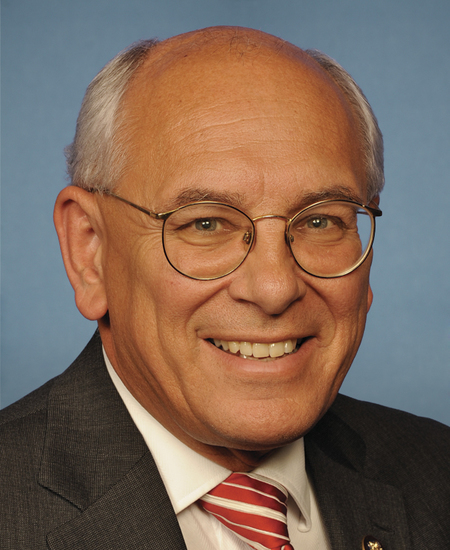
Rep. Paul Tonko
Sponsored bills
Substance Use Prevention, Treatment, and Recovery Services Block Grant Act of 2022 This bill reauthorizes through FY2027 and modifies the Substance Abuse Prevention and Treatment Block Grant, which supports state, tribal, and territorial efforts to prevent and treat substance use disorders. Specifically, the bill expands the scope of the grant to include the provision of recovery support services. Grant recipients must include information about recovery support activities in their plans for expending grant funds. Additionally, the Substance Abuse and Mental Health Services Administration must conduct a study to develop a model needs assessment process for grant recipients to use when determining the allocation of grant funding among prevention, treatment, and recovery support activities. The bill also revises multiple provisions to eliminate stigmatizing terms (e.g., substance abuse) and otherwise align with current legislative drafting conventions.
Anna Westin Legacy Act of 2022 This bill requires the Substance Abuse and Mental Health Services Administration to maintain the National Center of Excellence for Eating Disorders (NCEED). The bill specifies required activities for NCEED, including providing training for frontline health care providers and other professionals.
Emmett Till Antilynching Act This bill makes lynching a federal hate crime offense. Specifically, the bill imposes criminal penalties—a fine, a prison term of up to 30 years, or both—on an individual who conspires to commit a hate crime offense that results in death or serious bodily injury or that includes kidnapping or an attempt to kidnap, aggravated sexual abuse or an attempt to commit aggravated sexual abuse, or an attempt to kill.
This resolution supports the designation of National Sikh Day to honor and celebrate the important role played by the Sikh community in strengthening and inspiring the people of the United States.
This resolution supports the goals and ideals of National Women's History Month and recognizes the women and organizations that continue to promote the teaching of women's history.
9-8-8 Implementation Act of 2022 This bill modifies provisions to increase access to behavioral health services, with a focus on crisis services and the 9-8-8 telecommunication system. (The 9-8-8 system provides callers with mental health or suicide crisis support and resources through the existing National Suicide Prevention Lifeline and is scheduled to take effect by July 16, 2022.) The bill reauthorizes through FY2027 and revises the National Suicide Prevention Lifeline program and requires a national suicide prevention media campaign. In addition, the Substance Abuse and Mental Health Services Administration (SAMHSA) must establish standards for a behavioral health crisis continuum of care that health care providers and communities may use in responding to individuals experiencing a behavioral health crisis. The continuum must include emergency treatment, stabilization, and related services. The bill expands Medicaid and other insurance coverage for such services. The bill further expands Medicaid coverage for behavioral health services. This includes permanently allowing coverage of certain community-based mobile crisis services and exempting some short-term stabilization services from coverage restrictions that apply to institutions for mental diseases. Additionally, the bill establishes (1) an office within SAMHSA to coordinate behavioral health activities; and (2) various grants, including a pilot program for mobile crisis care teams that respond to behavioral health crises rather than law enforcement and a capital improvement program for certain behavioral health facilities. The bill also reauthorizes through FY2027 and expands certain workforce programs for behavioral health providers. It also addresses training for emergency services dispatchers and coordination of the 9-1-1 system with the 9-8-8 system.
Forced Arbitration Injustice Repeal Act of 2022 or the FAIR Act of 2022 This bill prohibits a predispute arbitration agreement from being valid or enforceable if it requires arbitration of an employment, consumer, antitrust, or civil rights dispute.
Dr. Lorna Breen Health Care Provider Protection Act This bill establishes grants and requires other activities to improve mental and behavioral health among health care providers. Specifically, the Department of Health and Human Services (HHS) must award grants to hospitals, medical professional associations, and other health care entities for programs to promote mental health and resiliency among health care providers. In addition, HHS may award grants for relevant mental and behavioral health training for health care students, residents, or professionals. Additionally, HHS must conduct a campaign to (1) encourage health care providers to seek support and treatment for mental and behavioral health concerns, and (2) disseminate best practices to prevent suicide and improve mental health and resiliency among health care providers. HHS must also study and develop policy recommendations on improving mental and behavioral health among health care providers, removing barriers to accessing care and treatment, and identifying strategies to promote resiliency. Furthermore, the Government Accountability Office must report on the extent to which relevant federal grant programs address the prevalence and severity of mental health conditions and substance use disorders among health care providers.
This resolution condemns the violence and killing of 14 individuals on Bloody Sunday 50 years ago in Northern Ireland and supports justice for the victims and their families. The resolution urges the full implementation of the Good Friday Agreement to ensure peace and stability in Ireland. The resolution recognizes the findings of the Bloody Sunday Inquiry, also known as the Saville Inquiry, and calls upon the United Kingdom to support the prosecutions of individuals who committed unjustifiable crimes on Bloody Sunday based on the evidence collected. Finally, this resolution urges the European Union, including the Republic of Ireland, and the United Kingdom to act in good faith with regard to negotiations around Brexit and implementation of the Northern Ireland Protocol.