

Preserving Access to Home Health Act of 2022 This bill restricts the Centers for Medicare & Medicaid Services (CMS) from decreasing payments for Medicare home health services based on certain adjustments until 2026. Current law requires the CMS to make certain permanent and temporary payment adjustments under the Medicare prospective payment system for home health services based on behavioral assumptions for 2020 through 2026. The bill restricts the CMS from making adjustments that decrease payments until 2026; the CMS must also ensure that any such necessary decreases are made before 2032.
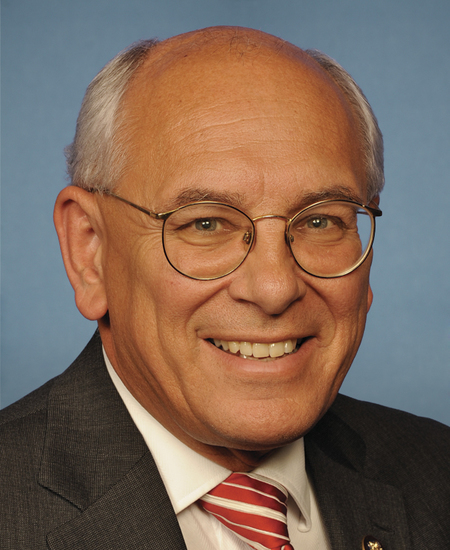
Rep. Paul Tonko
Sponsored bills
National Plan to End Parkinson's Act This bill requires the Department of Health and Human Services (HHS) to carry out a project to prevent and cure Parkinson's disease (a progressive brain disorder that causes unintended or uncontrollable movements) and related conditions. Among other components of the project, HHS must (1) implement and periodically update a national plan to coordinate and guide efforts to prevent and cure the disease; (2) improve diagnosis, treatment, and care of those with the disease; and (3) address health and other disparities related to the disease. HHS must also conduct annual assessments on the preparation for and response to the increased burden of Parkinson's disease. In addition, the bill establishes a council, comprised of federal and nonfederal stakeholders, to advise HHS on and make recommendations concerning the prevention and cure of Parkinson's disease. The bill's provisions terminate at the end of calendar year 2035.
Spectrum Innovation Act of 2022 This bill addresses auctions of, and other matters related to, portions of the electromagnetic spectrum allocated for federal use. The bill also establishes grants for and otherwise modifies provisions concerning next generation 9-1-1 systems (i.e., interoperable Internet Protocol-based systems for receiving 9-1-1 calls). The bill extends to March 31, 2024, the authority of the Federal Communications Commission (FCC) to auction and license electromagnetic spectrum. (Under current law, the authority expires on September 30, 2022.) Additionally, the bill establishes a process for auctioning specified parts of the spectrum currently allocated for federal use. The Office of Management and Budget must transfer certain funding to federal entities for planning activities related to reallocating and auctioning spectrum while the National Telecommunications and Information Administration (NTIA) and the Executive Office of the President must oversee the planning. The Department of Commerce must, informed by the planning, identify the spectrum to auction. Further, the bill addresses shared use of spectrum bands by federal and nonfederal users. For example, the NTIA must implement an incumbent informing capability system to manage harmful interference when nonfederal users and incumbent federal entities share spectrum. The bill also establishes the Public Safety and Secure Networks Fund and directs a portion of spectrum auction proceeds to the fund for, among other purposes, reimbursing telecommunications providers for replacing equipment that poses risks to national security and safety.
South Asian Heart Health Awareness and Research Act of 2022 This bill authorizes the Department of Health and Human Services to establish programs that support heart-disease research and awareness among communities disproportionately affected by heart disease, including the South Asian population of the United States. The programs include (1) grants to states for awareness initiatives and educational materials; and (2) research regarding heart disease, type 2 diabetes, and other heart health-related ailments with respect to the South Asian population and other at-risk populations.
Gabriella Miller Kids First Research Act 2.0 This bill reauthorizes through FY2027 a pediatric disease research initiative within the National Institutes of Health (NIH) and requires the NIH to coordinate pediatric research activities to avoid duplicative efforts. Additionally, the Department of Health and Human Services must report, within five years, to Congress about research funded through the initiative.
Original Slavery Remembrance Day Resolution of 2021 This resolution supports the designation of a Slavery Remembrance Day and condemns slavery and its progenies.
Shirley Chisholm Congressional Gold Medal Act This bill provides for the posthumous presentation of a Congressional Gold Medal in commemoration of Shirley Chisholm, in recognition of her activism, independence, and groundbreaking achievements in politics, election as the first African American woman in Congress, and campaign to be the first African American to gain the nomination of a major political party for President of the United States. Following its award, the gold medal shall be given to the Smithsonian Institution where it shall be available for display and research.
Overdraft Protection Act of 2021 This bill prohibits a financial institution from engaging in unfair or deceptive acts in connection with overdraft coverage. Each financial institution that offers overdraft coverage for accounts must disclose overdraft coverage fees. It must also disclose that the consumer's transaction may be declined if there are insufficient funds in the related account, and the consumer will not be charged a fee if such transaction is declined. A financial institution must provide certain other disclosures regarding its overdraft protection program, including prompt notification of the account's overdraft status. The bill limits the number of overdraft fees a consumer may be charged each month and year, and provides that such fees must be reasonable. The bill prohibits an overdraft coverage fee if the overdraft results solely from a debit hold amount that exceeds the actual dollar amount of the transaction. The bill also prohibits a financial institution from charging a non-sufficient fund fee for any automated teller machine or debit card transaction, or reporting negative information regarding consumer use of overdraft coverage to any consumer reporting agency when the overdraft amounts and coverage fees are paid under the terms of an overdraft coverage program.
This resolution recommends that the Department of Health and Human Services declare a public health emergency to respond to the spread of monkeypox in countries, including the United States, where the disease is not endemic. (Monkeypox is a viral disease that is endemic to parts of Africa and causes symptoms similar to, but less severe than, smallpox.)
Right to Contraception Act This bill sets out statutory protections for an individual's right to access and a health care provider's right to provide contraception and related information. Contraception refers to an action taken to prevent pregnancy, including the use of contraceptives (i.e., a device or medication used to prevent pregnancy), fertility-awareness based methods, and sterilization procedures. Generally, the bill prohibits measures that single out and impede access to contraception and related information. However, a party may defend against a claim that a measure violates the bill's prohibitions by demonstrating, through clear and convincing evidence, that the measure significantly advances access to contraception and cannot be achieved through less restrictive means. The Department of Justice, individuals, or health care providers may bring a lawsuit to enforce this bill, and states are not immune from suits for violations.