

China Watcher Act This bill establishes the China Watcher Program within the Department of State. The program must (1) monitor and combat China's malign influence in foreign countries, (2) monitor China's military trends abroad and counter its activities and advancements in foreign nations that pose a threat to U.S. interests and the rules-based order, and (3) strengthen U.S. government capacity to engage with foreign countries and international organizations to counter China's malign influence. Under this program, the State Department must place officers in select U.S. diplomatic and consular posts to engage with Chinese and third-party nationals, as well as host governments and nongovernment entities, on the above-referenced matters.
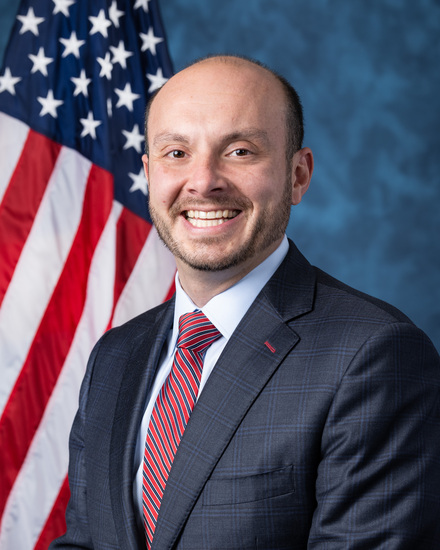
Rep. Andrew R. Garbarino
Sponsored bills
Burn Pit Program to Review Operations and Management of ILER System Efficacy Act or the Burn Pit PROMISE Act This bill requires the Government Accountability Office to study and report on the implementation and effectiveness of the Individual Longitudinal Exposure Record program of the Department of Defense and the Department of Veterans Affairs.
DHS Software Supply Chain Risk Management Act of 2021 This bill requires the Management Directorate of the Department of Homeland Security (DHS) to issue guidance regarding new and existing contracts relating to the procurement of information and communications technology or services. The bill requires contractors to submit to DHS a bill of materials, a certification that each item in the bill of materials is free from certain security vulnerabilities or defects affecting the security of the end product or service, a notification of any identified vulnerability or defect, and a plan to mitigate, repair, or resolve any identified vulnerability or defect. The Government Accountability Office must report to specified congressional committees with (1) a review of this bill's implementation; (2) information regarding DHS engagement with industry; (3) an assessment of how guidance issued pursuant to this bill complies with Executive Order 14208, relating to improving the nation's cybersecurity; and (4) any recommendations related to improving the supply chain for covered contracts.
United States Cadet Nurse Corps Service Recognition Act of 2021 This bill recognizes service as a member of the U.S. Cadet Nurse Corps between July 1, 1943, and December 31, 1948, as active duty service. The active duty designation entitles qualifying individuals to certain benefits afforded to veterans, such as burial benefits (not including interment or inurnment at Arlington National Cemetery) and honorary veteran status. Under the bill, the Department of Defense (DOD) must issue individuals who served in the corps during the specified period a discharge from their service under honorable conditions if such a discharge is warranted based on the duration and nature of the service. Such individuals are not entitled to Department of Veterans Affairs benefits aside from those related to burials and memorials. The bill also authorizes DOD to produce a service medal or other commendation, memorial plaque, or grave marker to honor the individuals.
This resolution recognizes and appreciates the dedication and devotion demonstrated by the men and women of law enforcement. It also condemns calls to defund, disband, dismantle, or abolish the police.
This resolution recognizes law enforcement agencies and officers for their tireless work to protect us and make our communities safer. It also condemns calls to defund, disband, dismantle, or abolish the police.
Lower Costs, More Cures Act of 2021 This bill establishes and modifies several programs and requirements to address prescription drug prices. The bill modifies provisions under Medicare and Medicaid relating to prescription drug coverage and price transparency. Among other changes, the bill requires the Centers for Medicare & Medicaid Services to publish certain information, as reported by pharmacy benefit managers (PBMs), relating to generic dispensing rates, drug discounts and rebates, and payments between PBMs, health plans, and pharmacies; caps annual out-of-pocket spending under the Medicare prescription drug benefit; allows prescription drug plan sponsors under the Medicare prescription drug benefit to offer additional plans in a region; requires pass-through pricing models, and prohibits spread-pricing, for payment arrangements with PBMs under Medicaid; and allows states to include in the Medicaid Drug Rebate Program covered outpatient drugs that are provided as part of physician or outpatient hospital services. The bill also generally modifies other provisions relating to the regulation and costs of generic and brand-name drugs. Among other changes, the bill prohibits the manufacturer of a brand-name, generic, or biosimilar drug from entering into certain agreements to resolve or settle a patent infringement claim in connection with the sale of a drug or biological product; permanently allows high deductible health plans to waive deductibles for insulin and associated products; and establishes the position of Chief Pharmaceutical Negotiator in the Office of the U.S. Trade Representative.
Honoring Our Fallen TSA Officers Act This bill extends public safety officers' death benefits to Transportation Security Administration employees performing official duties related to protecting the nation's transportation systems.
Veterans Medical Marijuana Safe Harbor Act This bill provides guidance related to veterans and medical marijuana that shall be effective for five years. Specifically, the bill authorizes (1) a veteran to use, possess, or transport medical marijuana in accordance with applicable state or Native American tribal law; (2) a Department of Veterans Affairs (VA) physician to discuss with a veteran the use of medical marijuana as a treatment if the physician is in a state or on tribal land that authorizes such treatment; or (3) a VA physician to recommend, complete forms for, or register veterans for participation in a medical marijuana treatment program in accordance with applicable state or tribal law. The bill requires the VA to report on (1) the effects of medical marijuana on veterans in pain; and (2) the relationship between state-approved medical marijuana treatment programs, program access, and opioid use and abuse reduction.
Khalid Jabara and Heather Heyer National Opposition to Hate, Assault, and Threats to Equality Act of 2021 or the Jabara-Heyer NO HATE Act of 2021 This bill creates grants for state and local governments to combat hate crimes. It also authorizes additional penalties for hate crime offenses. Specifically, it establishes grants for states to create state-run hate crimes reporting hotlines. It also authorizes grants for states and local governments to implement the National Incident-Based Reporting System and to conduct law enforcement activities or crime reduction programs to prevent, address, or respond to hate crimes. Finally, in the case of an individual convicted of a hate crime offense and placed on supervised release, the bill allows a court to order that the individual participate in educational classes or community service as a condition of supervised release.