Low-Revenue Recipient Paycheck Protection Program Relief Act of 2021 This bill provides additional forgiveness and flexibilities to certain low-revenue recipients of Paycheck Protection Program loans.
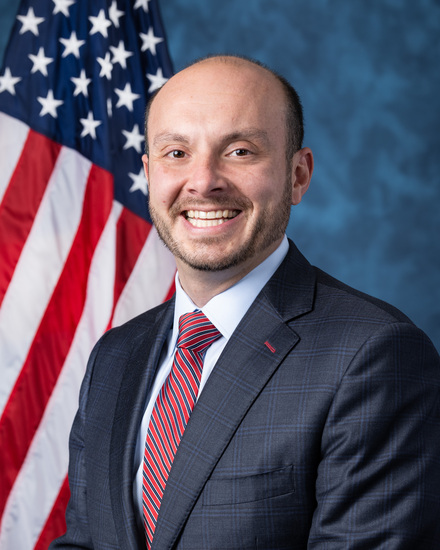
Rep. Andrew R. Garbarino
Sponsored bills
Employer-Directed Skills Act This bill allows for an employer to sponsor skills development programs with partial federal reimbursement under the Workforce Innovation and Opportunity Act (WIOA). These new skills development programs are exempt from the program application and participant assessment requirements that typically apply to WIOA employment and training activities. However, these skills development programs must be conducted according to an employer-sponsored skills development agreement that includes, among other required provisions, a commitment by the employer to employ an individual upon successful completion of the program. The bill also requires the federal share of these skills development programs and the federal share of existing on-the-job training programs to be paid by reimbursement from employer-directed skills accounts that must be established by local one-stop operators.
Border Agents Stay Employed Act or the BASE Act This bill prohibits using federal funds to require any U.S. Customs and Border Protection officer or employee to receive a COVID-19 vaccine.
This bill prohibits the Department of Defense (DOD) from taking specified actions against a member of the National Guard based on whether the member has received a COVID-19 vaccine. Specifically, DOD may not (1) involuntarily discharge or discipline the member, (2) withhold pay or benefits from the member, or (3) prohibit the member from participating in training or using equipment.
Critical Infrastructure Manufacturing Feasibility Act This bill requires the Department of Commerce to study and report on products that are in high demand across the critical infrastructure sectors. Critical infrastructure sectors are those whose assets, systems, and networks are vital to national security, the economy, public health or safety, or any combination of those matters. The study must (1) identify the products in high demand across those sectors that are being imported due to manufacturing, material, or supply chain constraints; and (2) analyze the costs, benefits, and feasibility of manufacturing those products in the United States.
Better Cybercrime Metrics Act This bill establishes various requirements to improve the collection of data related to cybercrime and cyber-enabled crime (cybercrime). Among the requirements the Department of Justice (DOJ) must enter into an agreement with the National Academy of Sciences to develop a taxonomy for categorizing different types of cybercrime faced by individuals and businesses; DOJ must establish a category in the National Incident-Based Reporting System for collecting cybercrime reports from federal, state, and local officials; DOJ's Bureau of Justice Statistics and the Bureau of the Census must include questions about cybercrime in the annual National Crime Victimization Survey; and the Government Accountability Office must assess the effectiveness of reporting mechanisms for cybercrime and disparities in reporting cybercrime data and other types of crime data.
Defund de Blasio's Injection Sites Act of 2021 This bill prohibits federal funds from being made available to a state, local, tribal, or private entity that operates or controls an injection center (i.e., a medically supervised injection site) in violation of the federal statute commonly known as the Crack House Statute. The statute generally prohibits making facilities available for the purpose of unlawfully using a controlled substance.
Department of Veterans Affairs Telehealth Strategy Ac t This bill requires the Department of Veterans Affairs (VA) to submit a strategy to Congress for the telehealth services furnished by the Veterans Health Administration. Additionally, the VA must report on the utilization of end-user devices provided to veterans by the VA to facilitate telehealth during FY2020 and FY2021.
9/11 Memorial and Museum Act This bill directs the Department of Homeland Security (DHS) to award to the official organization that operates the National September 11 Memorial & Museum a one-time grant to be used solely for the purposes of the operation, security, and maintenance of the memorial and museum. As a condition on receipt of the grant, the organization must provide for free admission to all facilities and museums associated with the memorial and museum for active and retired members of the Armed Forces, individuals who were registered first responders to the terrorist attacks of September 11, 2001, and family members of victims of such attacks; provide for dedicated free admission hours for the general public at least once a week; and allow for annual federal audits of its financial statements.
Parental Rights Protection Act This bill restricts government entities from requiring that individuals age 18 or younger receive certain COVID-19 vaccines that were authorized through emergency use and related procedures. Specifically, a federal, state, tribal, territorial, or local government entity (including a local educational agency) that receives funding from either the Department of Education or the Department of Health and Human Services may not require such COVID-19 vaccinations for individuals age 18 or younger. In particular, a local educational agency that mandates COVID-19 vaccinations for students loses its eligibility for federal education funding. The bill also requires the prior, informed, written consent of a parent or guardian before administration of such COVID-19 vaccines to an individual age 18 or younger.