

Maddy summaryThis non-binding resolution (HRES 1107) expresses Congress's view that Israel must fully support any negotiation or agreement addressing the Israeli-Hamas conflict - including a two-state solution - for progress to occur. It states that U.S. policy should require Israel's "full cooperation and approval at each step" for both conflict resolution and long-term plans involving Israel and Palestinians. The resolution emphasizes continued U.S. support for Israel while affirming the U.S. should not force Israel to act against its interests. It does not create new laws or affect any parties legally, as it merely states congressional sentiment.
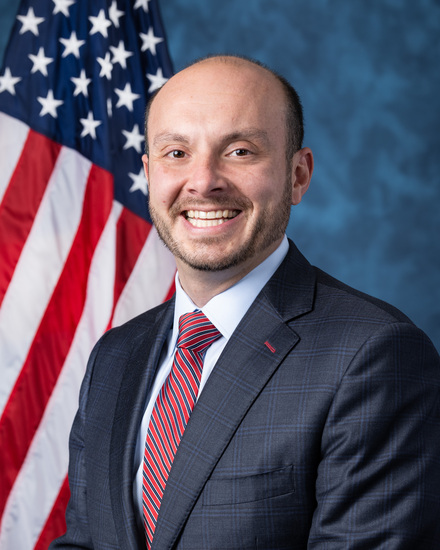
Rep. Andrew R. Garbarino
Sponsored bills
Maddy summaryThe SPEED and Reliability Act of 2024 creates a new process for designating major electricity transmission projects as "national interest high-impact transmission facilities." To qualify, projects must transmit at 345+ kilovolts, add or increase capacity by 750+ megawatts, and cross multiple states or the outer continental shelf. The bill streamlines permitting by directing the Federal Energy Regulatory Commission (FERC) to issue construction permits within 90 days for qualifying projects, while exempting them from standard National Environmental Policy Act (NEPA) reviews. This directly affects transmission project sponsors (like utilities), project states, and local authorities by accelerating approvals for large-scale infrastructure needed to address grid congestion and reliability.
Maddy summaryHR 6727 establishes the United States Foundation for International Conservation, a nonprofit organization that will provide grants to support long-term management of protected and conserved areas in eligible countries. The Foundation requires a 2:1 cost match from other sources, demands host country and community consent through binding agreements, and prioritizes areas with high biodiversity or species of significant importance. It will be governed by a Board of Directors including government officials and private sector experts, operate for 10 years with $1 million authorized for 2024 and $100 million annually from 2025-2035, and must follow international conservation standards while prohibiting funding for countries supporting terrorism or violating human rights.
Maddy summaryThis bill amends an existing provision of the Omnibus Crime Control Act to explicitly authorize federal grant funds to cover the purchase of fentanyl testing kits and opioid reversal agents. It directly affects state and local law enforcement and public health agencies that receive federal grants under this program. The key change allows current grant funding to be used for these specific harm reduction tools without requiring new legislation or appropriations.
Maddy summaryThis bill requires NASA and NOAA to establish civilian space cooperation with Taiwan within 90 days, focusing on satellite programs, weather/climate initiatives, and commercial space technology. It directly affects U.S. agencies (NASA, NOAA) and Taiwan’s Space Agency through structured collaboration. Key mechanisms include identifying mutual-benefit projects while complying with U.S. laws like the Taiwan Relations Act and protecting U.S. intellectual property. Agencies must report annually to Congress for five years on progress, challenges, and specific activities conducted. The bill does not alter U.S. policy toward Taiwan but mandates new coordination channels for space-related work.
Maddy summaryHR 7629, the Protect Our Letter Carriers Act of 2024, allocates $1.4 billion annually (2025-2029) to the U.S. Postal Service for high-security collection boxes and replacing physical universal mailbox keys with electronic versions, directly affecting USPS operations and letter carriers. It requires the Attorney General to appoint specialized prosecutors in each district to coordinate investigations and prosecutions of postal-related crimes, such as assaults on carriers or mail theft. The bill also mandates the U.S. Sentencing Commission to adjust guidelines so that assaults or robberies against postal employees are treated with the same severity as assaults against law enforcement officers. These provisions aim to enhance safety through infrastructure upgrades, improved prosecution, and stricter sentencing for crimes targeting postal workers.
Maddy summaryThis resolution (HRES 1069) demands that the Chinese government immediately release Kai Li, a U.S. citizen detained in China since 2016. It condemns China for denying Li access to legal counsel, unmonitored family communication, U.S. diplomatic visits, and adequate medical care during his detention. The resolution calls on the U.S. government to prioritize securing Li’s release through diplomatic pressure and international advocacy. It focuses on the specific conditions of Li’s detention and U.S. diplomatic efforts, without proposing new laws or regulations.
Maddy summaryThis non-binding resolution expresses the House's support for in vitro fertilization (IVF) access, noting that 19% of women in the U.S. face infertility challenges. It states IVF is necessary for those unable to conceive naturally, emphasizes policies enabling family growth, and recognizes "life is precious." The resolution does not create new laws or change regulations but symbolically affirms the House's position on IVF as a vital medical option for individuals struggling with infertility. It was introduced by Rep. Chavez-DeRemer and others on February 29, 2024.
Maddy summaryHR 7566, the CARTEL Act of 2024, requires U.S. Customs and Border Protection (CBP) to publish monthly public reports on border statistics, including encounters with individuals in the terrorist screening database (both attempts and apprehensions) and those affiliated with transnational criminal organizations. The bill mandates specific data points like total encounters, drug seizures, gang affiliations, and whether apprehended individuals were released or removed. Additionally, it requires the Secretary of Homeland Security to submit an annual report to Congress assessing foreign terrorist organizations and transnational criminal organizations attempting to enter the U.S. through border regions. This bill directly affects CBP (as the reporting entity) and provides the public and Congress with detailed, monthly border enforcement data.
Maddy summaryThe Ensuring States Support Law Enforcement Act requires states to adopt policies allowing the Department of Homeland Security (DHS) to access state driver's license and vehicle registration records for immigration enforcement purposes. States must implement this policy by the first fiscal year after the bill becomes law to qualify for federal law enforcement grants. Specifically, this applies to states seeking funds through the Edward Byrne Memorial Justice Assistance Grant Program, which provides federal funding for state and local law enforcement initiatives. Failure to comply would make a state ineligible for these grants.