

Maddy summaryHRES 1537 is a non-binding House resolution condemning Hamas' October 7, 2023, attacks on Israel, which killed over 1,200 people and took 251 hostages, including 7 Americans still held captive. It calls on Hamas to immediately surrender, cease attacks, and release all hostages unconditionally, while reaffirming Israel's right to self-defense. The resolution also urges international organizations to condemn Hamas' actions and address the global surge in antisemitism following the attacks. As a symbolic statement, it does not create new laws or alter policy but expresses congressional position. The bill specifically references the ongoing captivity of seven U.S. citizens: Edan Alexander, Itay Chen, Sagui Dekel-Chen, Gadi Haggai, Judith Weinstein Haggai, Omer Neutra, and Keith Siegel.
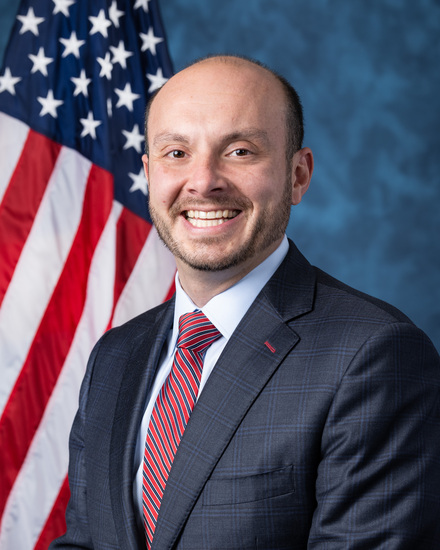
Rep. Andrew R. Garbarino
Sponsored bills
Maddy summaryHR 9928, the U.S. Park Police Modernization Act, adjusts salary structures for U.S. Park Police officers by updating pay scales and step progression timelines. It sets specific pay rates for each rank (from Private to Chief) relative to Executive Schedule level V, with Private positions capped at 95% of that rate and higher ranks at full Executive Schedule level V. The bill modifies step progression times (e.g., 52 weeks between steps for lower ranks) and clarifies that prior salary adjustments before January 3, 2021, are disregarded. This bill directly affects all U.S. Park Police officers by standardizing their compensation structure under the District of Columbia Police and Firemen’s Salary Act. It is a procedural salary adjustment, not a substantive policy change.
Maddy summaryHR 1719, the Honoring Our Fallen Heroes Act of 2023, establishes a presumption that certain cancers diagnosed in public safety officers (like police and firefighters) are work-related if linked to their duties. It defines 22 specific cancers (including lung, mesothelioma, and WTC-related cancers) as "exposure-related," allowing officers or their families to receive benefits without proving direct work connection, provided they were diagnosed within 15 years of leaving active service. The bill also creates a process for adding new cancers to the list based on scientific evidence, requiring the Bureau to review petitions and make decisions within 180 days. This applies to deaths or disabilities occurring on or after January 1, 2023, directly affecting officers who developed covered cancers during service.
Maddy summaryThe No Foreign Gifts Act of 2024 prohibits colleges and universities receiving federal education funding under the Higher Education Act from accepting gifts from China, Russia, North Korea, or Iran, or from any country the Secretary of State determines has provided material support to a foreign terrorist organization. Institutions must report any offers of such gifts to the Secretary of Education to maintain eligibility for federal funds. The bill amends the Higher Education Act of 1965 to add these restrictions, defining "material support" and "foreign terrorist organization" using existing legal terms without altering their current definitions.
Maddy summaryHR 3433, the "Give Kids a Chance Act of 2024," requires pharmaceutical companies developing certain cancer drugs to conduct pediatric studies if the drugs target molecular pathways relevant to childhood cancers. It directly affects drug manufacturers submitting new applications for cancer treatments, particularly those combining previously approved adult cancer drugs or containing a single new active ingredient. The bill amends FDA regulations to mandate these pediatric investigations only when specific conditions are met, such as when a drug's molecular target is relevant to pediatric cancer growth. The FDA must issue implementing guidance within 12 months, and reports to Congress will track implementation and effectiveness starting 2 years after enactment.
Maddy summaryThis bill prohibits hospitals and transplant centers from denying organ transplants or related services to people with disabilities solely because of their disability. It requires covered entities to make reasonable modifications to policies (like considering a patient's support network for post-transplant care) and provide auxiliary aids (such as communication services or accessible health information). The law specifically prevents discrimination based on disability during evaluation, listing, and treatment, while clarifying that medical decisions must be based on individualized assessments - not disability alone. It applies to all organ transplant processes and allows individuals to file complaints with the Department of Health and Human Services or sue for violations.
Maddy summaryHRES 1489 is a symbolic House resolution designating the week of September 23-27, 2024, as "National Clean Energy Week." It expresses congressional support for recognizing clean energy's role in economic growth (citing 8.35 million jobs in the sector) and encourages voluntary actions like public awareness, investment in clean energy technologies, and supporting local clean energy jobs. The resolution does not create new laws, funding, or obligations - it only formally endorses the week-long observance to highlight clean energy’s economic and environmental benefits. It directly affects no specific group but aims to raise national awareness of the clean energy sector.
Maddy summaryThis bill restricts federal funding for jurisdictions that limit cooperation with federal immigration enforcement. It defines a "sanctuary jurisdiction" as any state or local government that prohibits sharing immigration status information or complying with federal detainer requests (except for crime victims/witnesses). Starting after enactment, such jurisdictions lose eligibility for federal funds intended to provide food, shelter, healthcare, legal services, or transportation to undocumented immigrants. The law directly affects cities and states with specific immigration policies, not the immigrants themselves.
Maddy summaryHR 9745, the Lifesaving Gear for Police Act of 2024, removes barriers for state and local law enforcement agencies to access existing federal equipment. It prohibits federal agencies from enforcing any regulations (since May 15, 2015) that limit the transfer of Department of Defense or other federal equipment to police departments, unless Congress passes those rules into law. The bill also requires agencies to return or replace equipment recalled since 2015 under those regulations, provided the agency requests it, meets existing eligibility rules, and the equipment is available. This directly affects police departments that previously had equipment seized or denied under the blocked regulations. The law focuses on restoring access to current equipment-sharing programs, not creating new funding or gear.
Maddy summaryThe Keep Our Streets Safe Act of 2024 requires states receiving federal Byrne grant funds to consider public safety risks when setting bail or pretrial release, and prohibits blanket policies of sealing felony criminal records (excluding juveniles). States failing to comply would lose their Byrne grant funding, which would then be reallocated to local law enforcement agencies within that state. This bill directly affects all states that receive Byrne grants, which fund state and local law enforcement programs. The law changes federal funding conditions by linking access to specific pretrial and record-keeping practices.