

This resolution expresses the sense of the House of Representatives that the U.S. Postal Service should continue door delivery for all customers.
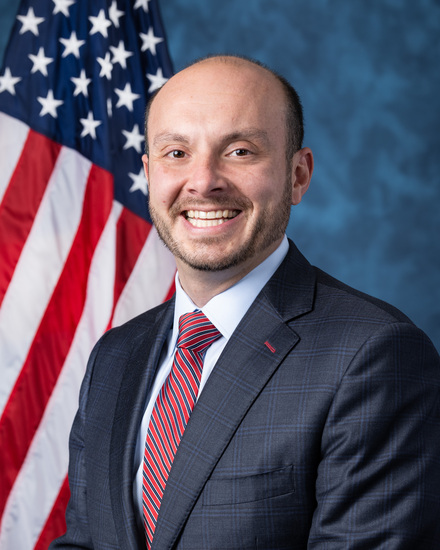
Rep. Andrew R. Garbarino
Sponsored bills
Gym Mitigation and Survival Act of 2021 or the GYMS Act of 2021 This bill establishes a grant program to provide economic support to eligible fitness facilities in response to the COVID-19 (i.e., coronavirus disease 2019) pandemic. Specifically, the bill authorizes the Small Business Administration to make initial and supplemental grants to privately owned fitness facilities that primarily provide health or fitness services and that do not offer golf, hunting, sailing, or riding facilities. The total amount of grant funds for a recipient may not exceed $25 million, and the recipient must use these funds for payroll costs, rent or mortgage obligations, and other ordinary and necessary business expenses.
United States-Israel PTSD Collaborative Research Act This bill establishes a grant program for collaborative efforts between the United States and Israel to advance research on post-traumatic stress disorders. The Department of Defense, in coordination with the Department of Veterans Affairs and the Department of State, shall award grants to eligible academic institutions or nonprofit entities in the United States. Work shall be conducted by the eligible entity and an entity in Israel under a joint research agreement.
Real Economic Support That Acknowledges Unique Restaurant Assistance Needed To Survive Act of 2021 or the RESTAURANTS Act of 2021 This bill temporarily establishes and provides funding for the Restaurant Revitalization Fund, from which the Department of the Treasury shall make grants to eligible food and beverage purveyors to cover specified costs such as payroll, operational expenses, and paid sick leave. For the grant program's initial period, Treasury must (1) prioritize awarding grants to marginalized and underrepresented communities, and (2) only award grants to eligible food and beverage purveyors with annual revenues of less than $1.5 million in 2019. For tax purposes, grant amounts are excluded from the recipient's gross income. An entity that received a loan under the Paycheck Protection Program established to support small businesses in response to COVID-19 (i.e., coronavirus disease 2019) may not apply for or use a restaurant revitalization grant for the same expenses for which the entity received the paycheck protection loan. Further, a grant applicant may request an additional amount to cover the cost of providing 10 days of paid sick leave to its employees. Treasury must report a list of grant recipients with the amount each recipient received, as well as demographics and other specified information.
Small Business Tax Fairness and Compliance Simplification Act This bill expands the tax credit for a portion of the employer-paid Social Security taxes for employee cash tips to include beauty service establishments. (Under current law, the credit is limited to tips received for providing, serving, or delivering food or beverages.) The credit applies to tips received in connection with providing beauty services to a customer or client if tipping employees who provide the service is customary. Beauty services include barbering and hair care, nail care, esthetics, and body and spa treatments. The bill also (1) establishes an employer tip reporting safe harbor for beauty service establishments, and (2) specifies reporting requirements for income received from renting space to individuals who provide beauty services. The employer tip reporting safe harbor for beauty service establishments provides an exemption from certain Internal Revenue Service tip examinations for employers who meet certain requirements for educational programs, reporting procedures, compliance with tax law, and recordkeeping.
Flood Resiliency and Taxpayer Savings Act of 2021 This bill requires federal agencies to take specified actions to evaluate and mitigate the risk of floods to federally funded projects. Specifically, the bill directs federal agencies to evaluate the potential for flooding throughout the planned lifetime or duration of a federally funded project to reduce the risk of financial and property losses and prevent the disruption of critical services during floods. Further, federal agencies must consider certain data and information (e.g., the most recent flood insurance rate map published by the Federal Emergency Management Agency) when evaluating whether a federally funded project is in a floodplain. If the agency determines the data and information are not adequate for understanding the flood risks to the project, then the agency must use an alternative design standard outlined by the bill. Finally, the bill directs the Federal Interagency Floodplain Management Task Force to issue guidelines for federal agencies related to flood risk management.
Marriage Access for People with Special Abilities Act or the MAPSA Act This bill excludes a spouse's income and resources when determining eligibility for Supplemental Security Income (SSI), and disregards marital status when calculating the SSI benefit amount, for an adult who has a diagnosed intellectual or developmental disability. SSI is a federal income supplement program designed to help aged, blind, and disabled individuals with limited income and resources meet basic needs.
Child and Animal Abuse Detection and Reporting Act This bill requires the Children’s Bureau of the Administration for Children and Families to disseminate information through the National Clearinghouse on Child Abuse and Neglect Information about the incidence of cases of child abuse that involve abuse to animals.
USPS Fairness Act This bill repeals the requirement that the U.S. Postal Service annually prepay future retirement health benefits.
Protecting Americans from Unnecessary Spread upon Entry from COVID-19 Act of 2021 or the PAUSE Act of 2021 This bill maintains immigration restrictions put in place under public health emergency authorities to prevent the introduction of COVID-19 (i.e., coronavirus disease 2019) from foreign countries. Specifically, the bill prohibits the Department of Health and Human Services from rescinding or reducing the stringency of the restrictions. It also prohibits the Department of Homeland Security from stopping or reducing enforcement of the restrictions. These prohibitions remain in effect until (1) federal and state COVID-19 emergency orders are lifted, and (2) the risk of introducing COVID-19 in or from Canada and Mexico is minimal.