Ensuring Economic Recovery Act This bill requires the Small Business Administration to report on the recovery of small businesses from the COVID-19 (i.e., coronavirus disease 2019) pandemic and the effects on small businesses of increasing the federal minimum hourly wage to $15.
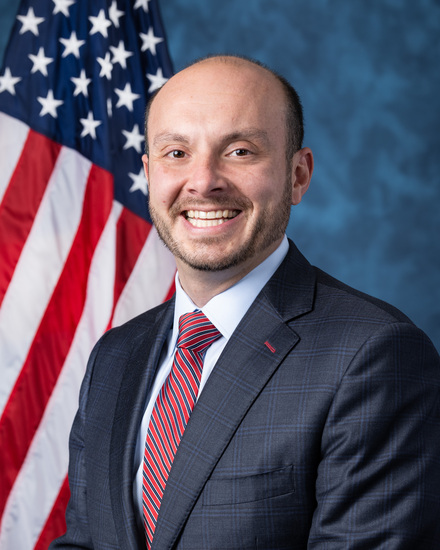
Rep. Andrew R. Garbarino
Sponsored bills
Postal Employee Appeal Rights Amendments Act This bill extends federal employee protections against adverse personnel actions, including the right to appeal such actions to the Merit Systems Protection Board, to additional categories of employees at the U.S. Postal Service (USPS). Specifically, it extends such protections to any officer or employee of the USPS who is not represented by a bargaining representative and is in a supervisory, professional, technical, clerical, administrative, or managerial position covered by the Executive and Administrative Schedule.
Postal Supervisors and Managers Fairness Act of 2021 This bill modifies procedures for negotiating pay and benefits of supervisory and other managerial personnel of the U.S. Postal Service (USPS). At least 60 days before the expiration of a pay decision, the USPS must propose to the supervisors' organization any changes in pay policies, pay schedules, or fringe benefit programs for members of such organization. Not later than 60 days after the USPS agrees to a collective bargaining agreement that affects the pay or benefits of supervisors or managers who are members of the supervisors' organization, the USPS shall provide a proposal regarding such matters to the organization. The bill makes binding the decision of the fact-finding panel appointed by the Federal Mediation and Conciliation Service in the event of an impasse between the USPS and a supervisors' organization over proposed changes in pay and benefits.

National Women's Hall of Fame Commemorative Coin Act of 2021 This bill directs the Department of the Treasury to mint and issue $5 gold coins, $1 silver coins, half-dollar clad coins, and proof silver $1 coins in recognition and celebration of the National Women's Hall of Fame in Seneca Falls, New York. All minted coins shall include a specified surcharge, which shall be paid to the National Women's Hall of Fame Foundation to establish an endowment fund to provide for the long-term financing of the hall's operations.
PFC Garfield M. Langhorn Memorial Semipostal Stamp to Benefit our Veterans Act of 2021 This bill directs the U.S. Postal Service to issue a PFC Garfield M. Langhorn Memorial Semipostal Stamp to Benefit our Veterans, with all proceeds benefitting the Supportive Services for Veteran Families program.
This joint resolution proposes a constitutional amendment limiting Representatives to three terms and Senators to two terms. Terms beginning before the ratification of this amendment do not count towards these term limits.
This joint resolution proposes an amendment to the Constitution to require that the Supreme Court consist of nine Justices.
Alzheimer's Caregiver Support Act This bill authorizes grants to expand training and support services for families and caregivers of individuals living with Alzheimer's disease or a related dementia. The Department of Health and Human Services may award these grants to community organizations and health care and social service providers.
Concealed Carry Reciprocity Act This bill establishes a federal statutory framework to regulate the carry or possession of concealed firearms across state lines. Specifically, an individual who is eligible to carry a concealed firearm in one state may carry or possess a concealed handgun (other than a machine gun or destructive device) in another state that allows its residents to carry concealed firearms. It sets forth requirements for the lawful concealed carry across state lines. The bill preempts most state and local laws related to concealed carry and establishes a private right of action for a person adversely affected by interference with a concealed-carry right established by this bill.
Telehealth Modernization Act This bill modifies requirements relating to coverage of telehealth services under Medicare. Specifically, the bill extends certain flexibilities that were initially authorized during the public health emergency relating to COVID-19 (i.e., coronavirus disease 2019). Among other things, the bill allows (1) rural health clinics and federally qualified health centers to serve as the distant site (i.e., the location of the health care practitioner); (2) the home of a beneficiary to serve as the originating site (i.e., the location of the beneficiary) for all services (rather than for only certain services); and (3) all types of practitioners to furnish telehealth services, as determined by the Centers for Medicare & Medicaid Services.