

Maddy summaryHCONRES 104 authorizes the use of the U.S. Capitol rotunda for a lying in state ceremony of Ralph Puckett, Jr.'s remains on April 29, 2024. The resolution recognizes Puckett as the last Medal of Honor recipient for actions during the Korean War (1950-1953) and honors over 5.7 million service members who served in that conflict, often called the "Forgotten War." The Architect of the Capitol will implement the arrangements under the direction of the House Speaker and Senate President pro tempore.
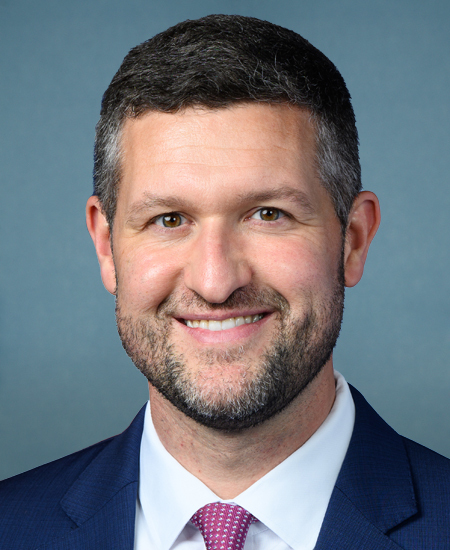
Rep. Patrick Ryan
Sponsored bills
Maddy summaryHRES 1151 is a symbolic resolution recognizing the Interstate Compact on Educational Opportunity for Military Children and designating April 2024 as "Month of the Military Child." It directly affects military-connected children (over 1.5 million in the U.S.) who face frequent school transitions due to parental service. The resolution expresses congressional support for the Compact - which helps streamline educational transitions for military students - and encourages nationwide recognition through events like "Purple Up!" to honor these children. As a non-binding resolution, it does not create new policies or funding but aims to raise awareness of military-connected students' educational challenges.
Maddy summaryThis resolution (HRES 288) urges the European Union to formally designate Iran's Islamic Revolutionary Guard Corps (IRGC) as a terrorist organization under EU legal framework Common Position 931. It does not create new laws but requests the EU take this specific action, noting the EU has previously sanctioned IRGC individuals but not the organization as a whole. The resolution cites the IRGC's role in human rights abuses, support for proxy groups, and involvement in conflicts like Ukraine as context for the request. Introduced in April 2023 by 20+ House members, it is a non-binding expression of congressional preference.
Maddy summaryHR 8025, the Blast Overpressure Safety Act, requires the Department of Defense to implement new protocols for monitoring and addressing blast-related brain injuries among military personnel. The bill mandates baseline and annual neurocognitive assessments for all service members, establishes detailed blast exposure logs tracking each member's cumulative exposure to weapons firing and training, and sets safety thresholds for blast overpressure exposure. It also creates a Warfighter Brain Health Initiative requiring evidence-based prevention strategies, specialized treatment programs for high-risk personnel, and regular reporting on brain injury incidents to Congress. The legislation requires the Department to document all blast exposures, track treatment outcomes, and publish annual reports on the effectiveness of these safety measures.
Maddy summaryHCONRES 103 authorizes the use of the U.S. Capitol rotunda for a "lying in honor" ceremony for the remains of Army Colonel Ralph Puckett, Jr., the last Medal of Honor recipient for actions during the Korean War (1950-1953). The resolution directs the Architect of the Capitol to arrange this ceremony on April 29, 2024, to honor Puckett and recognize the service of over 5.7 million U.S. military personnel who served in the Korean conflict, often called the "Forgotten War." This is a ceremonial resolution with no policy changes, solely granting permission for a specific honorific event.
Maddy summaryThis bill amends U.S. Code to lower the minimum student enrollment required for high schools to establish or maintain a Junior Reserve Officers' Training Corps (JROTC) program, reducing the threshold from 100 to 50 students. It directly affects high schools seeking to start or sustain JROTC units, particularly those with smaller student populations. The key provision changes the existing requirement under Title 10, U.S. Code, making it easier for schools to qualify for JROTC participation. This is a straightforward policy adjustment to existing law, with no additional funding or program changes specified.
Maddy summaryThis bill requires financial counselors within the Department of Defense to submit annual financial disclosures to ensure they are free from conflicts of interest. It mandates that these counselors provide services only after agreeing to these disclosures and allows the Secretary of Defense to block any counselor found to have a conflict until the issue is resolved. Additionally, the bill requires the Department of Defense to report to Congress annually on the percentage of counselors who have been verified as free from conflicts. These measures aim to protect military service members and their families from potential predatory financial practices by ensuring the independence of the financial advisors they receive.
Maddy summaryHRES 1132 is a symbolic House resolution condemning Republican opposition to past immigration reform efforts. It does not create new laws or allocate funds but formally expresses disapproval of Republican inaction on immigration policy since 2007, citing specific failed bills like the 2013 Border Security Act and the American Dream and Promise Act. The resolution urges cooperation among federal, state, and local entities and calls for full funding of border resources like asylum officers and border security personnel. As a non-binding statement, it has no legal effect on policy or funding.
Maddy summaryThis bill establishes a Principal Quantum Advisor within the Department of Defense to accelerate the adoption of quantum information science (QIS) technologies across military operations. The advisor will identify defense-specific QIS applications, develop transition plans from research to operational use, and coordinate with military branches, allies (including AUKUS partners), and industry. It requires a 5-year strategic plan for QIS technology development and implementation, with specific focus on quantum sensing, computing, communications, and navigation systems. The bill also creates a national defense quantum center of excellence to facilitate technology transition, workforce development, and collaboration with research institutions, with $20 million authorized annually for fiscal years 2025-2029.
Maddy summaryHR 7921, the Countering Antisemitism Act, establishes a National Coordinator to Counter Antisemitism within the Executive Office of the President and creates an Interagency Task Force to coordinate federal efforts against antisemitism across multiple agencies. The bill requires federal agencies to report on implementing the U.S. National Strategy to Counter Antisemitism, mandates annual threat assessments of antisemitic violent extremism from the FBI, DHS, and National Counterterrorism Center, and addresses antisemitic discrimination in higher education through a designated Office for Civil Rights Designee. It also includes provisions for a study on Holocaust education by the U.S. Holocaust Memorial Museum, a study on online antisemitism with recommendations for Congress, and amendments to the Nonprofit Security Grant Program to require public reporting on grant applications and awards.