

Maddy summaryThis bill bans the sale and use of adhesive rodent traps that cause prolonged suffering. It amends federal pesticide law to prohibit "covered glue traps" - defined as devices using non-drying adhesive to immobilize rodents, leading to death by starvation, dehydration, or suffocation. The prohibition directly affects pest control companies, food processors, and homeowners who currently use these traps. The law applies to both selling/distributing and using such traps, aligning with existing bans in other jurisdictions over animal welfare and health concerns.
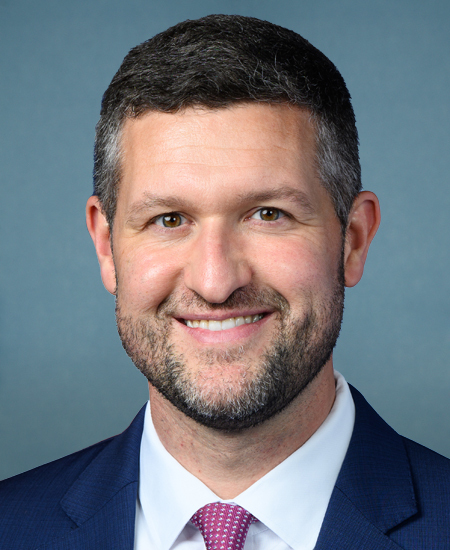
Rep. Patrick Ryan
Sponsored bills
Maddy summaryThis bill establishes a new tax credit to encourage the development of housing for working families. It provides a credit equal to 50% of the qualified basis for new buildings and 60% for existing buildings, calculated over a 15-year period. To qualify, properties must have at least 40% of units rent-restricted and occupied by households earning up to 180% of area median income, with 20% of units reserved for those earning 60% or less of area median income. The bill also includes $100 million in funding for infrastructure grants and loans to support housing development in rural and exurban areas.
Maddy summaryThe Pro-Housing Act of 2024 establishes a federal grant and loan program to help states, cities, tribes, and local housing authorities develop and implement housing policy plans. These plans must increase housing supply and affordability, reduce development barriers, and avoid displacing residents, with 20% of funds reserved for rural and exurban areas. Eligible entities can apply for competitive grants (requiring local matching funds of 15-45% based on population) or low-interest direct loans, and the program includes a pilot to transfer unused federal properties for housing development. It allocates $200 million annually from 2025 to 2030 and requires annual reporting on plan progress and outcomes.
Maddy summaryThis bill changes a rule for the Moving to Work housing program, which gives public housing agencies more flexibility in managing their funds. It lowers the minimum number of agencies required to join the program from 30 to at least 15. This directly affects local public housing authorities, making it easier for them to participate in the program. The change simplifies the process for agencies seeking to adopt innovative housing management approaches.
Maddy summaryThe Save our Safety-Net Hospitals Act of 2024 modifies Medicaid payment rules to better support hospitals serving large numbers of low-income patients. It removes a restriction that previously prevented some safety-net hospitals from receiving full reimbursement for care provided to these patients. The bill allows these hospitals to count payments from Medicare and other programs when calculating their Medicaid reimbursement, ensuring they are fully compensated for services. This change applies to fiscal years beginning October 1, 2021, and prevents states from recouping past payments made under the old rules.
Maddy summaryThis bill (HR 9255) is a simple naming resolution that renames a specific U.S. Postal Service facility. It designates the post office at 114 John Street in New York, New York, as the "Jack Greenberg Post Office." The bill requires all federal references to the building (in laws, maps, documents, etc.) to use the new name. This is a procedural change affecting only the official name of that single post office location.
Maddy summaryHR 9274, the SHAWL Act, establishes two new Smithsonian museums: the National Museum of the American Latino and the American Women’s History Museum. It authorizes both museums to be located within the National Mall’s "Reserve" area, overriding prior restrictions, and requires federal agencies managing potential sites to transfer jurisdiction to the Smithsonian after notifying congressional committees. The bill mandates that both museums accurately represent diverse cultures, histories, and viewpoints within Latino and women’s communities through exhibits and programs, requiring input from a broad range of community experts. It also requires the Smithsonian to submit biennial reports to Congress detailing compliance with these representation requirements.
Maddy summaryThe 9/11 Responder and Survivor Health Funding Correction Act of 2024 makes several key changes to the World Trade Center Health Program that serves 9/11 responders and survivors. It allows licensed mental health providers (not just physicians) to conduct mental health evaluations for program participants and extends the time period for adding new health conditions from 90 to 180 days. The bill also adjusts enrollment calculations by removing deceased individuals from program counts and provides $2.97 billion in new funding for fiscal year 2024 with a minimum annual funding level of $20 million for 2025. These changes aim to improve access to care while ensuring stable, long-term funding for the program that provides medical services to those affected by the 9/11 attacks.
Maddy summaryHR 4581, the Maternal and Child Health Stillbirth Prevention Act of 2024, amends Title V of the Social Security Act to explicitly allow federal funds to support stillbirth prevention efforts. The bill directs states receiving Title V maternal and child health funds to use these resources for evidence-based programs and research aimed at reducing stillbirths, including tracking fetal movements, screening for growth issues, smoking cessation, and community support. It directly affects state maternal health programs by clarifying that existing funding can now cover specific stillbirth prevention activities previously not explicitly permitted. The law changes how Title V funds may be spent, adding clear provisions for research and programs targeting stillbirth reduction. This is a policy change that updates funding guidelines without creating new programs or mandates.
Maddy summaryHRES 1355 is a non-binding resolution supporting the designation of July 10 as Journeyman Lineworkers Recognition Day. It honors lineworkers who maintain electrical infrastructure under hazardous conditions, including during disasters, and commemorates Henry Miller, the first president of the International Brotherhood of Electrical Workers, who died on July 10, 1896, while troubleshooting an electrical outage. The resolution encourages public recognition of these workers' contributions but does not create new laws or policies.