

In committee Sep 10, 2026
1 co-sponsor
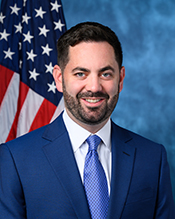
Rep. Michael Lawler
Total votes
1,879
all sessions
Attendance
99%
27 missed
Near the chamber average
With party
85%
of cast votes
Lower than 91% of chamber peers
Bipartisan score
8%
crosses aisle rarely
Higher than 89% of chamber peers
Sponsored
2,541
bills & resolutions
Higher than 99% of chamber peers
Committees
6
assignments
2,541 bills and resolutions
Sponsored bills
Total
2,541
Primary
193
Co-sponsor
2,348
This page
2,541
matching current filters
Fort Ontario Holocaust Refugee Shelter National Historical Park Establishment Act
Maddy summaryHR 1031 establishes the Fort Ontario Holocaust Refugee Shelter National Historical Park in New York to preserve and interpret the site where 982 Holocaust refugees were housed from 1944 to 1946. The park will be managed by the National Park Service after the Secretary of the Interior acquires sufficient land (primarily through donation for state-owned property) to form a manageable unit. Key provisions require a Federal Register notice upon land acquisition, a management plan within three years, and cooperative agreements for public access and interpretation. The park directly affects the preservation of this historical site and serves the public by making its history accessible for education and reflection.
In committee Sep 10, 2026
1 co-sponsor
Recognizing suicide as a serious public health problem, expressing support for the designation of September 8, 2026, as "988 Day" and the role of the 988 Suicide and Crisis Lifeline, and for other purposes.
Maddy summaryThis House resolution formally recognizes suicide as a significant public health issue in the United States and highlights the impact of the 988 Suicide and Crisis Lifeline on individuals and communities. It commends the establishment of the 988 number as a nationwide three-digit dialing code for crisis support, noting its role in connecting people to mental health resources. The bill supports the designation of September 8, 2026, as "988 Day" to raise awareness about the service and promote access to mental health care. Additionally, it encourages continued public education and federal, state, and local efforts to expand crisis intervention programs for high-risk populations.
In committee Sep 8, 2026
1 co-sponsor
SBA Spanish Resource Report Act
Maddy summaryThe SBA Spanish Resource Report Act requires the Small Business Administration administrator to submit a detailed report to Congress within 180 days of enactment. This report must inventory existing Spanish-language resources and services, including websites, application materials, and customer support, as well as those provided by partner organizations like small business development centers. The document also mandates an analysis of usage data, associated costs for translation and outreach, and operational considerations for delivering these services. While the bill requires a public report and a subsequent briefing to congressional committees, it explicitly states that this action does not force the agency to create, expand, or cut any specific Spanish-language programs.
In committee Sep 8, 2026
1 co-sponsor
Recognizing the 25th anniversary of the terrorist attacks of September 11, 2001, honoring the memory of the victims, recognizing the courage and sacrifice of the heroes who answered the call to serve, acknowledging the charitable organizations that continue to support survivors and victims' families, and reaffirming the enduring commitment of the United States to never forget.
Maddy summaryThis House resolution marks the 25th anniversary of the September 11, 2001 terrorist attacks by formally honoring the memory of the nearly 3,000 victims and recognizing the sacrifices made by first responders, military personnel, and the passengers of United Airlines Flight 93. The bill acknowledges the ongoing health challenges faced by survivors and responders, highlighting the role of the World Trade Center Health Program in providing long-term medical support. It also credits charitable organizations and community groups that have continued to assist victims' families and veterans over the past two decades. Finally, the resolution urges the American public to observe the anniversary with ceremonies and reaffirms Congress's commitment to remembering the events and lessons of that day.
In committee Sep 3, 2026
1 co-sponsor
L’Ouverture Economic Development Plan for Haiti Act of 2025
Maddy summaryThe L'Ouverture Economic Development Plan for Haiti Act of 2025 creates a Haitian American Enterprise Fund to support economic development in Haiti through private sector investments. The fund will finance projects in agriculture, manufacturing, tourism, and infrastructure, with special focus on empowering women and youth, and aims to create jobs to reduce migration from Haiti. It authorizes $1 billion annually from 2026-2031 to support these initiatives, managed by a private nonprofit organization with oversight from a diverse board. The legislation emphasizes building sustainable economic opportunities within Haiti to meet the country's development needs while strengthening ties with the Haitian-American diaspora.
In committee Sep 2, 2026
1 co-sponsor
Public Transit Mental Health Awareness Act
Maddy summaryThe Public Transit Mental Health Awareness Act requires public transit agencies that receive federal assistance to display information about the national suicide prevention hotline in areas visible to passengers. This information must state that the service is free, confidential, and available around the clock. Agencies can meet this requirement by placing the notice on all their vehicles or in all their transit facilities, provided it does not block existing revenue-generating advertising space. The law includes a provision allowing agencies to remain compliant if they make reasonable efforts to restore displays that are damaged or removed, with the mandate taking effect one year after enactment.
In committee Sep 1, 2026
1 co-sponsor
STOP Payments Fraud Act of 2026
Maddy summaryThis bill, titled the STOP Payments Fraud Act of 2026, amends federal laws to give banks more flexibility in delaying the availability of funds when they suspect fraud. It allows depository institutions to hold checks and wire transfers for up to 60 days if there is reasonable suspicion that the transaction is false, unauthorized, or fraudulent, rather than following standard expedited release rules. The legislation requires banks to notify customers of these delays and prohibits overdraft fees if the delay is caused by the bank's fraud investigation. Additionally, it permits banks to share information about suspected fraud with other financial institutions to help prevent future issues.
In committee Sep 1, 2026
1 co-sponsor
Fair Credit Reporting Reseller Accuracy Act
Maddy summaryThis bill requires credit reporting resellers to use reasonable procedures to ensure the accuracy of consumer information they transmit to other agencies or end users. It limits reseller liability when they accurately pass on data obtained from another consumer reporting agency without making changes. The law defines resellers according to existing Fair Credit Reporting Act definitions and focuses on maintaining data integrity during the transfer process. These changes directly affect companies that sell consumer credit reports to other businesses or individuals.
In committee Sep 1, 2026
0 co-sponsors
Clarity for Compensation Act
Maddy summaryThis bill clarifies that certain personal services entities owned by registered stockbrokers are not automatically considered "brokers" under securities law, if specific conditions are met. It directly affects registered representatives who own personal services entities (like independent contractor firms) and their brokers. Key provisions require brokers to control payment details, prevent entities from advertising as brokers, maintain written agreements, restrict ownership to the representative or immediate family, and preserve required records for oversight. The change aims to eliminate regulatory confusion for small, representative-owned entities without altering core broker-dealer rules.
In committee Sep 1, 2026
1 co-sponsor
Ask Maddy
·
AI policy assistant
Ask Maddy about Michael Lawler
Scope: indiana
Hi! I can help you understand Michael Lawler's legislative record. What would you like to know?
Try one of these
i
Maddy answers using official bill text and legislative records. Always verify before sharing.
Sources cited inline