

Maddy summaryThis bill amends federal energy conservation law to require federal agencies to consider mechanical insulation as a standard energy-saving measure during building evaluations. It defines "mechanical insulation property" as materials that reduce energy loss in mechanical systems while meeting ASHRAE 90.1 standards, including insulation placed in service with those systems. The law adds mechanical insulation to the list of measures agencies must evaluate for potential installation in federal buildings as part of their required energy and water assessments. This directly affects federal agencies managing buildings, ensuring they formally assess this specific efficiency measure during routine evaluations.
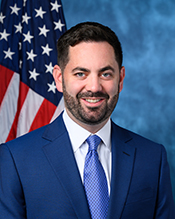
Rep. Michael Lawler
Sponsored bills
Weatherization Enhancement and Readiness Act of 2025 This bill reauthorizes through FY2030 and modifies the Weatherization Assistance Program. Under the program, the Department of Energy (DOE) provides grants for low-income households to improve the energy efficiency of their homes. The bill increases the cap on the average assistance provided per home from $6,500 to $12,000. The bill also directs DOE to include in its annual report to Congress a description of the impacts of enhancement and innovation readiness efforts on eligibility for assistance under the program.
Maddy summaryThis bill requires individuals to notify small businesses about website or mobile app accessibility issues before filing lawsuits, giving businesses 180 days to fix problems. If unresolved, complaints go to the Department of Justice (DOJ), which must investigate within 360 days. Failure to act within that period is treated as the business being compliant. It directly affects small businesses operating public-facing websites or apps used for commerce, aiming to prevent lawsuits over ADA accessibility without prior correction opportunities.
Maddy summaryHR 6704 establishes a $45 million prize competition to accelerate development of passive, in-vehicle technology that prevents operation by drivers with high blood alcohol levels (e.g., breath or touch sensors). It also creates a Traffic Safety Enforcement Center of Excellence to provide states and law enforcement with data-driven strategies for targeting drunk and drug-impaired driving, and mandates a national drug-involved crash data system to track non-alcohol impairments in fatal and serious injury crashes. The bill directly affects vehicle manufacturers (through tech integration incentives), states (via enforcement training and data grants), and law enforcement agencies (through new protocols and resource targeting). Key provisions include requiring standardized toxicology data collection, prioritizing rural/underserved states for grants, and de-identifying public crash data to comply with privacy laws.
Maddy summaryThe CARE for First Responders Act (HR 6601) provides mental health support specifically for first responders, including emergency personnel and 911 operators (defined as "qualified emergency response providers"). It requires the creation of a 24/7 confidential hotline via the 988 Suicide Lifeline, peer support programs staffed by trained responders, and mobile crisis units that offer on-site mental health services during major disasters. The bill mandates trauma-informed, culturally appropriate care and education to reduce stigma around mental health, with a focus on helping responders and their families adjust after disaster work. It authorizes $5 million annually (2026-2030) for these services through grants to state/local health entities.
Maddy summaryHR 6547, the Least Cost Exception Act, modifies the Federal Deposit Insurance Act to allow the FDIC (as the "Corporation") to select non-least-cost resolution methods for failing banks if certain conditions are met. It directly affects the FDIC, the Deposit Insurance Fund, and major global banking institutions by permitting exceptions to standard cost-minimization rules. Key provisions require the FDIC to determine that an alternative method limits further concentration among large banks, comply with specific cost and risk thresholds, and pay the Fund for cost differences over at least five years. The bill mandates annual reporting to Congress on such decisions and defines "covered alternatives" as the least-cost method involving sales to global systemically important banks.
Maddy summaryThe Bridges not Bumpers Act of 2025 creates a working group to improve data sharing about bridge clearances for commercial vehicles, requiring better GPS navigation tools, clearer height labeling on rental vehicles (over 5,700 lbs), and warnings to renters. It mandates that rental companies provide height information and warnings about bridge clearance, while also addressing liability for inaccurate GPS data. The bill establishes a national clearinghouse for bridge strike data and funds research grants to identify high-risk locations and improve infrastructure. It directly affects commercial truck drivers, GPS navigation providers, and rental car companies with fleets of 5+ vehicles, aiming to reduce bridge strikes through better information and infrastructure planning.
Maddy summaryHR 7291 establishes a review board to assess the safety of pre-2000 "Generally Recognized As Safe" (GRAS) designations used by food manufacturers for additives. The bill requires manufacturers to report their specific GRAS designations within 90 days, with the board categorizing them into priority tiers (1-3) for review. If the board finds a substance unsafe, it recommends revocation, giving manufacturers 180 days to provide safety evidence before the FDA can revoke the designation. The board must report results to Congress by specific deadlines (2-10 years after enactment) and terminates 10 years after the bill passes.
Maddy summaryHR 7292 amends the National Quantum Initiative Act to require the Subcommittee on Quantum Information Science (part of the National Science and Technology Council) to submit a biennial report to the President, the Advisory Committee, and relevant congressional committees. The bill mandates that these reports detail the subcommittee's progress in implementing the national workforce strategic plan, including any challenges faced and planned updates to address evolving workforce needs. This requirement directly affects the subcommittee and federal agencies managing quantum workforce development. The bill adds no new policy changes but establishes a regular reporting mechanism to track implementation of the existing workforce plan.
Maddy summaryHR 7263, the Safe Intersections for Buses and Pedestrians Act, requires new motorcoaches (buses) sold in the U.S. to have a minimally obstructed forward view for drivers. The bill mandates the National Highway Traffic Safety Administration (NHTSA) to establish safety standards within one year of enactment, ensuring drivers can clearly see ahead without obstructions. Manufacturers may use camera systems meeting Federal Motor Vehicle Safety Standard 101 as an alternative to physical visibility improvements. This directly affects new bus manufacturers and NHTSA, aiming to improve driver visibility and safety for bus passengers and pedestrians.