

Maddy summaryThe Guidelines for Use, Access, and Responsible Disclosure of Financial Data Act strengthens privacy protections for consumers by amending the Gramm-Leach-Bliley Act to require financial institutions to limit data collection to what is necessary, provide clearer privacy notices, and offer new rights for customers to access or delete their personal information. Key provisions include requiring explicit opt-in consent for sensitive data like biometric information, restricting how third parties can use consumer login credentials, and mandating that institutions disclose how they use artificial intelligence in processing financial data. The bill also establishes a right for former customers to request deletion of their data within 45 days and requires regulators to consider the impact of rules on smaller financial institutions with $15 billion or less in assets.
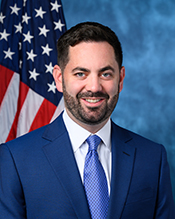
Rep. Michael Lawler
Sponsored bills
Maddy summaryThis bill mandates that the Secretary of Homeland Security grant temporary protected status (TPS) to Haitian nationals already residing in the United States. It requires the designation to begin on August 3, 2025, and last for 18 months, allowing eligible individuals to legally stay and work during that period. The bill directly affects Haitian nationals in the U.S. who qualify under TPS criteria, providing them temporary relief from deportation. The key provision is the mandatory 18-month TPS period with a specific start date, overriding other legal provisions that might otherwise prevent such a designation.
Maddy summaryHRES 1196 is a House Resolution that formally designates April as "Cancer Prevention and Early Detection Month." The resolution expresses the House of Representatives' support for the goals and ideals of this month, affirming a national commitment to educating the public on disease prevention and commending advancements in multi-cancer early detection efforts.
This resolution supports the recognition of Distracted Driving Awareness Month. The resolution also supports the efforts of the Department of Transportation, state and local governments, and state and local law enforcement to prevent and stop distracted driving.
Maddy summaryThis resolution expresses the sense of the House of Representatives that open water lifeguards qualify as first responders and emergency response providers. It recognizes their essential, lifesaving work and reaffirms their role in protecting lives, property, evidence, and the environment.
Maddy summaryThe Pets Belong with Families Act amends federal housing laws to ban restrictions on pet breeds, size, or weight in public housing. It allows landlords to charge pet deposits limited to 10% of monthly rent, which must be amortized over at least three months and fully reimbursed within 30 days if no damage occurs. The bill also permits limits on the number of animals based on unit size and prohibits pets declared dangerous by courts or banned by state and local laws.
Maddy summaryHR 7380, the IRAN Act, aims to improve internet access for Iranian citizens by directing U.S. agencies to support secure connectivity tools. It requires the State Department to coordinate digital freedom efforts, update strategies to evaluate VPNs and Direct-to-Cell (DTC) technology, and ensure sanctions enforcement doesn’t block these tools for Iranians. The bill also mandates the FCC to prevent licensees from geo-blocking Iran’s satellite/DTC coverage (except for network security) and directs the State Department to report on coverage issues. Additionally, it authorizes $15 million annually for cybersecurity training and digital safety tools for Iranian journalists, activists, and civil society. The law explicitly states it does not override existing sanctions or require U.S. companies to sell services in Iran.
Maddy summaryHR 8350, the "No Taxes on Utility Bills Act," amends the Internal Revenue Code to create a new federal income tax deduction. This bill allows taxpayers to deduct from their taxable income all taxes and state-mandated surcharges that appear on their gas or electric utility bills. This change directly affects individuals and businesses who pay these utility bills, potentially lowering their federal tax liability. The new deduction would apply to taxable years beginning after the bill becomes law.
Maddy summaryThe Foreign Service Age and Integration and Reform (FAIR) Act of 2026 amends the Foreign Service Act of 1980. This bill changes the mandatory retirement age for members of the Foreign Service. It raises the mandatory retirement age from 65 to 67, or to the individual's full retirement age as defined by the Social Security Act, whichever of those two ages is greater.
Maddy summaryThe SAFER Act of 2026 establishes federal standards for when financial institutions can transfer certain unclaimed securities, digital assets, and investment accounts to state governments under unclaimed property laws. It directly affects individuals and entities holding these assets, as well as the financial institutions that custody them. Under the bill, financial institutions generally cannot turn over assets from natural persons unless their death is confirmed at least three years prior with no fiduciary interest, or after five years of no contact for other entities. The bill also requires financial institutions to periodically check death databases for inactive accounts of individuals at retirement age and preempts conflicting state escheatment laws regarding these assets.