

Maddy summaryThis bill extends the deadline for certain regulations protecting the North Atlantic right whale from 2028 to 2035. It directly affects the National Marine Fisheries Service and other agencies responsible for enforcing these conservation rules. The key provision amends the Consolidated Appropriations Act, 2023 to update the expiration date in the relevant section of federal law. This change ensures that existing protective measures for the whale species remain in effect for an additional seven years.
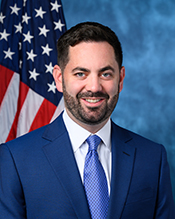
Rep. Michael Lawler
Sponsored bills
Maddy summaryThis bill, known as the Precision Agriculture Workforce Training and Development Act, aims to expand educational programs that prepare students for careers in precision agriculture. It directly affects universities, research institutions, and public or private partners by authorizing new grants to support workforce training initiatives. The legislation modifies existing federal funding rules to explicitly include cooperative education programs focused on improving skills in modern farming technologies. By adding these specific categories to research and extension grants, the bill ensures that financial resources are available for developing specialized training partnerships.
Maddy summaryThe Medicare Advantage Improvement Act of 2026 aims to speed up care decisions and increase transparency for Medicare Advantage enrollees and providers. Starting in 2028, the bill requires insurance plans to respond to most prior authorization requests within 72 hours and to provide real-time decisions for low-risk services, while also banning requirements for re-authorization when a treatment plan is clinically modified. The legislation introduces a new compliance scoring system that will publicly rank plans and reduce payments to those with poor performance, alongside stricter rules ensuring medical necessity standards match those of traditional Medicare.
Maddy summaryThis resolution designates April as "Community College Month" to recognize the significance of community colleges across the United States. It celebrates over 1,000 institutions for their role in providing accessible higher education and workforce training, and for contributing to the nation's economic prosperity.
Maddy summaryThe Protect our Pets Act strengthens federal laws against animal cruelty by increasing penalties for animal crushing and prohibiting the abandonment or endangerment of domesticated animals on federal land. Under this bill, individuals convicted of these offenses face up to 10 years in prison for a first offense and up to 15 years for subsequent offenses, in addition to fines. The legislation defines domesticated animals to include mammals, birds, reptiles, and amphibians but includes specific exceptions for veterinary care, hunting, farming, and euthanasia. These changes directly affect people who commit these acts on federal property or in interstate commerce, aiming to provide clearer legal consequences for harming or neglecting animals.
Maddy summaryThis bill proposes to reverse several tax incentives for energy efficiency and clean energy that were previously extended by a 2024 law. It would end the tax deduction for energy-efficient commercial buildings, shorten the expiration date for the energy-efficient home credit, and delay the deadline for constructing clean hydrogen facilities. Additionally, the legislation would remove limits on the amount of credits available for clean electricity production and change how the phase-out of these credits is triggered. These changes directly affect property owners, builders, and businesses that currently rely on these specific tax breaks to fund green projects.
Maddy summaryThis bill modernizes housing assistance programs for Native American tribes and Native Hawaiians by streamlining environmental reviews, extending funding authorization through 2032, and expanding loan guarantee options. Key provisions include consolidating environmental review requirements to reduce paperwork for tribes, allowing 99-year leasehold interests on trust lands for housing, and creating new rental assistance specifically for homeless or at-risk Native American veterans. The legislation also clarifies rent rules, waives certain housing counseling certifications for tribal entities, exempts tribal housing projects from some federal civil rights and Buy America requirements, and establishes a direct loan guarantee process for tribal housing projects.
Maddy summaryThis bill establishes an Office of Energy Affordability within the Department of Energy, directly affecting the Department's policy-making process and indirectly aiming to influence energy costs for consumers. The Office's primary duty is to review proposed Department regulations or policies related to energy transitions, analyzing their effects on energy affordability, economic costs, and reliable energy access. It must also identify strategies to mitigate negative impacts and promote cost-effective solutions. The Office provides advice and guidance based on its reviews, which must be completed within 30 days, but it cannot prevent the issuance of any regulation. Finally, the Office is mandated to submit annual reports to Congress detailing its findings and recommendations.
Maddy summaryThis bill establishes an independent, nonpartisan Commission on Natural Disaster Risk Management and Insurance to study how the United States can better manage risks and financial costs from natural disasters. The Commission would consist of 26 members appointed by congressional leaders and committee chairs, including two state insurance commissioners, who would serve without pay and meet to conduct assessments. Its main duties include examining current disaster risks, insurance availability and affordability, building codes, and various risk-sharing mechanisms like catastrophe bonds and alternative insurance products. After two years, the Commission must submit a detailed report with findings and recommendations to relevant congressional committees before it is dissolved.
Maddy summaryThe USA 6G Global Leadership Act directs the U.S. Department of State and other federal agencies to develop strategies for U.S. global leadership in 6G telecommunications technology. It mandates the Ambassador at Large for Cyberspace and Digital Policy to coordinate U.S. diplomatic efforts at upcoming international telecommunications conferences, consulting with the private sector and reporting to Congress. The bill also authorizes the Secretary of State to fund projects in developing countries that promote connectivity using trusted U.S. or allied telecommunications infrastructure. Additionally, it requires reports on a comprehensive U.S. 6G dominance strategy and on efforts by China and Russia to influence international telecommunications standards.