

Maddy summaryThe FIGHT Act (HR 2742) amends the Animal Welfare Act to specifically target animal fighting events, such as cockfighting, by defining "rooster" as any male chicken over six months old and banning the live broadcasting (simulcasting) of such events. It prohibits using the postal service or interstate transport to move roosters for animal fighting purposes and adds civil enforcement tools allowing citizens to sue violators after a 60-day notice period. Fines up to $5,000 per violation may be imposed, and property used in animal fighting ventures can be seized. These changes strengthen enforcement against animal fighting by expanding legal remedies for the public and authorities.
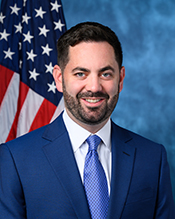
Rep. Michael Lawler
Sponsored bills
Maddy summaryHR 2719 establishes a competitive grant program to help farmers adopt climate-friendly agricultural practices. The bill authorizes $13 million annually for 4-year grants (capped at $400,000 per institution) to eligible land-grant colleges (including historically Black and tribal colleges). These institutions must partner with groups like nonprofits or state agencies to increase outreach to farmers by 25%, host workshops, provide technical assistance, and fund soil testing - while limiting administrative costs to 30% of grant funds. The program directly affects participating colleges and the farmers they assist, focusing on practices that improve soil health, reduce emissions, and enhance water management.
Maddy summaryHR 2723 (Local Farms and Food Act of 2023) reforms the Local Agriculture Market Program to support local food systems. It extends funding periods to 2024-2028, increases annual funding to $75 million for program grants and $30 million for partnerships, and creates simplified application processes for projects under $100,000. The bill defines "food hub" to include businesses aggregating and distributing local food products, and adds new project categories like farmers market staff support and food safety equipment. It directly affects small local farms, food hubs, and rural communities by improving access to grants and reducing administrative barriers for market development.
Maddy summaryThe Strengthening Organic Agricultural Research (SOAR) Act of 2023 increases annual funding for organic agricultural research and extension programs, directly supporting organic farmers, researchers, and institutions. It authorizes $60 million in 2024, rising to $100 million annually after 2028, for the Organic Research and Extension Initiative, and creates a new $10-20 million annual program to study transitioning from conventional to organic farming. This new program requires grants to prioritize partnerships with organic producers and specific educational institutions (1890/1994 colleges, Hispanic-serving institutions) while focusing on barriers, ecosystem benefits, and improved transition methods. Finally, the bill mandates a USDA economic impact analysis of organic agriculture, examining effects on rural economies, labor, environment, and community dynamics, to be completed within three years of enactment.
Maddy summaryHRES 375 is a ceremonial resolution supporting National Nurses Week (May 6-12, 2023), recognizing nurses' contributions to healthcare. It does not create new laws or policies but formally acknowledges nurses' roles as frontline caregivers, patient advocates, and key contributors to public health. The resolution encourages the public to observe the week through recognition and activities, highlighting nurses' impact across all healthcare settings. It directly affects the nursing profession by affirming their value, though it has no binding effect on legislation or funding.
Maddy summaryThe PAST Act of 2023 amends the Horse Protection Act to ban specific devices used to cause pain (soring) in horses at shows, particularly affecting Tennessee Walking Horses, Racking Horses, and Spotted Saddle Horses. It defines prohibited "action devices" (like boots or chains causing friction) and requires licensed, conflict-free inspectors at events to enforce rules. The bill increases penalties for violations to up to $5,000 fines or 3 years in jail, and mandates longer disqualifications for repeat offenses (180 days → 1 year → 3 years). Horse show organizers, exhibitors, and participants must comply with these new inspection and penalty requirements.
This resolution reaffirms the central role of local frontline health workforces in achieving global health objectives. The resolution also urges greater global attention and support for local frontline health workers.
Maddy summaryHR 3228 establishes the Mental Health in Schools Excellence Program to expand the workforce of school-based mental health providers. It authorizes the Education Secretary to partner with eligible graduate schools (offering accredited programs in school counseling, psychology, or social work) to cover up to 50% of participating students' tuition costs, with schools matching that contribution. The program prioritizes students who received Federal Pell Grants or attended certain institutions as undergraduates. It directly affects graduate students in school-based mental health fields and participating institutions, aiming to increase the pipeline of licensed providers for schools.
Maddy summaryThis bill authorizes Congress to award a Congressional Gold Medal to honor the service of Army and Navy nurses who served during World War II. It directly recognizes over 73,000 nurses (59,000 Army and 14,000 Navy) who provided critical medical care under dangerous conditions, often without military status or full benefits. The medal, designed by the Treasury Secretary, will be presented by congressional leaders and permanently displayed at institutions like the Women in Military Service Memorial and the National World War II Museum. The bill does not create new benefits but provides formal recognition for their service, as noted in congressional findings about their contributions to saving lives and supporting military operations.
Maddy summaryHR 3240 grants a federal charter to the Veterans Association of Real Estate Professionals (VAREP), a California-based nonprofit already recognized as a veterans service organization under IRS tax law. The bill establishes specific rules for VAREP, requiring it to maintain its tax-exempt status, submit annual reports to Congress, and follow restrictions like not issuing stock, making political contributions, or claiming government authority. VAREP must continue its existing mission of supporting veterans through financial literacy programs, housing assistance (including foreclosure prevention), workforce development, and suicide awareness initiatives. This charter does not create new government benefits but formally recognizes and regulates this specific organization's federal status.