

Maddy summaryHR 4040, the Recycling and Composting Accountability Act, requires federal agencies and states to collect and report detailed data on recycling and composting practices. It mandates the EPA to create reports on composting infrastructure capabilities, federal agency recycling/composting rates, and end-market sales of recyclables, while also developing a national inventory of materials recovery facilities. The bill directly affects federal agencies, state and local governments, and Indian Tribes by requiring standardized reporting on recycling rates, facility capabilities, and contamination rates. Key mechanisms include biannual facility inventories, standardized reporting metrics for recyclable diversion rates, and voluntary guidelines to improve labeling and public education on proper sorting. The goal is to strengthen data collection to address contamination issues and support infrastructure improvements, without imposing new regulatory requirements.
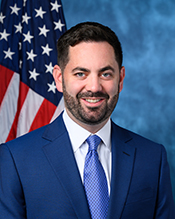
Rep. Michael Lawler
Sponsored bills
Maddy summaryThis bill updates federal grant programs to include all FDA-approved opioid overdose reversal agents (like naloxone), not just specific products. It requires the Health and Human Services Secretary to revise existing grant program materials by December 2023 to ensure references cover any approved agent. The change directly affects states and tribes receiving State Opioid Response Grants and Tribal Opioid Response Grants under the 21st Century Cures Act, as well as regional/national prevention grants under the Public Health Service Act. This allows grantees greater flexibility to use the most effective, currently available reversal agents in their opioid response efforts.
Maddy summaryHR 3946, the FASD Respect Act, establishes a new federal program within the Department of Health and Human Services (HHS) to address fetal alcohol spectrum disorders (FASD). The bill creates FASD Centers for Excellence to build state, tribal, and national capacity for prevention, identification, and support services - directly affecting individuals with FASD, their families, and healthcare providers. Key provisions include developing standardized diagnostic guidelines, expanding screening and training for medical professionals, creating a national resource directory for FASD services, and promoting culturally informed interventions. The program requires HHS to report to Congress on progress within four years. This legislation restructures existing HHS authority to focus comprehensively on FASD across the lifespan, replacing older terminology with consistent "FASD" references.
Maddy summaryHRES 513 is a non-binding resolution expressing the House of Representatives' support for designating September 20 as National Service Dog Day. It recognizes service dogs' critical role in assisting people with disabilities - including mobility, visual, hearing, and medical needs - and highlights their historical contributions since 1929. The resolution encourages public awareness of service dogs' benefits, requests the President issue a proclamation to honor them, and urges support for organizations training service dogs for veterans and individuals with disabilities. This resolution does not create new laws or alter existing policies, but serves as a symbolic acknowledgment of service dogs' societal value.
Maddy summaryThis bill prohibits the Consumer Product Safety Commission (CPSC) from using federal funds to ban gas stoves or impose safety rules that would either prohibit their sale/use or substantially increase their average price (defined as exceeding typical homeowner spending on cooking appliances). It directly affects the CPSC, blocking its ability to regulate gas stoves under the Consumer Product Safety Act. The key mechanism is a funding restriction preventing the CPSC from taking specific regulatory actions on gas stoves. This bill does not change existing stove safety standards but limits future CPSC actions that could impact gas stove availability or cost.
Maddy summaryHR 1640, the Save Our Gas Stoves Act, prevents the Department of Energy from implementing energy efficiency standards for gas stoves that would make them unavailable in the U.S. market. It amends federal law to require that any new standard for gas stoves must not result in the unavailability of gas stove types, directly affecting gas stove manufacturers and consumers who rely on these appliances. The bill specifically blocks the implementation of the 2023 proposed rule (Energy Conservation Program: Energy Conservation Standards for Consumer Conventional Cooking Products) and any similar rule. This is a policy change focused on maintaining the availability of gas stoves by altering the criteria for energy standard approval.
Maddy summaryHRES 272 is a non-binding resolution passed by the U.S. House of Representatives calling on Russia to immediately release Paul Whelan, a U.S. citizen and Michigan resident imprisoned since 2018 on espionage charges without evidence. It demands Russia provide Whelan with consular access, ensure due process rights, and release him from his 16-year labor camp sentence. The resolution also thanks Canada, Ireland, and the U.K. for their efforts to secure his freedom and expresses sympathy to his family. As a formal statement of congressional position, it does not compel action but underscores the House's stance on Whelan's case.
Maddy summaryThe School Guardian Act of 2023 creates a federal grant program to fund armed law enforcement officers at K-12 schools. It directs $80 billion in redirected IRS funds to provide grants to states, which then distribute subgrants to local law enforcement agencies to hire full-time officers for school security. Each school must have at least one assigned officer under written agreements between law enforcement agencies and schools. States must report annually on grant usage, including the number of schools and officers covered, with unused funds returned to the federal government.
Maddy summaryThe Protecting Veteran Community Care Act expands access to mental health and substance-use services through the Veterans Community Care Program for veterans who cannot get timely care in VA residential treatment facilities. It requires community providers to meet state licensing and accreditation standards and prohibits the VA from denying community care solely because community providers cannot meet the same wait time standards as VA facilities. The bill also mandates the VA to track and report on requests for mental health care, including approvals, denials, and appeals. This applies directly to veterans facing delays in accessing VA residential mental health programs.
Maddy summaryHR 3099 establishes a new Special Envoy for the Abraham Accords within the State Department, directly affecting U.S. diplomatic efforts and coordination. The envoy, appointed by the President with Senate confirmation, will coordinate U.S. government activities to expand diplomatic, economic, and security ties between Israel and Muslim-majority countries, including encouraging nations without formal relations with Israel to establish them. Key duties include strengthening existing Accords partnerships, fostering regional cooperation on issues like trade and water security, and providing diplomatic support for Israel’s regional engagement. The envoy must submit annual reports to Congress detailing specific diplomatic efforts and progress with partner countries.