

Maddy summaryHR 4485, the Rings of Fire Act of 2023, requires the Secretary of Defense to develop a strategy for deploying conventional ground-based missile systems in the Indo-Pacific region within 180 days of enactment. The strategy must assess capability gaps relative to China's intermediate-range missile arsenal (500-5,500 km range), identify specific military requirements and basing locations, and outline operational concepts for joint use with allies. It mandates including cost assessments, co-development plans with partners like AUKUS, and designating a theater commander for missile strategy. The bill directly affects the Department of Defense and aims to address a stated gap in U.S. conventional missile capabilities in the Indo-Pacific.
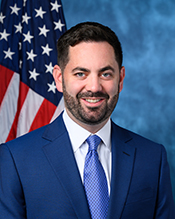
Rep. Michael Lawler
Sponsored bills
Maddy summaryThis bill prohibits the District of Columbia from using ranked choice voting in any District election, including elections for local or federal office and ballot initiatives. It amends the Help America Vote Act of 2002 to add a new provision explicitly banning ranked choice voting systems in DC elections. The law applies to all elections held within the District, preventing voters from ranking candidates in order of preference. This is a procedural change to federal election law, not a new voting system or policy affecting voters directly.
Canadian Snowbird Visa Act This bill authorizes the Department of Homeland Security to admit into the United States qualifying Canadian citizens as long-term nonimmigrant visitors. A qualifying Canadian citizen is an individual who (1) is at least 50 years old, (2) maintains a Canadian residence, (3) owns a U.S. residence or has rented a U.S. accommodation for the duration of the individual's stay, (4) is not inadmissible or deportable, (5) will not engage in employment or labor for hire in the United States other than for a non-U.S.-based person or entity by whom the Canadian citizen was employed in Canada or for whom the Canadian citizen performed services in Canada, and (6) will not seek certain forms of assistance or benefits. A qualified individual may be admitted for up to 240 days during any single 365-day period. The spouse of such an individual may be admitted under the same terms, except that the spouse is not required to separately satisfy the requirement for owning or renting a residence in the United States. An individual admitted into the United States under this bill shall have nonresident alien tax status.
Fair and Equal Housing Act of 2023 This bill prohibits discrimination, in the context of various housing practices, against individuals based on their sexual orientation or gender identity.
National Nursing Shortage Task Force Act of 2023 This bill establishes a National Nursing Shortage Task Force to recommend policies for addressing the nursing shortage in the United States, particularly in designated health professional shortage areas. The task force terminates 90 days after it submits its recommendations.
Maddy summaryHR 4339, the Preserving Local Medicaid Access Act of 2023, requires states receiving enhanced federal Medicaid funds to distribute those funds equitably to local governments (like cities and counties) based on each locality's prior spending on Medicaid. It amends federal law to mandate that states distribute these funds so that each local government receives an amount proportional to its past contribution relative to the state's total Medicaid costs. This applies to federal funding increases for medical assistance provided in calendar quarters starting October 1, 2022. The bill directly affects states managing Medicaid funds and local governments that previously may not have received a fair share of federal Medicaid dollars.
Maddy summaryThe Project Safe Neighborhoods Reauthorization Act of 2023 extends federal funding for the Project Safe Neighborhoods (PSN) program through fiscal years 2024-2028, replacing its previous authorization period. The bill directly affects state, local, tribal, and federal law enforcement agencies, prosecutors, and community groups that receive PSN grants to reduce violent crime. Key provisions allow grantees to use funds for hiring crime analysts, covering overtime for officers and assistants, purchasing technology for crime reduction, and supporting multi-jurisdictional task forces. It also requires annual reports from the Attorney General detailing fund usage, community outreach, and violent crime statistics (including murder, robbery, and assault) in each program area. The program operates across all 94 U.S. federal judicial districts and territories.
Saving Organs One Flight at a Time Act This bill requires the Transportation Security Administration (TSA) and the Federal Aviation Administration (FAA) to jointly issue regulations, as necessary, to enable air carriers to transport human organs for transplant above wing (i.e., in the cabin of an aircraft). Among other things, the regulations must include consideration of protocols for air control outages; a requirement that air carriers implement a protocol for a person to accompany organs to and from the aircraft and between connecting flights; and a standardized process for commercial air carriers to accept, handle, and manage organs in transit. The TSA and the FAA must also consult with the Organ Procurement and Transplantation Network to identify metrics for the handling of organs and organ-related tissue by air carriers.
Maddy summaryThis bill would exempt international doctoral degree holders who earned their degree at a U.S. accredited university from annual visa caps for permanent residency. To qualify, they must have a job offer in a related field paying above the median wage for that occupation in their area. It also allows F-1 students pursuing doctoral degrees to simultaneously pursue permanent residency ("dual intent") without violating current visa rules. The bill directly affects international students and graduates with doctoral degrees seeking to stay and work permanently in the U.S.
Maddy summaryHR 4335, the VA Loan Informed Disclosure Act of 2023, requires mortgage lenders to include specific information about VA home loan programs in standard mortgage disclosures. The bill amends the National Housing Act to mandate that lenders provide details on VA loans (guaranteed under Title 38) alongside other loan options, including assumptions about prevailing interest rates. This change directly affects lenders processing VA-guaranteed mortgages, ensuring borrowers receive clearer comparisons between VA loans and other financing. The law does not require lenders to verify borrower eligibility for VA loans, only to include the specified disclosure language.