

Maddy summaryThis bill reauthorizes and strengthens the Civil Rights Cold Case Records Collection program. It establishes that all federal, state, and local government records related to historical civil rights cases must carry a presumption of immediate public disclosure, with full access intended for public understanding. Key provisions include allowing the Review Board to reimburse state/local governments for digitizing or copying records to add to the national collection, removing an exception that previously blocked state records from being included, and extending the Review Board's term from 7 to 11 years. The bill directly affects government agencies holding these records and the public seeking historical transparency about civil rights cases.
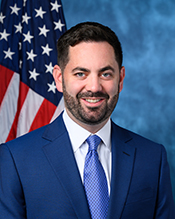
Rep. Michael Lawler
Sponsored bills
Dental Care for Veterans Act This bill expands eligibility for veterans for dental care provided by the Department of Veterans Affairs (VA). Specifically, the bill makes all veterans who are enrolled in the VA health care system eligible for VA-provided dental services. Currently, only veterans who have a service-connected dental issue or meet other narrow criteria are eligible for certain dental services. The bill phases in eligibility over four years based upon existing eligibility, degree of service-connected disability or other disability, prisoner of war status, award of a Purple Heart, financial need, or VA health care eligibility.
Maddy summaryThis bill designates May 2026 as National Electrical Safety Month to raise public awareness about electrical hazards in homes, schools, and workplaces. It encourages citizens to adopt safety habits, such as inspecting for hazards and installing protective devices like smoke alarms and ground-fault circuit interrupters. The resolution also supports the work of the Electrical Safety Foundation International and requests that the President issue a proclamation to promote safety programs during the designated month.
This bill designates the facility of the United States Postal Service located at 15422 NY 104 in Martville, New York, as the "Sergeant Staret J. Ingleston Memorial Post Office Building".
Maddy summaryThis bill prohibits Members of Congress and their survivors from receiving federal retirement benefits if they are convicted of specific sexual offenses committed on or after the law's enactment. It also bars pension payments for individuals who are under indictment for these crimes and willfully remain outside the United States for more than a year to avoid prosecution. Additionally, the legislation allows funds that would have gone to a convicted member's pension to be redirected to pay court-ordered restitution to victims of the sexual offenses.
Maddy summaryThe No Rigged Grocery Prices Act prohibits grocery stores and third-party delivery services from using a customer's personal data to raise prices for specific individuals. While the law allows for standard promotions, loyalty rewards, and objective cost differences like shipping fees, it bans dynamic pricing that targets consumers based on their personal information. Retailers must also inform customers if item availability changes or if prices are calculated by weight, and delivery services need explicit permission before swapping out grocery items. Violations of these rules would be treated as unfair business practices enforceable by the Federal Trade Commission. Additionally, the bill requires the Department of Labor to report on how the adoption of electronic shelf labels affects employment at grocery stores.
Maddy summaryThe Passenger Rail Crew Protection Act makes it a federal crime to assault or interfere with employees working on or around passenger trains, including engineers, conductors, and station staff. This law prohibits actions that hinder crew members from doing their jobs or reduce their ability to perform safety-sensitive duties. Penalties range from fines and up to six months in jail for minor offenses to up to 20 years in prison if the assault involves a weapon, intent to commit murder, or results in serious bodily injury. The bill directly affects anyone onboard a train or at a station serving passenger rail lines by establishing specific legal consequences for such interference.
Maddy summaryThe Radiation Health Research Act directs the National Institutes of Health to create a program specifically studying the health effects of nuclear radiation on women. This initiative requires long-term monitoring of participants, including pregnant women and young girls, for at least ten years while ensuring their privacy is protected. The program must involve collaboration with various federal agencies and align with current scientific evidence. Additionally, the Director of NIH is required to submit annual reports to Congress detailing research findings, identifying knowledge gaps, and proposing strategies to minimize adverse health effects.
Maddy summaryHR 6444 establishes a VA-DoD task force to improve care for veterans and active-duty service members diagnosed with blast-related injuries like traumatic brain injury (TBI) or PTSD. The task force will coordinate research on specific issues (e.g., sleep therapy, gut health, brain inflammation), develop clinical baselines, and create guidelines for evaluating disability claims related to blast exposure. It must report annually to Congress on research progress and claim evaluation recommendations, and will expire on September 30, 2029. The bill directly affects veterans and service members with blast exposure symptoms by focusing research and care coordination on their specific health needs.
Maddy summaryHR 4109, the Recycling and Composting Accountability Act, requires the Environmental Protection Agency (EPA) to collect and report detailed data on recycling and composting infrastructure across the U.S. The bill mandates reports on composting facilities, materials recovery centers (which process recyclable materials like plastic, paper, and metal), contamination rates, and barriers to expanding these programs. It also directs the EPA to develop standardized recycling rates, track end-market sales of recycled materials, and assess how much recyclable material is diverted from reuse. These reports will be submitted to Congress and used by states, local governments, and tribes to improve recycling access, reduce waste, and inform future policy decisions.