

This bill allows a deduction from gross income (above-the-line deduction) for expenses incurred by an employee if such expenses are for construction tools, personal protective clothing and gear, and other expenses necessary for the employee to be able to work. This allowance is an exception to the general rule that employee expenses are not deductible business expenses.
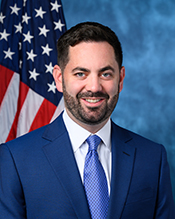
Rep. Michael Lawler
Sponsored bills
Maddy summaryHR 4999, the ALYSSA Act, requires school districts receiving federal education funds to install silent panic alarms in every elementary and secondary school. These alarms, defined as manual devices for signaling life-threatening emergencies (like active shooters or lockdowns), must be used to alert law enforcement during security crises. The bill amends the Elementary and Secondary Education Act to make this requirement a condition for receiving federal funds, directly affecting all local educational agencies that receive such funding. It mandates that schools be prepared for security emergencies through these silent alarm systems, with no mention of funding specifics or implementation details beyond the basic requirement.
Maddy summaryThis bill establishes the New York-New Jersey Watershed Restoration Program to coordinate habitat restoration and water quality improvements across the shared watershed region. It creates a grant program providing competitive federal funding (up to 90% for disadvantaged communities) to state/local governments, nonprofits, and tribes for projects like river restoration, green infrastructure, and community engagement. The program prioritizes environmental justice communities, advances climate-resilient solutions, and requires annual congressional reporting. The bill authorizes $20 million annually from 2024-2029, with a sunset provision ending in 2030.
Maddy summaryThis resolution (HRES 620) is a non-binding House of Representatives statement expressing support for Japan's efforts to secure justice for Japanese citizens abducted by North Korea. It directly urges North Korea to release any remaining abductees, return remains and provide details about deceased victims, offer appropriate restitution, and issue a formal apology. The resolution references North Korea's 2002 admission of abductions (after 24 years of captivity for some) and emphasizes the conflict with human rights principles. As a symbolic gesture, it does not impose new legal requirements but calls for North Korea to address past actions.
Maddy summaryHRES 578 is a non-binding House resolution calling for the immediate release of Eyvin Hernandez, a U.S. citizen and Los Angeles County public defender wrongfully detained by Venezuela since March 2022. The resolution urges U.S. officials, including the President and Secretary of State, to press Venezuela for his release and condemns Venezuela’s practice of detaining U.S. citizens for political purposes. It specifically references Hernandez’s wrongful detention without evidence or fair trial, noting his status as a Department of State-designated wrongfully detained individual. The resolution expresses support for Hernandez and other Americans detained abroad, without creating new legal requirements or funding.
Maddy summaryThe COTA Act amends the Workforce Innovation and Opportunity Act to require workforce programs to provide career guidance for high-skill, high-wage, or in-demand jobs - including skilled trades - and to run public awareness campaigns about these programs. It adds two specific requirements: (1) helping students explore career paths in skilled trades and emerging fields, and (2) using social media and other outreach to promote career and technical education. These changes directly affect state and local workforce development programs that receive federal funding under the WIOA. The law mandates concrete policy shifts in how these programs guide job seekers and publicize opportunities, without altering funding or creating new federal mandates.
Maddy summaryThis bill establishes new federal requirements for employers to prevent heat-related illness and injury among workers. It mandates that employers provide safe work environments by implementing specific measures, including access to cool water, scheduled rest breaks in shaded areas, employer-paid cooling equipment, and training for employees and supervisors on recognizing heat illness symptoms. The Secretary of Labor must create these standards within one year, requiring employers in high-heat occupations (like construction, agriculture, and outdoor labor) to adopt engineering controls, administrative schedules, and health protocols. Key provisions include ensuring hydration, rest, and language-accessible training, while preserving existing safety protections and allowing for updates as scientific evidence evolves.
Maddy summaryThis bill clarifies legal pathways for victims of terrorism to collect judgments against foreign states that sponsor attacks. It removes barriers by updating references in federal law to ensure victims can pursue claims under Section 2333(d)(1) without being blocked by prior legal interpretations. The bill also expands the definition of "national of the United States" to include U.S.-organized entities for these cases, making it easier for more victims to qualify. These changes apply to all pending or future lawsuits filed after the bill's enactment.
Maddy summaryHR 4942 extends and modifies the Conrad State 30 program, which allows states to sponsor foreign medical graduates to work in medically underserved areas in exchange for a commitment to practice for three years. The bill directly affects foreign medical graduates seeking to work in the U.S., states that sponsor them, and health facilities in underserved communities. Key provisions include creating mechanisms for physicians to change employers or states if they face issues with their current employment, adding requirements for employment agreements (including prohibitions on non-compete clauses), and establishing exceptions to the three-year work requirement under certain circumstances. The bill also creates a process for states to recapture waiver slots when physicians leave their employment and requires annual reporting on the program's usage. These changes aim to improve physician retention in underserved areas by providing more flexibility and protections for foreign medical graduates.
Maddy summaryThis bill establishes a single, uniform definition for sustainable aviation fuel (SAF) that must be used across all U.S. aviation operations and Federal Aviation Administration (FAA) programs. It requires SAF to meet specific ASTM standards, not be derived from palm oil or petroleum, and achieve at least a 50% reduction in lifecycle greenhouse gas emissions compared to conventional jet fuel. The definition includes detailed technical requirements for feedstocks and certification processes. This standardization will directly affect airlines, fuel producers, and FAA programs by creating consistent criteria for qualifying fuels. The bill mandates the FAA to implement this definition within 60 days of enactment.