

Maddy summaryHR 6230, the Tehran Incitement to Violence Act, requires the U.S. Secretary of State to annually determine whether 18 specific Iranian religious and political figures or entities - such as clerics who issued fatwas calling for violence against U.S. President Trump and Israeli PM Netanyahu, and institutions like the Qom Seminary - meet criteria for sanctions under existing U.S. authorities. The bill mandates these determinations every 180 days for up to six years, using established frameworks like Executive Order 13224 (blocking property of terrorism supporters). It directly affects the named individuals and organizations by subjecting them to potential U.S. sanctions if found to meet the criteria. The legislation focuses on formalizing the process for designating these entities under current sanction regimes, without altering existing penalties or making new policy changes.
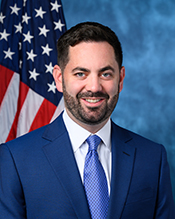
Rep. Michael Lawler
Sponsored bills
Maddy summaryThis bill requires the Commerce and State Departments to develop strategies preventing U.S. and allied technology exports to Iran for drone production. It specifically targets microchips, GPS modules, and other critical components (like microcontrollers and voltage regulators) used in Iranian drones that have been linked to attacks in Ukraine and against Israel via groups like Hamas. The strategy must identify U.S. and foreign manufacturers, track third-party distributors circumventing controls, and coordinate with allies to block these exports. It directly affects U.S. technology companies, global distributors, and foreign partners whose exports could enable Iran's drone program. The bill aims to disrupt technology flows supporting Iranian drones used in conflicts without making speculative claims about outcomes.
United States Commission on International Religious Freedom Reauthorization Act of 2026 This bill reauthorizes the U.S. Commission on International Religious Freedom through 2028. The commission is an independent federal commission tasked with monitoring international religious freedom conditions, reviewing U.S. government policy, and making policy recommendations. (Under current law, the commission is authorized through FY2026.)
Maddy summaryThe Prior Authorization Reform for Autoimmune and Blood Disorders Act requires group health plans and health insurers to cover specific medications for autoimmune diseases, hemophilia, and Von Willebrand disease without restricting how they are administered. To improve access, the bill limits prior authorization requirements for these drugs to no more than once every 12 months, unless the medication is short-term, classified as an opioid or benzodiazepine, or carries a specific government-mandated risk management strategy. These rules apply to plans governed by federal laws including ERISA, the Public Health Service Act, and the Internal Revenue Code, with coverage beginning for plan years starting on or after January 1, 2027.
Maddy summaryThe Cost of Living Tax Cut Act allows individual income tax brackets to automatically adjust based on the specific cost of living in a taxpayer's region starting in the 2027 tax year. The bill requires the Treasury to calculate multipliers for different statistical areas using a new cost-of-living index, which will increase tax thresholds for areas where living costs are significantly higher than the national average. This mechanism ensures that the tax rates themselves remain unchanged while the dollar amounts defining each bracket rise to reflect local economic conditions. The law applies to individuals living in metropolitan or non-metropolitan areas and takes effect for taxable years beginning after December 31, 2026.
Maddy summaryThe Never Fight Alone Act expands the Veterans Community Care Program to allow veterans who cannot access VA mental health or substance-use residential treatment programs to receive these services from qualified community providers. This expansion includes specific requirements for community facilities to be state-licensed and accredited by recognized behavioral health standards, with provisions for waivers if no suitable options exist. The bill also mandates that veterans be permitted to choose their preferred care option when multiple providers are available and prohibits denying care solely because a provider cannot meet standard wait times. Additionally, the legislation requires the VA to collect detailed data on care requests and approvals, specifically highlighting mental health cases, and restricts the VA from changing community care access rules without congressional approval.
Maddy summaryThis resolution expresses support for recognizing June 7, 2026, as Tourette Syndrome Awareness Day to promote understanding and reduce stigma for individuals with the condition. The measure highlights that Tourette Syndrome is a neurological disorder affecting approximately 1 in 50 children, often accompanied by other mental health challenges. By designating this specific date, the House aims to encourage public awareness and compassion for those living with the disorder.
Maddy summaryThe Abraham Accords Expansion Act of 2026 updates the legal framework for the Special Envoy to include Central Asia and the Caucasus in normalization efforts alongside existing regions. This change formally recognizes Kazakhstan as the first Central Asian nation to join the Abraham Accords and defines specific countries within the Caucasus and Central Asia regions. The bill requires the Special Envoy to coordinate with other federal agencies like Defense and Commerce while implementing these goals using existing authorities without requesting new funding. Additionally, the act allows the Special Envoy to appoint a Deputy Special Envoy with relevant regional expertise to assist in these expanded diplomatic activities.
Maddy summaryThe American Manufacturing Revitalization Exchange Program Act of 2026 establishes a new international exchange program designed to address skilled labor shortages in the U.S. manufacturing sector by sending American workers to allied nations for training. Administered by the Assistant Secretary for Educational and Cultural Affairs within the Department of State, the program will select up to 10 participants annually who must be U.S. citizens with prior apprenticeship or higher education experience in manufacturing fields. These selected individuals will travel to allied countries for up to 12 months to gain hands-on expertise in strategic industries such as robotics, semiconductors, and aerospace, while also serving as cultural ambassadors. Upon returning to the United States, participants are expected to share their newly acquired skills and knowledge with domestic employers and training institutions, and the program will conclude two years after its enactment.
Maddy summaryThis resolution honors the 80th anniversary of diplomatic relations between the United States and the Philippines, which began on July 4, 1946. It formally recognizes the historical contributions of Filipino Americans and Filipino servicemembers, including their roles during World War II and in modern healthcare and business sectors. The document reaffirms the mutual defense treaty between the two nations and expresses support for strengthening economic and security cooperation in the Indo-Pacific region. As a non-binding statement of intent, it does not create new laws or funding but encourages the public and government to celebrate this milestone through appropriate programs.