

Maddy summaryThe Protecting America's Food Supply Act of 2026 requires the Department of Health and Human Services to evaluate imported food products based on their health risks, safety history, import volume, and the coordination between U.S. and foreign regulators. Within one year of enactment, the agency must publish a detailed report on its findings, including specific targets and actual numbers for foreign facility inspections by the Food and Drug Administration. The report will also analyze trends by food type and country of origin to determine if current inspection methods align with existing food safety laws. This legislation aims to increase transparency and oversight of the food supply chain by making inspection data publicly available on a government website.
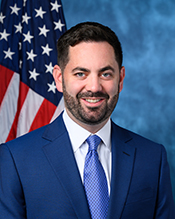
Rep. Michael Lawler
Sponsored bills
Maddy summaryThe Take Care of America's Veterans Act is a comprehensive legislative bill designed to improve benefits, healthcare access, and administrative efficiency for veterans and their families. The bill directly affects veterans, their surviving spouses, caregivers, and the Department of Veterans Affairs (VA). Key provisions include expanding disability compensation for combat-related retirees, allowing remarried surviving spouses to retain certain survivor benefits, and increasing compensation rates for specific disability conditions like sleep apnea and tinnitus. The legislation also mandates significant healthcare improvements, such as establishing a pilot program to coordinate care between the VA and Medicare, creating a formulary for prosthetic items, and requiring the VA to provide lactation spaces in all medical centers. Additionally, the bill introduces administrative reforms to speed up claims processing, prohibit denying claims solely for missed medical appointments, and enhance oversight of the VA's disability rating system.
Maddy summaryThe Essential Caregivers Act of 2026 requires nursing homes, long-term care hospitals, rehabilitation facilities, and intermediate care facilities to allow two chosen family members or friends to visit residents during times when regular visitation is suspended. These essential caregivers must agree to follow the facility's existing safety and infection control rules, which are no more restrictive than those applied to staff. While facilities can limit access for the first seven days of a suspension or deny entry if a caregiver shows symptoms of a serious infectious disease, they cannot block visits for end-of-life care. Additionally, the bill mandates that complaints about denied access to essential caregivers be investigated and resolved within three days.
Maddy summaryThis bill requires Medicare Advantage plans to implement electronic pre-approval systems for medical services by 2028 and meet transparency reporting standards starting in 2027. Plans must publicly report data on approval/denial rates, appeal outcomes, response times, and technology use for pre-approval requests, including details on how denials relate to clinical criteria. It establishes a 24-hour response timeframe for certain requests and mandates annual reviews of pre-approval requirements based on data and input from seniors and providers. The law directly affects Medicare Advantage plans, seniors enrolled in these plans, and healthcare providers who submit pre-approval requests. These changes aim to make the pre-approval process faster, more transparent, and more accountable for seniors seeking covered medical services.
Maddy summaryThis bill directs the U.S. Secretary of State to create and execute a plan to end the operations of the United Nations Relief and Works Agency for Palestine Refugees in the Near East (UNRWA) across the Middle East. The legislation requires a detailed strategy that assesses current programs like education and healthcare, identifies new organizations to take over these services, and outlines how to fund and oversee the transition without interrupting aid. Once the plan is submitted to Congress, the State Department must begin implementing it within a year while coordinating with host countries and international partners. The bill emphasizes maintaining service continuity and ensuring that any successor groups meet strict standards for transparency and accountability.
Maddy summaryThe BUSES Act establishes a national minimum standard requiring that restrictions on bus engine idling cannot last for less than 15 minutes, applying to both over-the-road and school buses. This rule prevents states and local governments from enforcing shorter idling limits through their existing air quality plans. Additionally, the legislation prohibits private citizens from suing bus owners or operators for violating these idling rules and bans state programs that pay individuals for reporting such violations.
Maddy summaryHR 3978, the Nuclear REFUEL Act, amends the Atomic Energy Act to exclude certain nuclear fuel reprocessing methods from the definition of a "production facility." Specifically, it exempts facilities that reprocess spent nuclear fuel without separating plutonium from other elements, or continue uranium enrichment. This change would directly affect nuclear fuel recycling companies and facilities seeking to process spent reactor fuel under streamlined regulations. The bill focuses on altering regulatory classification to potentially simplify licensing for specific recycling processes.
Maddy summaryThis resolution expresses support for designating July 10th as Journeyman Lineworkers Recognition Day to honor the workers who maintain the nation's electrical grid. The bill specifically recognizes the dangerous conditions these employees face, such as working at heights near live power lines and responding to disasters like hurricanes and wildfires. It also commemorates Henry Miller, the first president of the International Brotherhood of Electrical Workers, who died on July 10, 1896, while performing his duties. Ultimately, the measure encourages the public to observe this day with reflection on the contributions of lineworkers.
Maddy summaryThis resolution honors the memory of Corey Comperatore, a veteran and volunteer firefighter from Sarver, Pennsylvania, who passed away on July 13, 2024. It formally acknowledges his service to his community and country while mourning his loss as a husband, father, and hero. The House of Representatives is asked to express its condolences and celebrate his life through this commemorative measure.
Maddy summaryThis bill requires the Medicare program to ensure specific electronic reporting methods (like digital clinical quality measures) are available for Accountable Care Organizations (ACOs) participating in the Medicare Shared Savings Program from 2025 through 2029. It clarifies that ACOs won’t be penalized for missing data from certain participants if they meet other reporting rules and demonstrate the participant couldn’t collect data via the required digital method. Additionally, it creates a voluntary pilot program (2028-2032) where selected ACOs report only two quality measures digitally instead of all required measures, with special rules about how this data affects performance scoring. The bill directly affects MSSP ACOs and changes their quality reporting requirements and flexibility.