Maddy summaryThis bill amends the tax code to change how small business owners calculate a deduction for pass-through business income. It caps the deduction at $25,000 annually for eligible small businesses (defined as those with qualified business income under $25,000), while raising the income threshold for phaseout to $200,000 ($400,000 for joint filers). The changes simplify rules around loss carryovers and wage calculations for this deduction. The bill takes effect for tax years beginning after December 31, 2025.
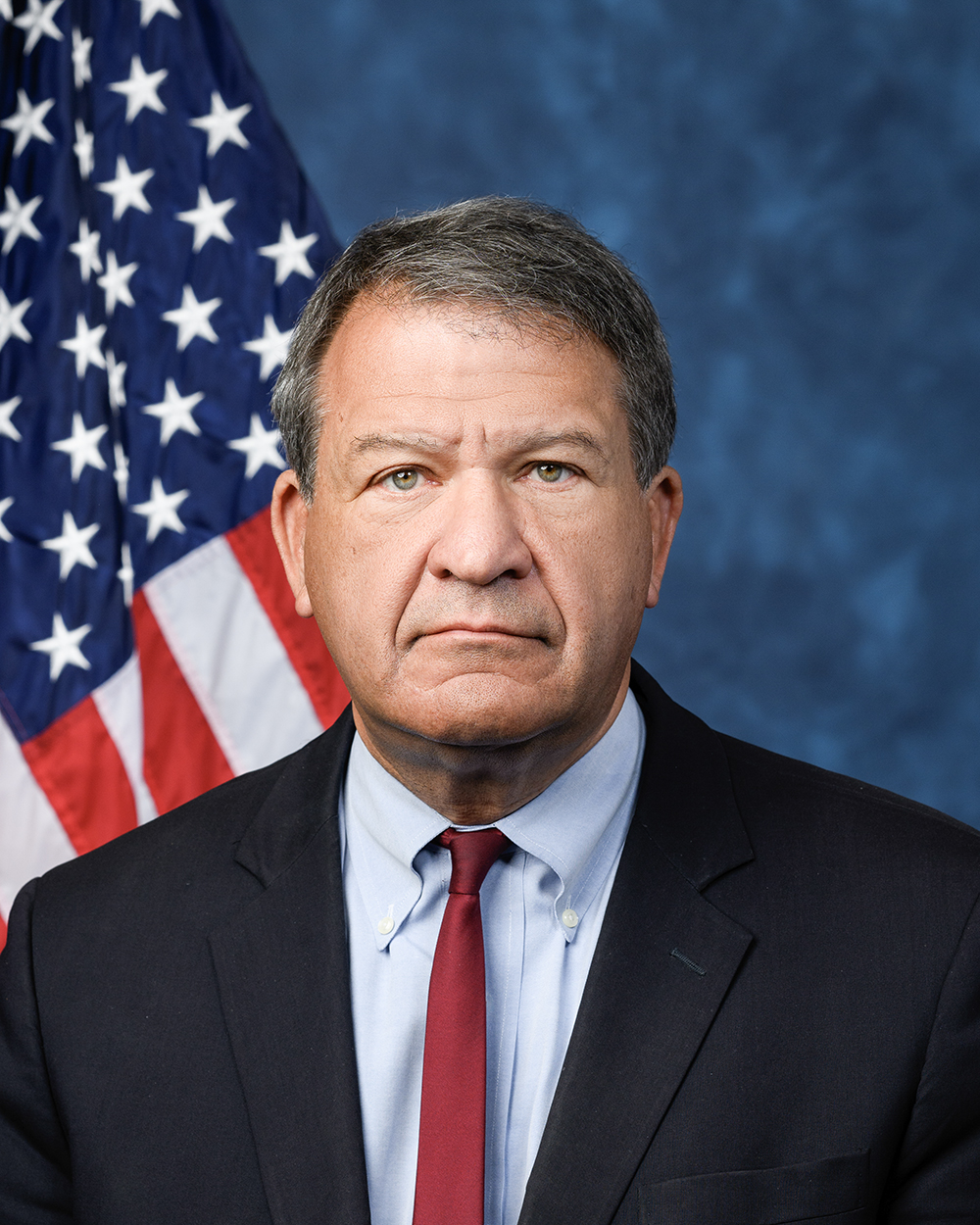
Rep. George Latimer
Sponsored bills
Maddy summaryThis bill authorizes $7.5 billion annually from fiscal years 2027 through 2031 for grants to states and rail agencies to fund intercity passenger rail projects. It directly affects state transportation departments and rail operators by providing long-term federal funding for building, upgrading, or operating passenger rail services. The key mechanism is a multi-year funding authorization for the Federal-State Partnership program, with up to 2% of each year's funds reserved for project oversight. This reauthorization replaces previous funding levels and aims to support expanded rail networks across the country.
Maddy summaryHR 3184, the PFAS Alternatives Act, funds research to develop turnout gear (firefighter safety clothing) without harmful PFAS chemicals, directly affecting firefighters who wear this gear. It authorizes $25 million annually (2025-2029) for grants to eligible organizations to research and test PFAS-free gear, requiring partnerships with firefighting groups to translate findings into practice. The bill also allocates $2 million yearly (2027-2031) for training programs on safe gear use and decontamination. Its goal is to reduce firefighters' exposure to chemicals linked to occupational illnesses during operations.
Maddy summaryHR 3199, the Captive Primate Safety Act of 2025, bans the import, export, sale, breeding, and possession of certain nonhuman primates (including chimpanzees, gorillas, and lemurs) in interstate or foreign commerce. It directly affects pet owners, breeders, zoos, and wildlife facilities that currently handle these primates. The bill allows limited exceptions for existing owners who register their primates with the U.S. Fish and Wildlife Service within 180 days, agree to stop breeding/selling, and prevent public contact. It amends the Lacey Act to implement these restrictions, with enforcement beginning immediately regardless of regulatory timelines.
Maddy summary# Summary of the SHIPS for America Act This comprehensive legislation focuses on strengthening the U.S. maritime industry, shipbuilding capacity, and maritime workforce to enhance national security and economic competitiveness. ## Key Areas of Focus 1. **Shipbuilding & Maritime Infrastructure** - Establishes a United States Center for Maritime Innovation to accelerate adoption of commercial technologies - Creates a National Shipbuilding Research Program - Requires an annual survey of anticipated commercial vessel construction - Includes provisions for streamlined environmental reviews of maritime infrastructure 2. **Workforce Development** - Establishes the United States Merchant Marine Career Retention Program to maintain mariner qualifications - Creates Centers of Excellence for Domestic Maritime Workforce Training and Education - Implements military-to-maritime transition programs - Establishes a Maritime Career and Technical Education Advisory Committee 3. **Education & Training** - Expands educational assistance for merchant mariners - Creates eligibility for Naval Postgraduate School for merchant mariners - Establishes maritime education programs from K-12 through higher education - Provides for international exchanges for mariners and naval architects 4. **National Security & Strategic Readiness** - Requires reports on National Defense Reserve Fleet utilization - Includes measures to de-risk the maritime sector from Chinese influence - Enhances shipbuilding capacity for national security needs - Establishes programs to ensure sufficient mariner workforce for national defense 5. **Funding Mechanisms** - Authorizes appropriations from the Maritime Security Trust Fund - Includes funding for workforce programs, education, and shipbuilding initiatives - Establishes specific funding levels for various programs over multiple fiscal years The legislation aims to create a sustainable domestic maritime industrial base that supports both commercial shipping and national defense requirements, with a particular emphasis on developing and retaining a skilled U.S. maritime workforce.
Maddy summaryHR 3112, the Better CARE for Animals Act of 2025, strengthens enforcement of the federal Animal Welfare Act by requiring dealers and exhibitors to hold valid licenses for animal sales or transport (Section 4). It expands enforcement authority by allowing the Attorney General to sue violators for up to $10,000 per day, seize animals, and seek injunctions (Section 20), while clarifying that courts can address violations of related rules and regulations. The bill directly affects animal dealers, exhibitors, the USDA, and the Department of Justice, creating clearer pathways for holding violators accountable. Key provisions include updating definitions, broadening inspection powers to cover all regulations, and directing penalty funds toward temporary animal care costs during legal proceedings.
Assault Weapons Ban of 2025 This bill makes it a crime to knowingly import, sell, manufacture, transfer, or possess a semiautomatic assault weapon (SAW) or large capacity ammunition feeding device (LCAFD). The prohibition does not apply to a firearm that is (1) manually operated by bolt, pump, lever, or slide action, except for certain shotguns; (2) permanently inoperable; (3) an antique; (4) only capable of firing rimfire ammunition; or (5) a rifle or shotgun specifically identified by make and model. The bill also exempts from the prohibition the following, with respect to a SAW or LCAFD: importation, sale, manufacture, transfer, or possession related to certain law enforcement efforts, or authorized tests or experiments; importation, sale, transfer, or possession related to securing nuclear materials; and possession by a retired law enforcement officer. The bill permits continued possession, sale, or transfer of a grandfathered SAW, which must be securely stored. A licensed gun dealer must conduct a background check prior to the sale or transfer of a grandfathered SAW between private parties. The bill permits continued possession of, but prohibits sale or transfer of, a grandfathered LCAFD. Newly manufactured LCAFDs must display serial number identification. Newly manufactured SAWs and LCAFDs must display the date of manufacture. The bill also allows a state or local government to use Edward Byrne Memorial Justice Assistance Grant Program funds to compensate individuals who surrender a SAW or LCAFD under a buy-back program.

Maddy summaryThe SHIELD Act (HR 3101) would create a federal grant program to expand legal representation for immigrants facing deportation. It authorizes $100 million annually for fiscal years 2026-2027 to fund workforce development, training, and infrastructure for legal services organizations. Eligible recipients include states, local governments, community organizations, and educational institutions that provide immigration legal services. Funds would support recruitment and training of legal staff, technical assistance, and coordination of services to better serve immigrants in deportation proceedings, addressing the current shortage of representation that affects most immigrants in deportation cases who cannot afford attorneys.
Maddy summaryThis bill prohibits U.S. federal executive agencies from renewing or entering contracts for specific consumer products containing PFOS or PFOA (types of harmful PFAS chemicals) after its effective date. Covered items include nonstick cookware, cooking utensils, and furniture/carpet treated with stain-resistant coatings. Agencies must prioritize purchasing PFAS-free alternatives when available and practical for these items. The law applies to all contracts entered into six months after enactment.
Maddy summaryThis bill designates the U.S. Postal Service facility at 216 Cumberland Street in Rochester, New York, as the "Minister Franklin Florence Memorial Post Office." It updates all official references in federal laws, maps, regulations, and documents to reflect this new name. The bill does not create new policies, funding, or services - it solely changes the facility's official designation for commemorative purposes. It directly affects how the location is identified in government records but has no broader policy impact.