Maddy summaryHR 7127, the FAIR Act, establishes pay adjustments for federal employees in 2025. It increases base pay by 4% for most federal workers under statutory pay systems and for "prevailing rate" employees (like those in specific geographic areas), while raising locality pay rates by 3.4%. The bill directly affects all federal employees receiving pay under these systems, as it modifies their 2025 salary calculations. These changes are based on statutory formulas under Title 5 of the U.S. Code, with no new policy mechanisms beyond the specified percentage increases. The adjustments apply to pay rates in effect as of the end of fiscal year 2024.
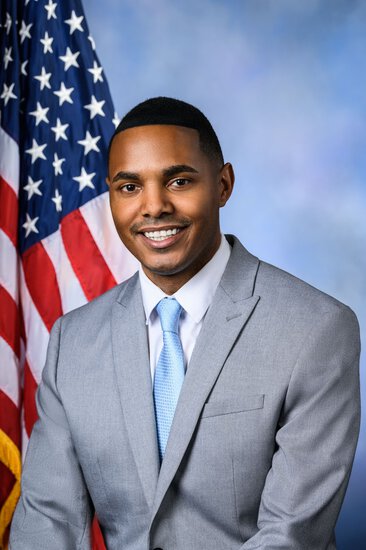
Rep. Ritchie Torres
Sponsored bills
Maddy summaryHR 7108, the Expanding Access to Mental Health Services in Schools Act of 2024, authorizes federal grants to help high-need public schools hire and retain mental health staff. It targets schools that meet specific criteria: being in the top 15% of need (based on student poverty or other metrics) and failing to meet minimum staffing ratios for counselors, psychologists, or social workers. Grants fund recruitment (through salary stipends or loan repayment), retention (via professional development or incentives), and evidence-based mental health services, with grantees required to contribute 25% matching funds and report annually on provider numbers, demographics, and student-to-provider ratios. The program runs through 2029 and requires all services to comply with privacy laws like FERPA.
Low Income Housing Tax Credit Landlord Accountability Act of 2024 or the LIHTC Landlord Accountability Act of 2024 This bill requires inspections and physical condition assessments of buildings that qualify for the low-income housing tax credit. It also requires annual reporting on the basis of qualified low-income buildings and other information (currently, such reports are discretionary).
Maddy summaryThe Stronger Communities through Better Transit Act establishes a new federal grant program to improve public transportation service. It provides funding to urban areas, states, and Indian tribes to cover up to 50% of public transit operating costs (up to 80% in persistent poverty areas and 100% for Indian tribes), with requirements to report on service frequency, access to jobs, and conduct community surveys. The program mandates that a majority of funds must benefit underserved communities and areas of persistent poverty, defined as census tracts with high poverty rates or minority populations. Recipients must maintain their transit funding levels and report on improvements in access to essential services. The bill authorizes $20 billion annually for fiscal years 2024-2027.
Maddy summary# Summary of "Protecting Communities from Plastics Act" (Title II) This comprehensive legislation addresses the environmental, health, and environmental justice impacts of plastics production and use. Key provisions include: ## Environmental Justice Protections - Requires environmental justice assessments for permits of "covered facilities" (plastics manufacturing facilities) - Mandates consultation with "fenceline communities" (communities near facilities) including: * Prompt notification in multiple languages * Public hearings with translation services * Community benefit agreements - Establishes a 45-day waiting period before approving permits after public hearings ## Regulatory Requirements - Amends Clean Air Act to establish new source performance standards for plastics facilities - Requires continuous monitoring of air emissions (benzene, nitrogen oxides, etc.) - Amends Clean Water Act to prohibit discharge of plastic pellets in wastewater - Requires financial assurance for facility closure and emergency response - Prohibits new facility permits within 5 miles of community buildings (schools, hospitals, etc.) ## Research and Monitoring - Requires study of microplastics in food (including fish, meat, fruits, vegetables) - Mandates research on microplastics in human bodies (urine, breastmilk, stool) - Establishes a pilot program to test technologies for microplastic removal - Requires inventory of plastics manufacturing and distribution ## Additional Provisions - Temporary permitting moratorium on new plastics facilities (during "temporary pause period") - Requires listing of discarded polyvinyl chloride as hazardous waste - Limits National Recycling Strategy to exclude chemical recycling technologies - Creates grants to reduce single-use plastics in agricultural packaging - Requires biodegradable alternatives to plastic weed barriers The legislation aims to address the disproportionate environmental and health impacts of plastics production on vulnerable communities while establishing comprehensive regulatory frameworks for plastics manufacturing and disposal.

Maddy summaryThis bill restores visa eligibility for immigrants who had diversity visas allocated for fiscal years 2017-2022 but were denied entry due to specific travel restrictions (like Executive Orders 13769/13780 or related proclamations) or pandemic-related delays. The State Department must notify affected individuals within 90 days of the bill’s enactment, giving them one year to confirm they wish to proceed with their visa applications. Unused visas from those years can be reallocated without counting against current annual limits, and applicants who fail to respond or are denied for standard reasons (like education requirements) lose eligibility. The policy directly affects individuals impacted by these specific past barriers to immigration.
Maddy summaryThe Affordable Connectivity Program Extension Act of 2024 allocates $7 billion in funding for the Affordable Connectivity Program (ACP) during fiscal year 2024. The ACP provides subsidies to low-income households to help cover the cost of internet service and connected devices like laptops or tablets. This funding ensures the program can continue supporting eligible households throughout the year, with the money remaining available until fully spent. The bill extends existing program funding without changing eligibility criteria or service requirements.
Maddy summaryHR 6922, the Securing Facilities for Mental Health Services Act, amends Section 242(b)(1) of the National Housing Act to adjust the structure of mortgage insurance provisions for hospitals. The bill revises punctuation and renumbers subsections to clarify that hospitals are eligible for mortgage insurance parity under existing law. This procedural change does not alter substantive requirements but ensures consistent application of the provision. The amendment takes effect upon the bill's enactment.
Maddy summaryHR 6905, the Building Collapse Prevention Act, requires the Department of Housing and Urban Development (HUD) to establish a program where the National Institute of Standards and Technology (NIST) inspects buildings containing federally assisted rental housing after specific safety events. It directly affects residents in housing funded by federal programs like public housing (under the 1937 Housing Act), Section 8 rental assistance, and supportive housing for the elderly or disabled. The law mandates NIST inspections following local safety violations that could cause collapse or after a building collapse occurs, to identify structural issues. This creates a formal process for evaluating safety risks in vulnerable federally supported housing units.
Maddy summaryThis bill designates the U.S. Postal Service facility at 86 Main Street in Haverstraw, New York, as the "Paul Piperato Post Office Building." It updates all official references in federal law, maps, and documents to reflect this new name. The bill does not change postal services, funding, or affect any specific group of people; it solely modifies the facility's official designation. This is a routine naming resolution with no substantive policy provisions.