

Maddy summaryThis bill (HR 9255) is a simple naming resolution that renames a specific U.S. Postal Service facility. It designates the post office at 114 John Street in New York, New York, as the "Jack Greenberg Post Office." The bill requires all federal references to the building (in laws, maps, documents, etc.) to use the new name. This is a procedural change affecting only the official name of that single post office location.
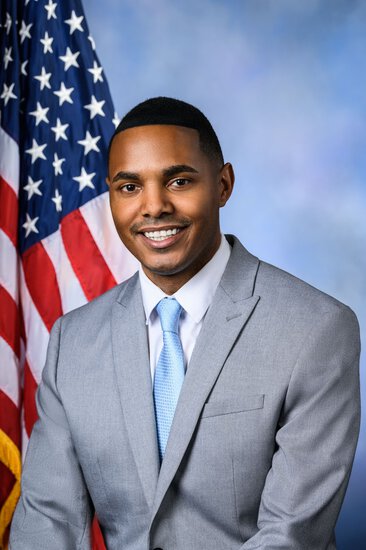
Rep. Ritchie Torres
Sponsored bills
Maddy summaryThe NO BAN Act (HR 9244) prohibits U.S. immigration authorities from denying visas or entry based on national origin, religion, or sex. It amends immigration law to explicitly ban such discrimination in visa decisions and tightens restrictions on the president’s power to suspend entry of certain groups under Section 212(f). The bill requires specific evidence, narrow tailoring, time limits, and congressional notification for any entry restriction, while mandating public reports on visa denials and waivers. It directly affects nonimmigrant visa applicants (e.g., students, workers) and federal agencies administering immigration policy.
Maddy summaryHR 9253, the National Gun Violence Research Act, repeals longstanding restrictions that blocked federal funding for gun violence research, including the 1996 Dickey Amendment. It establishes a National Gun Violence Research Program to support scientific studies on gun-related injury and death, with $200 million authorized over six years (2025-2030). The program directs agencies like the CDC, NIH, and National Institute of Justice to fund research, train researchers, develop safety standards, and share gun trace data with researchers through new protocols. This bill directly affects federal research institutions and public health agencies by enabling evidence-based study of gun violence causes and prevention strategies.
Maddy summaryThe Residential Recovery for Seniors Act would expand Medicare Part A coverage to include specific types of residential substance use disorder treatment for seniors. It creates three new coverage categories: low-intensity, high-intensity, and medically managed residential treatment, each with defined service requirements and facility standards. Medicare would cover these services when provided by certified facilities meeting specific clinical and operational criteria, including regular need assessments and adherence to evidence-based treatment standards. The bill also establishes a prospective payment system for these services to be implemented by October 2025, with initial payments matching current costs and future payments adjusted for inflation.
Maddy summaryThis bill amends the Omnibus Crime Control and Safe Streets Act to expand eligibility for federal crime prevention grants. It specifically allows private businesses classified under NAICS code 445131 (Bakeries and Tortilla Manufacturing) to use grant funds for security equipment like panic buttons and surveillance systems. The change directly affects small bakery and tortilla businesses seeking to enhance safety through federal funding. The bill modifies existing grant provisions without creating new funding or altering broader policy.
Maddy summaryH.J. Res. 193 proposes a constitutional amendment to eliminate legal immunity for federal officials, including the President, from criminal prosecution for actions taken while performing official duties. It also prohibits the President from granting a pardon to themselves. The amendment would apply to all federal officers (such as the President, Vice President, and members of Congress) except for Congress members acting in their legislative role as defined in the Constitution. If ratified by 38 states, this change would become part of the U.S. Constitution, requiring no further congressional action.
Maddy summaryThe 9/11 Responder and Survivor Health Funding Correction Act of 2024 makes several key changes to the World Trade Center Health Program that serves 9/11 responders and survivors. It allows licensed mental health providers (not just physicians) to conduct mental health evaluations for program participants and extends the time period for adding new health conditions from 90 to 180 days. The bill also adjusts enrollment calculations by removing deceased individuals from program counts and provides $2.97 billion in new funding for fiscal year 2024 with a minimum annual funding level of $20 million for 2025. These changes aim to improve access to care while ensuring stable, long-term funding for the program that provides medical services to those affected by the 9/11 attacks.
Maddy summaryHRES 1355 is a non-binding resolution supporting the designation of July 10 as Journeyman Lineworkers Recognition Day. It honors lineworkers who maintain electrical infrastructure under hazardous conditions, including during disasters, and commemorates Henry Miller, the first president of the International Brotherhood of Electrical Workers, who died on July 10, 1896, while troubleshooting an electrical outage. The resolution encourages public recognition of these workers' contributions but does not create new laws or policies.
Maddy summaryHRES 1333 is a symbolic House resolution recognizing June as National Caribbean American Heritage Month. It affirms the significant contributions of Caribbean Americans to U.S. history, culture, and society, and encourages the public to observe the month through ceremonies and activities. The resolution does not create new laws, programs, or impose requirements on any group; it is a non-binding expression of support for the established observance. This follows annual presidential proclamations since 2006, as noted in the resolution's historical context.
Maddy summaryHRES 1329 is a resolution formally acknowledging and apologizing for the U.S. government's historical discrimination against lesbian, gay, bisexual, and transgender (LGBT) individuals who served in the military, Foreign Service, and Federal civil service. It condemns past policies - including the 1949 Department of Defense decree banning "homosexual personnel" and the "Don't Ask, Don't Tell" policy (1993-2011) - that led to the discharge or termination of thousands of LGBT service members and employees. The resolution offers a formal apology on behalf of the United States to affected individuals and their families, reaffirming the government's commitment to equal treatment without authorizing legal claims or providing benefits. This is a symbolic act of acknowledgment, not a policy change or financial remedy.