

Maddy summaryThis bill expands TRICARE coverage to allow military service members and their dependents to obtain up to a full year's supply of contraception in a single fill (365 days) at military pharmacies, retail pharmacies, or through TRICARE's mail-order program. It requires TRICARE to implement this coverage within 180 days of enactment and mandates outreach to inform beneficiaries and providers within 90 days of implementation. The policy directly affects active-duty military members and their eligible dependents enrolled in TRICARE, removing prior restrictions on supply limits for contraceptive prescriptions. This change simplifies access by eliminating the need for frequent refills while maintaining existing coverage requirements under TRICARE.
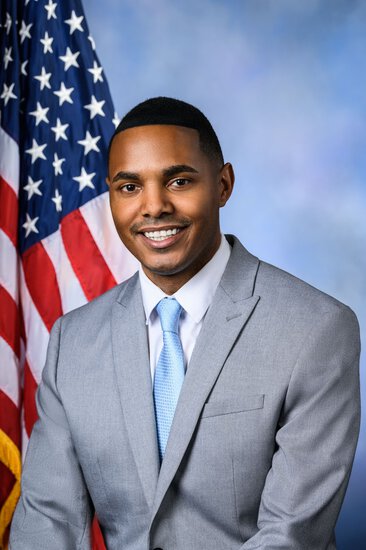
Rep. Ritchie Torres
Sponsored bills
Maddy summaryHR 9670, the Emergency Electric Grid Stabilization Act, authorizes the federal government to provide immediate assistance to states facing electricity shortages or grid failures. The Secretary of the Army (via the Chief of Engineers) must deliver technical help, temporary power, or equipment within 10 days of a state request, continuing until the grid is stabilized through federal-state coordination. The bill requires monthly progress reports to specific congressional committees and allocates $1 billion in funding for this emergency response. It directly affects states experiencing grid disruptions, such as those caused by natural disasters or equipment failures, by enabling rapid federal intervention to restore reliable electricity service.
Maddy summaryThis bill amends the Justice for United States Victims of State Sponsored Terrorism Act to establish a fifth round of payments for eligible victims of state-sponsored terrorism, requiring all authorized payments to be distributed by December 31, 2024. It directs specific funds into the Victims of State Sponsored Terrorism Fund, including $898 million from the Binance case settlement and 50% of annual unobligated balances from DOJ and Treasury forfeiture funds starting December 1, 2024. The bill mandates annual payments beginning January 1, 2025, for eligible claimants and requires the Special Master to submit annual reports on fund activity to Congress, including detailed deposit and disbursement records. It directly affects victims of state-sponsored terrorism, the Special Master administering the fund, and federal agencies managing forfeiture funds.
Maddy summaryThis bill creates a new occupational category (code 31-1123) within the federal Standard Occupational Classification system specifically for direct support professionals (DSPs) who assist people with intellectual or developmental disabilities. It directly affects DSPs, state agencies, and federal data collectors by reclassifying their work - currently grouped under home health aides - into a distinct category. The key mechanism is revising the SOC system to better track DSP workforce data, address high turnover rates (43% nationally), and recognize their unique role in promoting clients' independence and community inclusion. This change aims to improve data accuracy for addressing staffing challenges, without altering service delivery or benefits.
Maddy summaryThe BASIC Act (HR 9669) creates a system to help college students access federal assistance programs that address basic needs like food, housing, and healthcare. It requires federal agencies to share data to identify students who might qualify for programs like SNAP, Medicaid, or housing assistance, and mandates that colleges provide students with information about these programs. The bill authorizes $1 billion in funding for planning grants (up to $75,000 per institution for 2 years) and implementation grants (up to $1 million per institution for 5 years) to help colleges develop and carry out strategies to address student food insecurity, housing insecurity, and other basic needs. Community colleges, historically Black colleges, and other minority-serving institutions receive priority for funding, with at least 25% of funds reserved for each category.
Maddy summaryThe Kids Online Safety Act (HR 7891) would require major online platforms (with high revenue or user numbers) to implement safety features for children and teens, including default protective settings, parental controls, and age verification. It would mandate platforms to report annually on risks to minors and their safety measures, and prohibit advertising harmful products (like tobacco, alcohol, or gambling) to minors. The bill directly affects social media platforms, online video games, and video streaming services that are used by minors, with the goal of preventing mental health harms, compulsive usage, and cyberbullying.
Maddy summaryThe JUDGES Act of 2024 authorizes new federal district court judgeships across multiple states to address rising case backlogs in the federal judiciary. It specifies new permanent judgeships for districts including California (multiple districts), Florida, Texas, Delaware, Indiana, Iowa, New Jersey, and New York, with implementation phased through 2035, and creates temporary judgeships for Oklahoma districts with specific vacancy rules. The bill authorizes funding for these positions and requires reports on judicial caseloads and detention space needs, while mandating public access to the Judicial Conference's judgeship recommendations. The bill directly affects federal district courts in the specified locations by increasing judicial staffing to handle growing case volumes.
Maddy summaryHRES 1448 is a non-binding House resolution stating that the House believes every person has the right to emergency health care, including abortion care, during medical emergencies. It specifically addresses concerns that abortion restrictions force medical providers to choose between treating patients in life-threatening situations or risking criminal charges. The resolution highlights that such restrictions disproportionately harm Black, Indigenous, people of color, immigrants, low-income individuals, and LGBTQI+ patients. It does not change existing laws but expresses congressional support for ensuring access to emergency care without legal barriers. The resolution was introduced by multiple House members and referred to the Energy and Commerce Committee.
Maddy summaryThis bill requires the FEMA Administrator to reimburse public employee retirement systems for costs related to accidental disability retirements and deaths of workers who participated in 9/11 rescue, recovery, or cleanup efforts. It specifically authorizes $3.4 billion in FY2024 funding for these reimbursements, which must be used solely by eligible retirement systems (those with members who worked at the World Trade Center site). The funds cannot be diverted to other purposes or entities. This policy change directly affects retirement systems managing benefits for first responders and workers injured or killed during the 9/11 operations.
Maddy summaryHRES 1437 is a ceremonial resolution designating the week beginning September 9, 2024, as "National Hispanic-Serving Institutions Week." It recognizes Hispanic-serving institutions (HSIs) - colleges and universities with at least 25% Hispanic enrollment - and their role in educating low-income students, advancing economic mobility, and serving 31.7% of all undergraduate students. The resolution calls for the public and organizations to observe this week with ceremonies and activities during Hispanic Heritage Month. It does not create new laws, allocate funding, or change existing policies - it is purely a symbolic gesture of recognition.