

Dentist and Optometric Care Access Act of 2025 or the DOC Access Act of 20 25 This bill prohibits private health insurance plans from setting rates for items and services, except for dental cleanings, provided by a doctor of optometry, of dental surgery, or of dental medicine (or an employer of such a doctor) for which the plan does not pay a substantial amount. Additionally, an agreement between a plan and such a doctor for limited scope dental or vision benefits may last longer than two years only with the prior acceptance of the doctor for each term extension. Plans also may not restrict such a doctor's choice of laboratories or suppliers. Such doctors may elect to waive the application of the payment amount and choice of laboratories provisions of this bill. The bill does not supersede state laws regarding health insurers and dental or vision benefit plans.
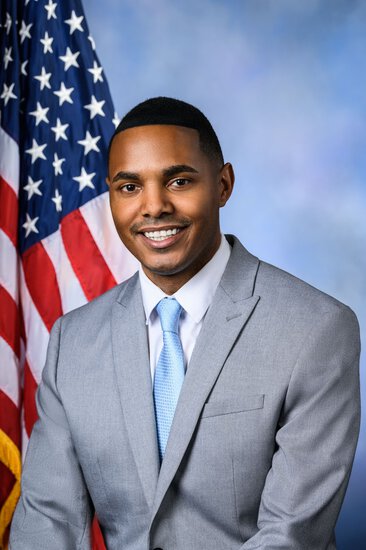
Rep. Ritchie Torres
Sponsored bills
Maddy summaryThe American Victims of Terrorism Compensation Act amends the Justice for United States Victims of State Sponsored Terrorism Act to increase funding for victims of terrorism. It directs the transfer of approximately $1.5 billion from the Binance Holdings Limited case, plus 50% of excess unobligated balances from Department of Justice and Treasury forfeiture funds, into the Victims Fund. The bill establishes deadlines for agencies to deposit funds (within 30 days of receipt or 15 days after enactment), requires annual reports on fund activity, and authorizes annual payments to eligible claimants starting in 2026. This legislation directly affects terrorism victims who receive compensation from the fund and federal agencies that handle forfeited assets from terrorism-related cases.
More Options to Develop and Enhance Remote Nutrition in WIC Act of 2025 or the MODERN WIC Act of 2025 This bill permanently allows individuals to remotely certify their eligibility for, and receive benefits through, the Special Supplemental Nutrition Program for Women, Infants, and Children (WIC). Specifically, the bill requires that a state agency allow an individual seeking a WIC certification, recertification, or a nutritional risk evaluation to do so by phone or through video teleconference, in addition to the in-person option. A state agency has 90 days to collect data for a nutritional risk evaluation for a remotely certified individual. Further, a state agency may consider an applicant who meets the income eligibility standards to be temporarily eligible on an interim basis to participate in the program and may certify the individual for immediate participation without waiting for a nutritional risk evaluation. The bill also allows states to provide benefits on WIC electronic benefit transfer cards through mail or remote issuance instead of requiring participants to pick up or reload benefits in person at a WIC office. Further, the Department of Agriculture must report to Congress about the use of remote technologies and other digital tools in the WIC program. Currently, individuals are generally required to be physically present to certify their WIC eligibility and receive benefits, with exceptions. The Food and Nutrition Service has temporarily waived these requirements and allowed remote certification and benefits using authorities that were provided by laws that were enacted to address COVID-19.
Maddy summaryThe PURE Water Act (HR 1441) creates a federal tax credit for individuals who install qualifying home water filtration systems. It allows a 20% credit on primary residence filtration costs and 10% on secondary residence costs, capped at $2,500 per tax year, with unused portions carryable forward. The credit applies only to systems that remove at least 90% of lead, PFAS, and PFOA from drinking water, excluding maintenance costs. This directly affects individual taxpayers who purchase qualifying filters for their U.S. homes, effective for tax years beginning after December 31, 2024.
Maddy summaryHR 1410 expands access to mental health care for 9/11 responders and survivors by allowing licensed mental health providers (not just physicians) to conduct initial health evaluations and certifications under the World Trade Center Health Program. It adjusts the program’s funding formula to account for changing enrollment numbers by linking annual funding to the previous year’s enrollment ratio, and clarifies that deceased individuals are excluded from enrollment counts. The bill also extends the timeframe for adding new health conditions to the program’s list and requires a 2028 report assessing long-term funding needs through 2090. These changes aim to streamline eligibility, improve care access, and ensure sustainable funding for the program.
Maddy summaryThe Food Deserts Act (HR 484) creates a federal grant program to help establish grocery stores in underserved communities by providing capitalization grants to states. States would use these grants to build revolving funds that make low-interest loans to grocery stores meeting specific criteria, such as offering unprocessed foods, affordable pricing, and local hiring. The program prioritizes stores that source from local farms, provide nutrition education, and commit to keeping healthy foods in stock, while requiring applicants to contribute 20% of loan costs from non-federal funds. It authorizes $150 million for fiscal year 2026 to support these loans, which must be repaid over up to 30 years to replenish the revolving fund for future use.
Maddy summaryHR 1330 establishes the Smithsonian National Museum of the American Latino, authorizing its location within the National Mall's "Reserve" area. The bill requires the Smithsonian Board to coordinate with federal agencies managing potential museum sites, including notifying relevant congressional committees before land transfers. It mandates that the museum's exhibits and programs accurately represent the diverse cultures, histories, and viewpoints of Hispanic and Latino communities in the U.S., seeking input from a broad range of community experts. The Smithsonian must also submit regular reports to Congress detailing compliance with these representation requirements.
Maddy summaryThe Office of Gun Violence Prevention Act of 2025 would create a new office within the Department of Justice to coordinate federal efforts on reducing gun violence. The office, led by a Director appointed by the Attorney General, would integrate existing DOJ programs, evaluate data gaps, and develop evidence-based recommendations for Congress and the President. It would also establish an advisory council including survivors of gun violence, public health officials, and community representatives to guide its work. The office would produce annual reports detailing gun violence trends and policy proposals, while collaborating with agencies like Health and Human Services and the FBI.
United States-Israel Defense Partnership Act of 2025 This bill requires or authorizes certain actions to increase defense-related cooperation between the United States and Israel. Specifically, the bill requires the Department of Defense (DOD) to establish a cooperative program, with the concurrence of Israel's Ministry of Defense (MOD), to develop and deploy advanced technologies for countering unmanned systems that threaten the United States and Israel; establish in Israel an office of the Defense Innovation Unit (an organization that focuses on rapidly fielding and scaling commercial technology across the U.S. military); and seek to engage Israel's MOD on the ascension of Israel into the national technology and industrial base (currently defined in law as the persons and organizations engaged in research, development, production, integration, services, or information technology activities conducted within the United States, the United Kingdom, Australia, New Zealand, and Canada). The bill authorizes DOD, upon request of Israel's MOD, to jointly conduct research, development, test, and evaluation (RDT&E) of emerging technologies such as artificial intelligence and robotics to meet defense challenges. Additionally, the bill extends the authority for DOD to (1) carry out RDT&E on a joint basis with Israel to establish anti-tunnel and counter unmanned aerial systems capabilities through 2028, and (2) transfer defense articles intended for use as reserve stocks for Israel through January 1, 2029.
Maddy summaryHR 1269, the Honoring Our Fallen Heroes Act of 2025, expands benefits for public safety officers (like police and firefighters) who develop certain cancers linked to their work. It adds 22 specific cancers - including lung, mesothelioma, and breast cancer - to the list of conditions presumed to be "exposure-related" and sustained in the line of duty. This presumption applies if the officer served at least 5 years, was diagnosed with the cancer within 15 years after last active duty, and the cancer directly caused death or permanent disability. The bill also establishes a process for adding new cancers every 3 years based on medical evidence from agencies like NIOSH, and allows claims to be filed within 3 years of the law's enactment.