

Maddy summaryHR 6181, the John Lewis Every Child Deserves a Family Act, prohibits child welfare agencies receiving federal funds from discriminating against children, youth, or prospective foster/adoptive parents based on religion, sex (including sexual orientation and gender identity), or marital status. It directly affects LGBTQ youth in foster care - overrepresented at 30% of the system - who face higher risks of trauma, group home placements, and suicide attempts compared to non-LGBTQ peers. Key provisions require agencies to collect data on sexual orientation and gender identity, establish a National Resource Center for LGBTQ youth support, provide cultural competency training, and eliminate discriminatory practices. The law aims to improve safety, permanency, and placement stability by expanding access to family-based care and ensuring equitable services for all children in the system.
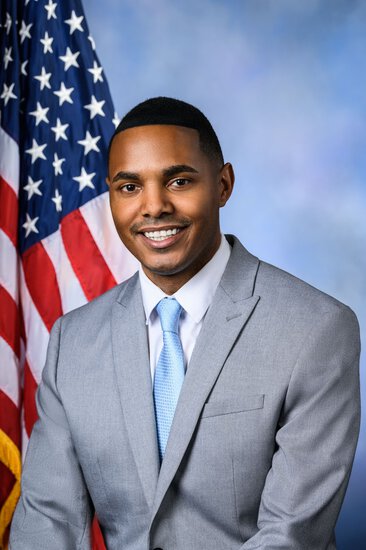
Rep. Ritchie Torres
Sponsored bills
Maddy summaryHRES 581 is a procedural resolution that establishes rules for the House to consider H.R. 185, the Epstein Files Transparency Act. It waives all points of order against the bill, adopts a specific amendment (the full text of the Epstein Files Transparency Act), and limits debate to one hour equally divided between the Judiciary Committee's chair and ranking minority member. The resolution also requires the Attorney General to release unclassified DOJ records related to Jeffrey Epstein within 30 days, with limited exceptions for privacy or national security.
Maddy summaryHR 6148, the Patients Over Paperwork Act of 2025, repeals Section 71107 of Public Law 119-21, which had changed how states review Medicaid eligibility. It restores the previous rules for Medicaid eligibility redeterminations as if that section had never been enacted. This directly affects Medicaid beneficiaries and state Medicaid programs by reverting to the pre-2024 process for verifying ongoing eligibility.
Maddy summaryHR 6137 would create a new separate job code for "direct support professionals" (DSPs) within the federal Standard Occupational Classification system. This change aims to better recognize DSPs - who provide daily support for people with intellectual and developmental disabilities (like helping with daily living, community participation, and goal-setting) - as distinct from other roles like home health aides. The bill requires the Office of Management and Budget to consider this revision during the next system update, without authorizing new funding. It addresses data gaps caused by high turnover rates (39% nationally) in DSP hiring and retention.
Maddy summaryHR 6132, the Housing Affordability Act, updates inflation-adjusted dollar limits for multifamily housing loans under the National Housing Act. It increases specific loan caps (e.g., raising the maximum for certain units from $38,025 to $167,310) using the Bureau of the Census' Price Deflator Index for multifamily construction, with adjustments calculated annually based on March-to-March data. These changes directly affect lenders and borrowers participating in federally backed multifamily housing programs by setting new maximum loan amounts. The bill makes technical adjustments to existing limits without creating new programs or altering eligibility rules.
Maddy summaryThe Global Respect Act (HR 6151) requires the U.S. President to publicly list foreign officials responsible for severe human rights violations against LGBTQI individuals, including torture, prolonged detention, or violence based on sexual orientation or gender identity. It mandates denying visas and entry to listed individuals and requires annual reports on the list's updates and impacts. The bill also directs the State Department to track global violence against LGBTQI people and update annual human rights reports to include discrimination based on sexual orientation or gender identity. These provisions directly affect foreign government officials and entities implicated in such abuses, aiming to increase accountability through U.S. visa restrictions.
Maddy summaryHR 6056, the International Human Rights Defense Act of 2025, establishes a permanent Special Envoy at the State Department to lead U.S. foreign policy efforts addressing discrimination and violence against LGBTQI+ people globally. The bill requires the U.S. government to develop and update a biannual global strategy to prevent criminalization and violence against LGBTQI+ individuals, mandate detailed reporting on such abuses in annual country reports, and ensure all U.S. foreign assistance programs include inclusive nondiscrimination policies. This legislation directly affects U.S. foreign policy implementation, federal agencies receiving funding, and LGBTQI+ communities facing persecution worldwide. The bill aims to coordinate U.S. government efforts across departments and with international partners to advance LGBTQI+ rights globally through concrete policy mechanisms.
Maddy summaryHR 6030, the Puerto Rico Substance Use and Health Data Collection Act, requires the federal government to include Puerto Rico in the annual National Survey on Drug Use and Health starting fiscal year 2026. This amendment to the Public Health Service Act ensures Puerto Rico residents' substance use and health data will be collected alongside data from states and territories. The key mechanism is adding Puerto Rico to the survey's geographic scope, which has been excluded since the survey's inception. This provides a more comprehensive dataset for federal health programs serving Puerto Rico.
Maddy summaryThis bill ensures continuous funding for SNAP (food assistance) and WIC (nutrition program for mothers/children) during government funding gaps. It authorizes emergency Treasury funds to cover SNAP/WIC benefits and reimburse states for costs if Congress fails to pass regular appropriations for the Department of Agriculture by September 30, 2025. The funding covers missed payments retroactively from September 30, 2025, through the bill’s enactment date, and continues until either regular appropriations pass or September 30, 2026. It directly affects low-income households relying on these programs and state agencies administering them during funding lapses.
Maddy summaryThis bill, HR 5973, requires federal immigration enforcement personnel to follow strict limits on force use, including proportional application, mandatory de-escalation efforts, and prohibitions on equipment like flash bangs or rubber bullets except for specific public safety threats. It mandates body-worn and vehicle cameras for all operations, with footage retained for one year (three years for force incidents or complaints), and grants affected individuals the right to inspect recordings. The law also requires annual training on force policies, First Amendment compliance, and racial bias avoidance, while demanding detailed quarterly reports to Congress on force usage, assaults on agents, and equipment approvals. These provisions directly affect all federal immigration agents conducting enforcement actions, aiming to increase transparency and accountability during operations.