

Maddy summaryThe Dignity for Detained Immigrants Act establishes minimum standards for detention facilities operated by the Department of Homeland Security, requiring them to follow the American Bar Association's Civil Immigration Detention Standards. It mandates annual unannounced inspections by the DHS Inspector General, with penalties including fines for noncompliant private facilities and transfers of detainees from noncompliant facilities. The bill requires DHS to publicly report on facility compliance, phase out private detention facilities over three years, and prohibit solitary confinement. It also ensures detainees have access to legal orientation, counsel, and more frequent custody review hearings. The bill directly affects all individuals detained in DHS custody, including immigrants, asylum seekers, and refugees held in facilities operated by or contracted to DHS.
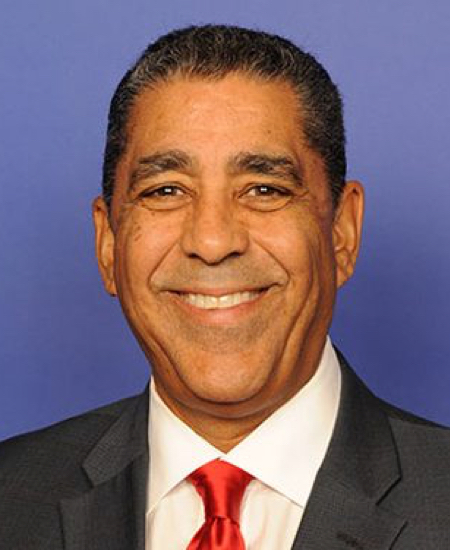
Rep. Adriano Espaillat
Sponsored bills
Give Kids a Chance Act of 2025 This bill expands the Food and Drug Administration’s (FDA’s) authority with respect to research on rare pediatric diseases, including by permitting the FDA to take enforcement action against drug sponsors that fail to satisfy pediatric study requirements and by reauthorizing programs that support pediatric research. Specifically, the bill modifies requirements relating to molecularly targeted pediatric cancer investigations to permit research on new drugs in combination with active ingredients that have already been approved, provided certain conditions are met; permits the FDA to take enforcement action against drug sponsors that fail to comply with pediatric study requirements, if such sponsors demonstrated a lack of due diligence in satisfying the requirement; renews the FDA’s authority to award priority review vouchers to sponsors of new products intended to treat rare pediatric diseases through September 30, 2029; and reauthorizes through FY2027 certain funding for the National Institutes of Health to support priority pediatric research. The bill also provides statutory authority for the FDA’s interpretation of the orphan drug exclusivity period. The bill specifies, consistent with FDA regulations, that the seven-year market exclusivity period for drugs for rare diseases or conditions (i.e., orphan drugs) prohibits the approval of the same drug for the same approved use or indication with respect to the disease or condition. (In Catalyst Pharmaceuticals, Inc. v. Becerra , a court rejected the FDA’s interpretation and held that orphan drug exclusivity extends to all uses or indications for the disease or condition.)
Maddy summaryHR 6318, the No GOUGE Act, prohibits large businesses from excessively raising prices on goods affected by tariffs or planned tariffs (e.g., imports subject to new tariffs) for five years after the tariff takes effect. It specifically targets companies with over $100 million in U.S. revenue, banning price hikes that exceed the actual cost of the tariff plus legitimate operational expenses (excluding executive pay or stock buybacks). The Federal Trade Commission (FTC) enforces this by presuming violations if large firms (over $1 billion revenue) raise prices beyond pre-tariff averages during "tariff shock" periods, though companies can rebut this by proving costs were genuinely tied to the tariff. The law aims to prevent price gouging by ensuring tariff costs - not profit motives - drive price changes for consumers.
Maddy summaryHRES 909 is a House resolution affirming that immigrant justice and reproductive justice are interconnected and must be addressed together. It calls on the Department of Homeland Security to reinstate protections for pregnant individuals in detention, eliminate the 5-year bar restricting immigrants’ access to federal health programs like Medicaid, and implement transparent oversight of reproductive health care in detention facilities. The resolution also urges Congress to remove barriers to health care access for immigrants and requires federal agencies to report on policies affecting reproductive health care for detained individuals. This resolution directly affects policies toward immigrants in detention, particularly regarding access to abortion, prenatal care, and mental health services, but does not create new laws.
Maddy summaryHR 6181, the John Lewis Every Child Deserves a Family Act, prohibits child welfare agencies receiving federal funds from discriminating against children, youth, or prospective foster/adoptive parents based on religion, sex (including sexual orientation and gender identity), or marital status. It directly affects LGBTQ youth in foster care - overrepresented at 30% of the system - who face higher risks of trauma, group home placements, and suicide attempts compared to non-LGBTQ peers. Key provisions require agencies to collect data on sexual orientation and gender identity, establish a National Resource Center for LGBTQ youth support, provide cultural competency training, and eliminate discriminatory practices. The law aims to improve safety, permanency, and placement stability by expanding access to family-based care and ensuring equitable services for all children in the system.
Maddy summaryThe FAIR Act requires immigration detention centers to provide detained immigrants with access to forms needed to contact their congressional representatives, including a Privacy Waiver form (ICE Form 60-001) and a Congressional Privacy Release form, upon written request. Detainees must receive these forms and a multilingual handbook explaining constituent services within 90 days of the bill’s enactment, with the handbook provided in their language or via interpreter. Centers must notify the detainee’s congressional office within seven days of a request and allow access to communication tools like computers and printers for ongoing contact. Failure to comply allows detainees to file complaints or sue in federal court, with enforcement mechanisms detailed in the bill. The law takes effect 90 days after enactment.
Maddy summaryThe Global Respect Act (HR 6151) requires the U.S. President to publicly list foreign officials responsible for severe human rights violations against LGBTQI individuals, including torture, prolonged detention, or violence based on sexual orientation or gender identity. It mandates denying visas and entry to listed individuals and requires annual reports on the list's updates and impacts. The bill also directs the State Department to track global violence against LGBTQI people and update annual human rights reports to include discrimination based on sexual orientation or gender identity. These provisions directly affect foreign government officials and entities implicated in such abuses, aiming to increase accountability through U.S. visa restrictions.
Maddy summaryThe EXPERTS Act of 2025 requires agencies to disclose funding sources and potential conflicts of interest for studies submitted during rulemaking, including who funded research and any financial relationships that might influence findings. It establishes an Office of the Public Advocate within the Office of Management and Budget to assist public participation in rulemaking, conduct social equity assessments, and improve outreach to underrepresented groups. The bill also mandates that agencies consider social equity impacts when creating rules and requires detailed explanations for withdrawing proposed regulations. These provisions aim to increase transparency, inclusivity, and accountability in the federal regulatory process.
Maddy summaryThe Jumpstart on College Act provides $250 million annually to support early college high schools and dual enrollment programs that allow high school students to earn college credits while still in high school. It funds partnerships between colleges and high schools to help low-income students and those from underrepresented groups complete postsecondary credentials within normal timeframes. The bill requires grantees to track student outcomes by demographic groups, use funds for program coordination and professional development, and ensure college credits earned are transferable. States receiving grants must develop statewide strategies to expand access to these programs and address achievement gaps. The legislation emphasizes program quality through established standards and requires annual reporting on student progress toward earning college credits and diplomas.
Maddy summaryThis bill requires oil, gas, and geothermal companies to test nearby underground drinking water sources before, during, and after hydraulic fracturing ("fracking") operations. Companies must conduct testing at specified intervals (e.g., before starting, every 6 months during operations, annually for 5 years after) and submit results to the EPA within two weeks. The EPA will maintain a public database of all test results, making it searchable by ZIP code for community access. The requirement does not apply to sites with no accessible drinking water sources within one mile.