

Maddy summaryThis resolution (HRES 740) symbolically recognizes October 2021 as Liver Cancer Awareness Month. It does not create new laws or allocate funds but aims to raise public awareness about liver cancer risks and prevention. The resolution highlights that liver cancer is the fastest-growing cause of cancer deaths in the U.S., with higher rates among American Indian/Alaska Native, Black, and Hispanic communities due to factors like hepatitis infections and diabetes. It urges broader awareness of screening for at-risk groups and encourages collaboration between the CDC and health departments to address prevention and treatment access. The resolution focuses on education and early detection, not on implementing new policies or services.
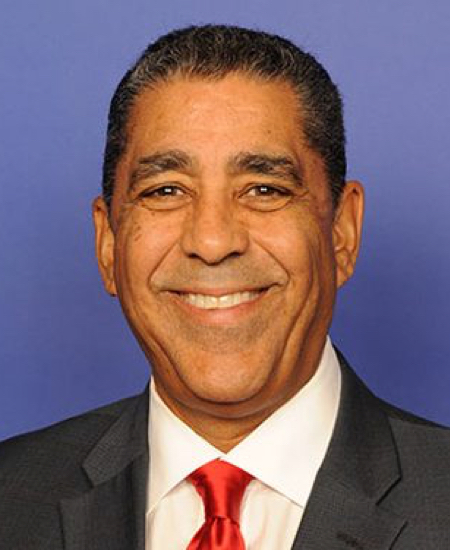
Rep. Adriano Espaillat
Sponsored bills
Liver Illness Visibility, Education, and Research Act of 2021 This bill expands and coordinates activities related to the research of liver cancer and liver disease, including causes, prevention, detection, and treatment. Specifically, the National Cancer Institute must establish a working group to coordinate efforts across the National Institutes of Health to cure liver cancer and liver disease, including research into such cases resulting from hepatitis B. The institute may also award grants for developing preventative and diagnostic measures and supporting experimental treatment options. The bill further establishes grant programs, administered by the Centers for Disease Control and Prevention, to support liver disease prevention services, diagnostics, and hepatitis tracking programs and to raise awareness about liver disease within high-risk communities. The renamed National Institute of Diabetes and Digestive, Kidney, and Liver Diseases also must prioritize programs addressing liver disease, including (1) establishing a national clearinghouse for patient data, and (2) developing or expanding the centers for research of liver disease.
College Student Hunger Act of 20 21 This bill expands the eligibility of students at institutions of higher education to participate in the Supplemental Nutrition Assistance Program (SNAP). SNAP eligibility for students is expanded to include certain low-income students who (1) are employed a minimum of 10 hours per week (currently 20 hours) during the regular school year, (2) are eligible for a federal Pell Grant, (3) have an expected family contribution equal to zero, or (4) are independent. Additionally, the bill directs the Department of Education to provide notification to certain students regarding their eligibility for SNAP benefits, the Inspector General of the Department of Agriculture (USDA) to conduct an audit of the operations of the Food and Nutrition Service to examine the procedures and outreach practices used by the service to provide to states information about the eligibility of students at institutions of higher education for participation in the program, USDA to update its state outreach plan guidance, and USDA to implement projects to decrease student hunger at institutions of higher education and to reduce barriers to college students fully utilizing SNAP benefits at these institutions.
This concurrent resolution recognizes the disparity between wages paid to Latina women, and its impact on women, families, and the nation and reaffirms Congress' commitment to supporting equal pay and to narrowing the gender wage gap.
Maddy summaryThis resolution (HRES 356) expresses the U.S. House of Representatives' condemnation of police brutality worldwide, including excessive force, extrajudicial killings, and disproportionate harm to racial minorities, women, migrants, and LGBTQIA+ communities. It urges the U.S. government to stop arms sales to countries with documented police brutality, end militarized policing tactics domestically and abroad, and redirect funds toward community programs. As a symbolic resolution, it does not create new laws but calls for specific policy actions from the executive branch and businesses.
This resolution calls for the creation of a Green New Deal with the goals of achieving greenhouse gas and toxic emissions reductions needed to stay under 1.5 degrees Celsius of warming; establishing millions of high-wage union jobs and ensuring economic security for all; investing in infrastructure and industry; securing clean air and water, climate and community resiliency, healthy food, access to nature, and a sustainable environment for all; and promoting justice and equality. The resolution calls for accomplishment of these goals through a 10-year national mobilization effort. The resolution also enumerates the goals and projects of the mobilization effort, including building smart power grids (i.e., power grids that enable customers to reduce their power use during peak demand periods); upgrading all existing buildings and constructing new buildings to achieve maximum energy and water efficiency; removing pollution and greenhouse gas emissions from the transportation and agricultural sectors; cleaning up existing hazardous waste and abandoned sites; ensuring businesspersons are free from unfair competition; and providing higher education, high-quality health care, and affordable, safe, and adequate housing to all.
Protecting the Rights Of Towns against federal Enforcement contrary to Constitutional Tenets for Immigration Act of 2021 or the PROTECT Immigration Act of 2021 This bill establishes that the authority to investigate, apprehend, or detain aliens for the purposes of immigration enforcement is limited to immigration officers and authorized Department of Homeland Security employees, except when such authority is provided to other individuals under specified statutes. Specifically, this restriction does not apply in certain instances involving (1) an actual or imminent mass influx of aliens, (2) persons bringing in and harboring aliens in violation of immigration laws, or (3) an alien illegally present in the United States who had previously left or was deported after being convicted of a felony. The bill repeals the authority allowing the Department of Justice to enter into agreements authorizing state or local government employees to perform immigration enforcement functions.
This bill generally addresses the adverse effects of climate change with a particular focus on immigration. Specifically, the bill establishes an immigration pathway to admit climate-displaced persons into the United States. These are individuals (1) who need durable resettlement because of an environmental change that adversely affects their living conditions, and (2) whose government cannot or will not provide a resettlement solution. Persons admitted to the United States under this pathway are entitled to the same resettlement assistance and benefits available to refugees. Additionally, the bill authorizes the President to provide foreign assistance for promoting resilience and reducing vulnerability among communities facing adverse effects of climate change. It also creates the position of Coordinator of Climate Change Resiliency in the Department of State. Moreover, the State Department must implement, and periodically report on, a strategy to mitigate the impact of climate change on displacement and humanitarian emergencies. The State Department must also provide (1) training on climate displacement to foreign service officers assigned to countries from which climate-displaced persons originated, and (2) guidance on the humanitarian impacts associated with climate change to all U.S. diplomatic missions. The bill also requires the President to report on displacement caused by climate change.
Families Belong Together Act This bill provides various immigration benefits for eligible alien parents (or legal guardians) and minor children who were separated by the Department of Homeland Security (DHS) between January 20, 2017, and January 20, 2021. Generally, to be an eligible parent or minor child under this bill, the alien must not be inadmissible for certain crime- or security-related grounds, though DHS may waive certain grounds for humanitarian or public interest reasons. Furthermore, an eligible child who was separated as a minor remains eligible for the immigration benefits after reaching majority. DHS must grant humanitarian parole into the United States to an eligible alien who requests such parole, regardless of whether the alien is physically present in the United States. An eligible alien in the United States may apply for lawful permanent resident status. U.S. Citizenship and Immigration Services shall grant a qualifying alien's lawful permanent resident status within 30 days of receiving the alien's application. An alien who receives lawful permanent resident status under this bill shall be eligible for benefits and services that are available to an alien who is admitted as a refugee. Certain annual numerical limitations shall not apply to aliens who receive lawful permanent resident status under this bill. If an alien seeks judicial review of a denial of an application for lawful permanent resident status under this bill, the Department of Justice shall appoint counsel to represent that alien upon request.
Honduras Human Rights and Anti-Corruption Act of 2021 This bill temporarily imposes sanctions and other penalties on Honduran president Juan Orlando Hernandez and the government of Honduras for systemic corruption and human rights violations, with particular focus on the Honduran police and military. Specifically, the President must impose asset- and visa-blocking sanctions on Juan Orlando Hernandez due to his corrupt practices, including the use of the state apparatus to protect and facilitate drug trafficking. Additionally, the President must prohibit, within 30 days, the issuance of licenses to export defense articles and services and specified munitions to the Honduran police or military. The bill also (1) makes Honduras ineligible for security assistance to equip and train police and military, and (2) requires U.S. representatives at multilateral development banks to oppose any loans for Honduran police or military. Furthermore, the Department of the Treasury must instruct U.S. leadership of international financial institutions and the U.S. International Development Finance Corporation to promote human rights due diligence and risk management in any loan, grant, policy, or strategy related to Honduras. The sanctions and other penalties put in place under this bill terminate in five years but may be lifted earlier if specified conditions are met.