

Maddy summaryThe Treat and Reduce Obesity Act of 2023 expands Medicare coverage for obesity treatment by allowing a wider range of healthcare providers - including nurse practitioners, dietitians, psychologists, and community-based counseling programs - to deliver intensive behavioral therapy for obesity, provided they coordinate with primary care providers. It also adds Medicare Part D coverage for medications used to treat obesity or for weight loss management in overweight individuals with related health conditions like diabetes or high blood pressure. These changes directly affect Medicare beneficiaries, particularly older adults (65+), who face higher obesity rates and associated costs, including $50 billion annually in Medicare spending for obesity-related care. The bill requires annual reports to Congress on implementation to improve coordination of obesity care across federal health programs.
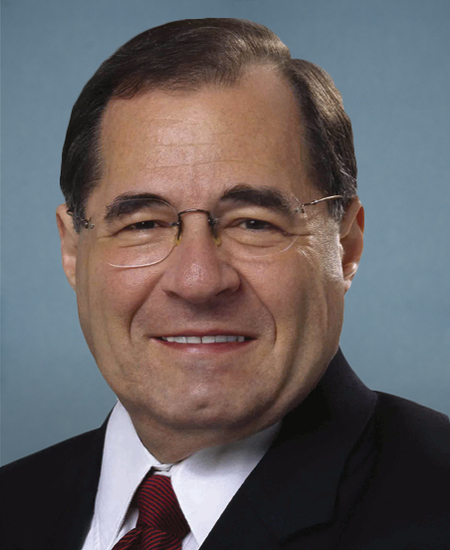
Rep. Jerrold Nadler
Sponsored bills
Maddy summaryThis bill, HR 1097 (Everett Alvarez, Jr. Congressional Gold Medal Act of 2023), authorizes the award of a Congressional Gold Medal to Everett Alvarez, Jr., in recognition of his service as a U.S. Navy pilot and Vietnam War prisoner of war. It directly honors Alvarez, who was the first U.S. pilot shot down in the Vietnam War, spent over 8.5 years in captivity, and later served in the Peace Corps and Veterans Administration. The bill’s key mechanism is directing the U.S. Mint to strike a gold medal bearing his name and image, with bronze duplicates available for sale to cover costs. It does not create new policies or affect any group beyond the honoree.
Maddy summaryThis bill would strengthen protections for employees and retirees during business bankruptcies by increasing wage priority from $10,000 to $20,000, ensuring severance pay is deemed earned upon layoff, and creating new claims for pension losses. It also restricts how bankrupt companies can modify collective bargaining agreements, requiring court approval for such changes and mandating that purchasers of business assets maintain employee benefits. Additionally, the bill limits executive compensation in bankruptcy by restricting special payments and requiring court approval for certain compensation plans. These changes directly affect employees, retirees, and their representatives in bankruptcy cases, aiming to prevent them from bearing the brunt of business failures while in bankruptcy proceedings.
Maddy summary# Summary of the Consumer Bankruptcy Reform Act of 2024 This comprehensive legislation proposes major reforms to the U.S. bankruptcy system, with the most significant change being the introduction of **Chapter 10** for individual debtors (replacing Chapter 13 for individuals). ## Key Provisions: ### 1. Introduction of Chapter 10 - Creates a new Chapter 10 for individual debtors to replace Chapter 13 - Requires debtors to meet a "minimum payment obligation" under section 1021(a)(1) - Introduces new plan types: repayment plans, residence plans, and property plans - Changes discharge procedures (replacing Chapter 7 and Chapter 13 discharge provisions) ### 2. Major Bankruptcy Code Changes - Amends Chapter 7, 11, 12, and 13 provisions to reflect the new Chapter 10 structure - Modifies discharge exceptions (Section 523) to include new provisions for attorney compensation - Changes confirmation requirements (Section 1129) to reference "minimum payment obligation" - Repeals outdated sections (e.g., Sections 722, 727, 1228(f)) ### 3. Consumer Financial Protections - Strengthens enforcement of discharge injunctions (Section 524) - Requires collection of demographic data on bankruptcy filers (Section 159) - Increases penalties for violations of the Fair Debt Collection Practices Act - Amends Truth in Lending Act to increase statutory damages ### 4. Systemic Changes - Creates a "Consumer Bankruptcy Ombuds" within the Consumer Financial Protection Bureau - Amends fee structure for bankruptcy filings (Chapter 10 filing fee increased to $250) - Changes trustee compensation structure with new maximums - Adds requirements for data collection on bankruptcy filings ### 5. Other Key Elements - Requires "plain writing" for bankruptcy forms - Establishes a new process for waiver of bankruptcy fees - Introduces data collection requirements for identifying disparities in the bankruptcy system - Creates new penalties for violating discharge injunctions This legislation represents a significant overhaul of the bankruptcy system, with a focus on creating a more streamlined process for individual debtors, strengthening consumer protections, and improving data collection to address disparities in the bankruptcy system. The effective date is set for one year after enactment, with transition provisions for cases filed before that date.
Maddy summaryHR 5401, the 9/11 Memorial and Museum Act, provides a one-time federal grant of $5 million to $10 million to the National September 11 Memorial & Museum (operated by the World Trade Center Foundation). The grant funds the museum's operations, security, and maintenance, with specific requirements including free admission for veterans, first responders, and victims' families, dedicated weekly free public hours, and annual financial audits. The museum must also report annually to Congress on how the funds were used. This bill directly affects the museum's financial operations and access policies, not broader legislative changes.
Maddy summaryThis bill expands financial support for living organ donors by amending the Public Health Service Act. It prohibits reimbursement programs from considering the recipient's income when covering donors' expenses and allows donors with household income up to 700% of the poverty line to qualify for reimbursement. Reimbursement is capped at $10,000 for fiscal year 2026 (adjusted annually for inflation), covering costs like travel or lost wages. The bill also requires annual reports tracking program participation, expenses, and impacts on Medicare savings, with funding authorized through 2035.
Maddy summaryThis bill extends Medicare payment adjustments for physicians and other practitioners through 2025 instead of ending in 2024. It specifically adds a 4.73% payment increase for services provided between January 1, 2025, and January 1, 2026. The legislation modifies existing Medicare payment rules to stabilize practice revenues during transition periods. It directly affects doctors and healthcare providers who bill Medicare for patient services. The key change is the extended timeframe and the defined 4.73% rate for the 2025-2026 period.
Maddy summaryHR 9774, the Health Care Affordability Act of 2024, would expand premium tax credits under the Affordable Care Act for households earning between 150% and 400% of the federal poverty level. It modifies the sliding scale calculation to reduce the percentage of monthly insurance premiums these households must pay, with the lowest out-of-pocket costs for those near 400% of poverty. This directly affects individuals and families purchasing health insurance through marketplace plans who qualify for these tax credits. The changes apply to tax years beginning after December 31, 2025.
Maddy summaryThis bill adds specific Medicare coverage for treatments targeting dialysis-related amyloidosis (DRA), a condition affecting some long-term dialysis patients. It directly affects Medicare beneficiaries diagnosed with DRA and dialysis facilities providing these treatments. The bill defines DRA treatments as FDA-approved items/services in dialysis settings and mandates separate 100% payment for them - outside standard dialysis fees - ensuring coverage without being bundled into existing payment systems. This change takes effect upon the bill's enactment.
Maddy summaryHR 8796, the "Stop Comstock Act," removes outdated restrictions from federal law that previously banned the distribution of materials related to contraception and abortion as "obscene" or "indecent." The bill amends Title 18 and the Tariff Act by deleting references to "indecent," "immoral," "unlawful abortion," and "procuring abortion" from provisions governing obscene materials. It clarifies that the law only prohibits "obscene materials" in commerce, eliminating broad restrictions on reproductive health information. This directly affects internet platforms, healthcare providers, and individuals sharing reproductive health resources by removing legal barriers to their distribution.