

Maddy summaryHR 628, the Honor Our Living Donors Act, amends federal law to protect living organ donors by changing how reimbursement grants operate. It prohibits grant recipients from considering the organ recipient's income when reimbursing donors and removes any expectation that organ recipients pay donors directly. The bill also requires the Secretary to submit an annual report detailing whether grants fully covered all donor expenses and estimating any funding gaps. This directly affects living organ donors participating in federal grant programs under the Public Health Service Act.
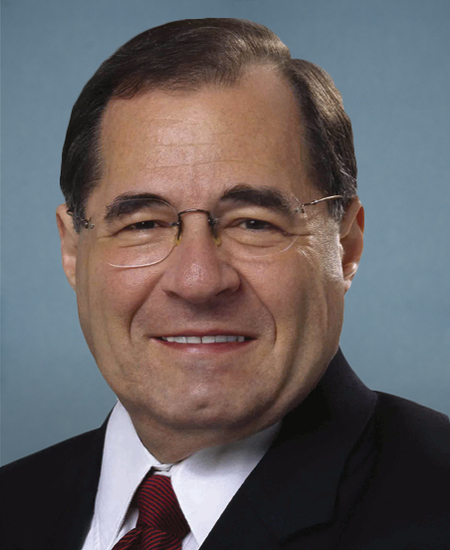
Rep. Jerrold Nadler
Sponsored bills
Maddy summaryHR 609, the Assuring Medicare's Promise Act of 2025, directs revenue from the net investment income tax (currently applied to investment income) into the Medicare Hospital Insurance Trust Fund. It expands the tax base to include certain business income for high-income individuals with modified adjusted gross income exceeding $400,000 ($500,000 for joint filers), with a phase-in to limit the tax increase. The bill ensures this tax revenue directly supports Medicare's hospital insurance program, applying to taxable years beginning after December 31, 2025. The changes do not alter the tax rate but broaden the income types subject to the tax for high earners.
Maddy summaryThe Close the Medigap Act of 2025 would prohibit Medigap insurance issuers from denying coverage or charging higher premiums based on health status, pre-existing conditions, genetic information, or other factors. It requires insurers to spend a minimum percentage of premiums on health care claims and improves the Medicare Plan Finder website to provide clearer information about coverage options, out-of-pocket costs, and guaranteed issue requirements. The bill applies to Medigap policies effective January 1, 2026, with full implementation by 2031, and requires Medigap brokers to disclose payments they receive from insurers. These changes would directly affect Medicare beneficiaries, particularly those with pre-existing conditions who have historically faced barriers to obtaining affordable supplemental coverage.
Boundary Waters Wilderness Protection and Pollution Prevention Act This bill protects and preserves approximately 225,504 acres of federal land and waters in a specified area in the Rainy River Watershed of Superior National Forest in Minnesota from certain mining, such as sulfide-ore copper mining. (The area is upstream from the Boundary Waters Canoe Area Wilderness.) Specifically, the bill withdraws those acres from entry, appropriation, and disposal under the public land laws; location, entry, and patent under the mining laws; and operation of the mineral leasing, mineral materials, and geothermal leasing laws. However, the Forest Service is authorized to permit the removal of sand, granite, iron ore, and taconite from national forest system lands within such area if the removal is not detrimental to the water quality, air quality, and health of forest habitat within the Rainy River Watershed. Land or interest in land within such area that is acquired by the United States must be immediately withdrawn in accordance with this bill.
Maddy summaryThis bill prohibits discrimination based on gender identity, sexual orientation, or sex characteristics in military service. It requires that eligibility for military service and all personnel policies consider only an individual's ability to meet job-specific military standards, banning the use of race, color, national origin, religion, or gender-related factors. The law directly affects all current and prospective members of the Armed Forces by mandating that military occupational standards apply equally to everyone. It amends Title 10 of the U.S. Code to establish these protections as a formal requirement for all military personnel policies.
Maddy summaryHR 429, the Rosie the Riveter Commemorative Coin Act, authorizes the U.S. Treasury to mint and sell three types of commemorative coins ($5 gold, $1 silver, and half-dollar) to honor women who worked on the U.S. home front during World War II. The coins will be sold at face value plus surcharges ($35 for gold, $10 for silver, $5 for half-dollar), with all surcharge revenue directed to the Rosie the Riveter Trust to support the Rosie the Riveter WWII Home Front National Historical Park and related educational programs. The coins must be issued between January 1, 2028, and December 31, 2028, in specified quantities (50,000 gold, 400,000 silver, 750,000 half-dollar), with all costs covered by the sales revenue to avoid net government expense.
Maddy summaryHR 433, the Department of Education Protection Act, prohibits the use of federal funds to reorganize the Department of Education. Specifically, it blocks any spending from current fiscal year appropriations on activities that would decentralize the department, reduce staffing, or alter its structure, responsibilities, or authority relative to its organization as of January 1, 2025. The bill directly affects the Department of Education by preventing structural changes to its existing offices and operations. This is a procedural measure focused solely on preserving the current departmental framework, not on changing education policy or funding.
Maddy summaryHR 430, the SALT Deductibility Act, repeals the $10,000 cap on deducting state and local taxes (SALT) for federal income tax filers who itemize deductions. This change directly affects taxpayers in high-tax states who currently face the $10,000 limit on deducting their state income taxes, property taxes, and sales taxes. The bill amends the Internal Revenue Code to remove the specific deduction limit (Section 164(b)(6)), allowing these taxpayers to deduct their full state and local tax payments. The repeal applies to tax returns filed for taxable years beginning after December 31, 2024.
Maddy summaryThe TRUST in Congress Act requires current and new Members of Congress, along with their spouses and dependent children, to place certain investments - such as stocks, commodities, and derivatives - into a blind trust within 90 to 180 days of taking office. It excludes U.S. Treasury securities and widely held mutual funds from this requirement and exempts investments tied to a spouse’s or dependent child’s primary job. Members must certify the trust’s setup to the House Clerk or Senate Secretary within 15 days, with these records posted publicly online. The act also prohibits dissolving such trusts until 180 days after a member leaves office.
Maddy summaryThe LNG Public Interest Determination Act of 2025 requires the Secretary of Energy to approve natural gas exports only if they meet a public interest standard. This standard mandates three specific assessments: climate impact (including effects on global warming and clean energy investment), economic impact on U.S. consumers (with focus on low-income households and businesses), and environmental justice (assessing burdens on vulnerable communities). The Secretary must complete these assessments within one year of receiving environmental data and make a public finding. The bill also requires public participation in the process and treats export approvals as major federal actions under environmental law.