

Maddy summaryHR 2848, the Stop Arctic Ocean Drilling Act of 2025, prohibits the federal government from issuing new oil and gas leases in Arctic federal waters. It amends the Outer Continental Shelf Lands Act to ban the Secretary of the Interior from authorizing exploration, development, or production of oil, natural gas, or minerals in designated Arctic areas, overriding all other federal laws. The bill defines "Arctic" using the 1984 Arctic Research Act, focusing on federal waters off Alaska. This directly affects federal leasing decisions and prevents new drilling permits in the region.
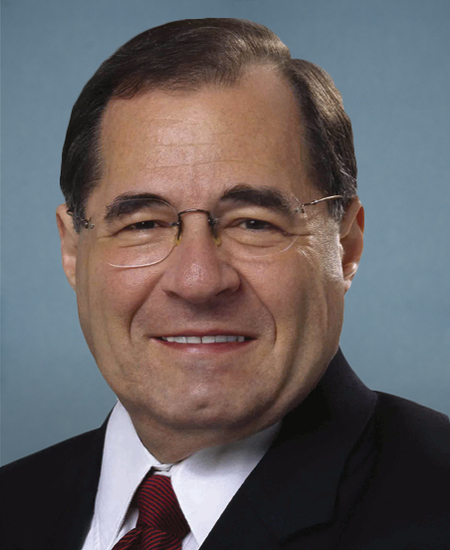
Rep. Jerrold Nadler
Sponsored bills
Maddy summaryHRES 321 is a symbolic resolution supporting the "Rise Up for LGBTQI+ Youth in Schools Initiative," which calls for communities to demand equal educational opportunities, civil rights protections, and inclusion for LGBTQI+ students in K-12 schools. It urges states and localities to adopt policies prohibiting bias-based discrimination, exclusion, and erasure of LGBTQI+ students - particularly transgender, nonbinary, Black, Indigenous, and disabled youth - while recognizing existing efforts like National Day of Silence. The resolution does not create new laws or allocate funds but formally endorses community-led advocacy to address hostile school environments documented in studies showing discrimination correlates with higher absenteeism, lower grades, and mental health challenges among LGBTQI+ students. It directly affects state education policies and school climates, encouraging local action without federal enforcement.
Maddy summaryHRES 317 is a non-binding resolution urging the U.S. government to lead global efforts to halt and reverse the nuclear arms race. It calls on the President to pursue negotiations with nuclear-armed states to reduce arsenals, end the U.S. policy allowing first use of nuclear weapons, eliminate immediate launch readiness, stop developing new weapons, and support communities affected by nuclear programs. The resolution emphasizes diplomatic action over military modernization to reduce nuclear risks and prevent catastrophic conflict.
Maddy summaryHR 2762 establishes a new Title X Clinic Fund to expand federal funding for family planning clinics. It appropriates $512 million annually (2026-2035) for clinic grants and $50 million for infrastructure like construction and equipment. The bill requires clinics receiving this funding to provide nondirective pregnancy counseling, ensuring patients receive neutral information about all options - including prenatal care, adoption, and termination - upon request. This directly affects Title X clinics nationwide and the low-income patients they serve, primarily by increasing financial support and standardizing counseling practices.
Maddy summaryThe American Family Act (HR 2763) establishes a new refundable child tax credit that provides monthly payments to eligible families with children. It would pay $300 per month for each child under age 6 and $360 per month (120% of $300) for each child age 6 or older, with income limits of $150,000 for joint filers and $112,500 for other filers. The bill creates a "period of presumptive eligibility" to determine eligibility for monthly payments, allowing families to receive advance payments based on information from previous tax returns. This would directly affect millions of families with children who meet the income requirements, providing more consistent financial support throughout the year rather than an annual tax credit.
Maddy summaryThis bill expands the Earned Income Tax Credit (EITC) for low-income workers by lowering the minimum age to claim the credit from 25 to 19 (with exceptions for students, former foster youth, and homeless youth), removing the maximum age limit of 65, and doubling the credit percentage from 7.65% to 15.3%. It also increases the income thresholds for eligibility, raising the phaseout starting point from $4,220 to $9,820 for single filers and $5,280 to $11,610 for joint returns. The credit amounts and income limits will now adjust annually for inflation using specific Consumer Price Index (CPI) benchmarks. Additionally, taxpayers can elect to use their prior year’s earned income to calculate the credit if it was higher than the current year’s, effective for 2026 tax returns.
Maddy summaryHR 2710, the People Over Parking Act of 2025, removes requirements for developers to provide a set number of parking spots for new or substantially rebuilt residential, retail, commercial, or industrial buildings located within 0.5 miles of a qualifying public transit point. It directly affects property owners and local governments by giving developers sole discretion over parking provision in these areas, overriding conflicting state or local parking mandates. The bill defines "covered public transit points" as fixed guideway access (like train stations) or bus stops with two or more frequent routes (15-minute peak interval), excluding most standard bus stops. This policy change aims to reduce parking requirements near transit, potentially lowering development costs and land use for parking.
Maddy summaryThis bill establishes federal minimum standards for collective bargaining rights for public employees and supervisors. The Federal Labor Relations Authority would determine if state laws provide these rights, and if not, would establish them for affected employees. The bill guarantees public employees the right to form unions, bargain collectively, and engage in concerted activities, while requiring public employers to recognize unions and put agreements in writing. It also prohibits strikes or lockouts that would disrupt emergency services. This would apply to public employees in states that don't meet the federal standards for collective bargaining rights.
Maddy summaryHR 2664 amends the Higher Education Act to allow historically Black colleges and universities (HBCUs) to use federal grant funds for specific arts, arts education, and cultural programs. The bill adds new provisions enabling HBCUs to provide financial aid to arts students, establish outreach programs for arts departments, offer comprehensive support services (like mentorship and career advising), maintain Black art collections, and create paid internships through partnerships with arts organizations. It also authorizes HBCUs to partner with the National Endowment for the Arts to carry out these activities. This amendment directly affects HBCUs by expanding allowable grant uses to address historical underfunding and strengthen arts education.
Maddy summaryThe No Tax Breaks for Union Busting Act would deny tax deductions for employers who spend money to influence employees' decisions about union activities, such as union elections or collective bargaining. It defines "labor organization activities" broadly to include union elections, labor disputes, and collective actions. The bill requires employers to report such spending on tax returns and prevents them from deducting these expenses from taxable income. This would apply to employers using tactics like captive audience meetings, outside consultants, or other efforts to sway workers' union decisions. The policy aims to remove tax incentives for employers to interfere with workers' rights under labor law.