

Maddy summaryThis bill requires the U.S. Department of State to include specific, detailed reporting on reproductive rights in its Annual Country Reports on Human Rights Practices. It mandates descriptions of each country's policies regarding access to contraception, abortion services, and comprehensive reproductive health care, alongside data on pregnancy-related deaths, discrimination against women and LGBTQI+ individuals, and disparities based on race, disability, or other factors. The bill also directs the State Department to consult with civil society organizations and health experts to ensure thorough reporting on these issues. This change aims to align U.S. reporting with international human rights standards and address past omissions of reproductive rights from these reports.
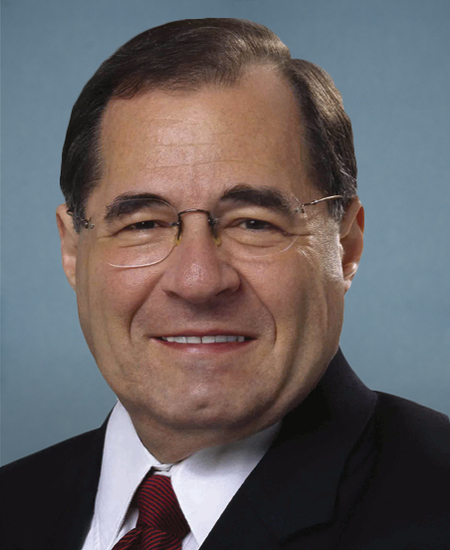
Rep. Jerrold Nadler
Sponsored bills
Maddy summaryThis bill adjusts health insurance subsidies by modifying the premium tax credit structure under the Internal Revenue Code. It replaces previous income thresholds with a sliding-scale formula, increasing subsidies for households earning between 150% and 400% of the federal poverty level - reducing their required premium payments as income rises within these tiers. The changes apply to tax years beginning after December 31, 2025, directly affecting middle-income individuals and families purchasing coverage through health insurance marketplaces. It also repeals specific provisions from a prior reconciliation law related to health care.
Maddy summaryThe Medical Debt Relief Act of 2025 would prevent medical debt from being reported as negative information on credit reports. It defines medical debt as any debt related to medical services, products, or devices and prohibits credit reporting agencies from including such debt - even if sent to collections - in credit reports. The bill also requires the Consumer Financial Protection Bureau to update regulations within one year to ban creditors from using medical debt when making credit decisions. This change directly affects consumers with unpaid medical bills and alters standard credit reporting practices.
Maddy summaryThis bill removes a barrier preventing most low-income students from accessing SNAP benefits. It amends the Food and Nutrition Act to explicitly allow students enrolled at least half-time in recognized higher education programs to qualify for SNAP, reversing a prior exclusion. The key change eliminates the previous requirement that students meet specific exceptions (now deleted) and adds a new eligibility category under Section 3(m)(5). This directly affects low-income undergraduate and graduate students at colleges and training programs who were previously ineligible. The changes take effect January 2, 2026.
Maddy summaryHR 4796, the Restoring Essential Healthcare Act, repeals a provision that blocked Medicaid payments to certain healthcare providers during a specific period. It directly affects Medicaid beneficiaries who received care from these providers between the enactment of the prior law (Public Law 119-21) and this bill's enactment. The key provision retroactively restores Medicaid payments for services already provided during that blocked period, treating the payment restriction as if it never existed. This change ensures eligible individuals and providers receive reimbursement for covered care delivered during the prohibited timeframe.
Maddy summaryHR 4763, the PTO Act, requires most employers to provide employees with at least 1 hour of paid annual leave for every 25 hours worked, with a maximum of 80 hours per year. It applies to private-sector workers and certain government employees, protecting their right to use paid leave for any purpose without disclosing the reason. The bill mandates employers to maintain health benefits during leave, allow carryover of up to 40 hours of unused leave, and pay out unused leave upon separation. It also prohibits employers from discriminating against employees for using paid leave or requiring them to find replacements while on leave. The law includes enforcement mechanisms, allowing employees to file complaints with the Department of Labor or pursue private lawsuits.
Maddy summaryThe Pigs and Public Health Act prohibits the use of beta-adrenergic agonist drugs like ractopamine for growth promotion or feed efficiency in pigs (not for treating disease), sets new transportation standards to prevent pigs from becoming nonambulatory (including requirements for space, bedding, temperature control, and water access), and mandates humane euthanasia of nonambulatory pigs. It prohibits processing meat from nonambulatory pigs, establishes an online complaint portal for confidential reporting of violations, and requires a study on public health risks associated with pathogens like swine influenza and Salmonella. These provisions apply to pork producers, slaughter facilities, and workers in the pork industry. The bill aims to improve animal welfare, worker safety, and public health by preventing diseased pigs from entering the food supply. Regulations must be issued within one year of enactment.
Maddy summaryHR 4696 amends Section 249 of the Immigration and Nationality Act to update eligibility for a registry program that provides a pathway to legal status for long-term residents. It changes the requirement from entering the U.S. before January 1, 1972, to entering at least 7 years before the application date. This adjustment bases eligibility on a rolling 7-year window instead of a fixed historical cutoff, allowing more recent long-term residents to qualify. The bill directly affects individuals who entered the U.S. after 1972 but maintained continuous residence for at least seven years prior to applying.
Resident Physician Shortage Reduction Act of 2025 This bill increases the number of residency positions eligible for graduate medical education payments under Medicare for qualifying hospitals, including hospitals in rural areas and health professional shortage areas. The bill provides for an additional increase of 2,000 positions per fiscal year from FY2026-FY2032; during this period, each hospital may receive up to 75 additional positions in total under the bill and current law. Additionally, one-third of the positions that are made available under the bill must be allocated to hospitals that are already operating above applicable resident limits. The bill also requires the Government Accountability Office to report on strategies to increase the diversity of the health professional workforce, including with respect to representation from rural, low-income, and minority communities.
Maddy summaryThis bill would require states to adopt ranked choice voting for elections of U.S. Senators and Representatives, with specific rules for how the voting system would work, including ballot design and tabulation methods. It mandates the use of multi-member districts in states with six or more representatives (with districts electing 3-5 representatives each) and requires states with five or fewer representatives to elect all representatives at-large. The bill also establishes new nonpartisan criteria for congressional redistricting, including requirements for population equality, Voting Rights Act compliance, and measures to prevent partisan gerrymandering. States would receive federal funding to implement these changes, with the requirements taking effect for elections following the 2030 census.