

Maddy summaryHR 296, the "Justice for 9/11 Act," modifies legal procedures for three specific defendants accused of the September 11, 2001, attacks: Khalid Shaikh Mohammad, Walid Muhammad Salih Mubarak Bin ‘Attash, and Mustafa Ahmed Adam al Hawsawi. The bill ensures their plea agreements for the 9/11 attacks cannot block military commission trials under Title 10, makes the death penalty available in those trials, and mandates they remain in solitary confinement at Guantanamo Bay under strict conditions - no contact with foreigners, limited psychological care, and no transfer to the U.S. or other countries. It directly affects only these three individuals and their legal proceedings, not the general public. The bill changes existing legal pathways for their trial and confinement, not broader policy.
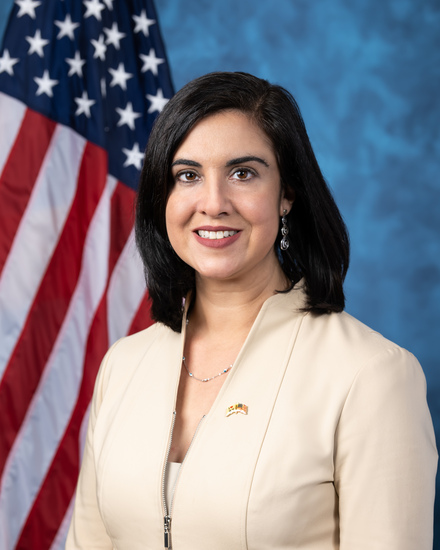
Rep. Nicole Malliotakis
Sponsored bills
Maddy summaryThis bill prohibits federal funding for colleges and universities conducting painful research on dogs or cats after 180 days from enactment. Exceptions include clinical veterinary research (studying natural diseases for the animal's benefit) and studies involving service animals or military animals. It defines "painful research" as USDA pain categories D or E. The law directly affects higher education institutions receiving federal funds that perform such research on dogs or cats, excluding the specified exceptions.
Maddy summaryThis bill allows disabled veterans with qualifying service-connected disabilities to use HOV lanes as single-occupant vehicles. It requires a special license plate, transponder, or other identification approved by the transportation authority. Disabled veterans meeting VA disability rating thresholds (defined in the bill) can use HOV lanes without paying tolls, bypassing standard occupancy rules. The law amends federal transportation code to add this exception for disabled veterans under specific identification and disability criteria.
Maddy summaryHRES 17 is a symbolic House resolution condemning Turkey’s continued military occupation of northern Cyprus, which began with the 1974 invasion. It specifically demands Turkey withdraw its 35,000 troops, cease illegal settlements of over 200,000 people in occupied areas, and comply with international rulings on property rights for U.S. citizens. The resolution also calls for Turkey to stop violating Cyprus’ Exclusive Economic Zone and assist in locating four missing U.S. citizens from the 1974 invasion. It urges President Trump (as the resolution was introduced in 2025) to prioritize resolving the Cyprus conflict as a top foreign policy goal, emphasizing a bizonal, bicommunal federation solution. As a non-binding resolution, it does not impose legal requirements but expresses congressional stance.
Maddy summaryHRES 18 is a non-binding resolution expressing the U.S. House of Representatives' view that the United Kingdom should negotiate the return of the Parthenon Marbles to Greece. It specifically calls for the UK government to enter talks with Greece to facilitate the marbles' return, citing their cultural significance as an integral part of the Parthenon and Greece's 200-year effort to reclaim them. The resolution emphasizes that reunifying the marbles would honor their historical context and Greece's care for them, noting Greece's New Acropolis Museum as a suitable home. As a procedural resolution, it does not impose legal obligations but formally states the House's position on this cultural heritage issue.
Maddy summaryThis bill requires federal employees who telework at least one day weekly (or 20% of their time under alternative schedules) to be paid at the "Rest of U.S." locality pay rate without future adjustments. It excludes employees who telework daily, those with disabilities receiving accommodations, Foreign Service members, law enforcement officers, and military personnel on active duty. Covered employees will no longer receive annual pay adjustments under standard federal pay schedules. The policy takes effect at the start of the first full fiscal year after the bill becomes law. It directly affects federal workers meeting the telework threshold, altering their pay structure based on location.
Maddy summaryThe HELP PETS Act prohibits U.S. federal funding from being provided to colleges and universities that conduct or fund painful research on dogs or cats, effective 180 days after enactment. This directly affects institutions receiving federal grants or contracts, such as research universities. Exceptions include clinical veterinary research (for a dog or cat’s benefit with naturally occurring conditions) and studies involving service animals or military animals. The bill defines "painful research" using USDA pain categories D or E, excluding non-painful procedures.
Maddy summaryThis proposed constitutional amendment would limit Members of Congress to serving a maximum of three terms in the House of Representatives or two terms in the Senate. It directly affects current and future members by preventing those who have already served the maximum terms from seeking re-election. Key provisions include counting vacancies filled for more than a year (House) or three years (Senate) as a full term toward the limit, while excluding terms served before ratification from the count. As a constitutional amendment proposal, it requires approval by three-fourths of state legislatures to become law.
Maddy summaryHR 82, the Social Security Fairness Act of 2023, repeals two provisions that reduce Social Security benefits for certain government workers. It eliminates the Government Pension Offset (GPO), which cuts spousal or survivor benefits for people with pensions from jobs not covered by Social Security (like federal or state government roles), and the Windfall Elimination Provision (WEP), which lowers retirement benefits for those with similar pensions. The law takes effect for benefits paid after December 2023, requiring the Social Security Administration to adjust benefit calculations to remove these reductions. This change directly affects public-sector employees who previously had their Social Security benefits reduced due to their government pensions.
Maddy summaryHR 171 requires the Transportation Department's inspector general to audit how the five largest public transit agencies (by 2019 ridership) spent coronavirus relief funds. It covers spending from specific pandemic aid bills like the CARES Act and American Rescue Plan. The audit must track all funds received and how they were used, with a report to Congress within 180 days of the bill's enactment. This aims to increase transparency around federal transit funding during the pandemic.