

Maddy summaryHRES 49 prohibits all House Members, Delegates, and Resident Commissioners from displaying or bringing foreign flags on the House floor during sessions. Exceptions allow lapel pins with foreign flags and flags shown as part of speeches or debates under House rules. The Sergeant-at-Arms enforces this rule, which applies to all visible foreign flags regardless of size, except for the specified exceptions. This is a procedural rule change affecting conduct on the House floor, not a policy on foreign relations.
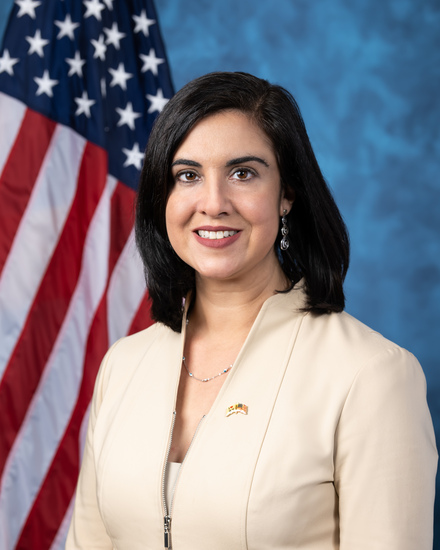
Rep. Nicole Malliotakis
Sponsored bills
Chiropractic Medicare Coverage Modernization Act of 2025 This bill expands Medicare coverage of chiropractic services to include all services provided by chiropractors, rather than only subluxation corrections through manual manipulation of the spine.
Maddy summaryThis bill codifies qualified immunity standards for law enforcement officers under federal law. It specifies that individual officers cannot be held liable in civil suits if they demonstrate either that the constitutional right at issue was not clearly established at the time of the incident, or that a prior court ruling already confirmed the conduct was lawful. Local government agencies also cannot be held liable if the officer is found not liable under these standards and was acting within their job duties. The law applies to all federal, state, tribal, and local officers with arrest powers, including police officers. The changes would take effect 180 days after enactment.
Maddy summaryHR 524, the "NO GOTION Act," blocks U.S. green energy tax credits for companies tied to specific countries. It amends tax law to deny benefits under sections like 30C, 45, and 48 to any "disqualified company" - defined as entities created in, controlled by, or linked to China, Russia, Iran, or North Korea. The law directly affects corporations with ties to these nations that seek federal tax incentives for clean energy projects. The policy takes effect for tax years after the bill's enactment, removing eligibility for these companies without altering other tax rules.
Maddy summaryHR 507, the Veterans Member Business Loan Act, amends the Federal Credit Union Act to explicitly include loans made to veterans as qualifying "member business loans" under credit unions. This change directly affects veterans seeking business financing through federal credit unions, allowing them to access these loans under the same framework as other small business borrowers. The key mechanism is adding a new definition category ("made to a veteran") to the existing eligibility criteria for business loans, using the standard military definition of "veteran" from Title 38, U.S. Code. The bill does not create new funding or programs but expands existing credit union lending options to include veterans. This definition change takes effect six months after the bill's enactment.
Maddy summaryThis bill creates special tax rules for certain Taiwanese residents with income from U.S. sources, primarily addressing double taxation concerns. It reduces withholding tax rates on interest, dividends, and royalties from 30% to 10% (or 15% for certain dividends) for qualified Taiwanese residents, and eliminates tax on certain wages paid to Taiwanese workers in the U.S. It also sets a $30,000 annual limit on tax-free income from entertainment or athletic activities. To qualify, individuals must meet specific residency and ownership criteria, and the bill requires reciprocal tax benefits from Taiwan before taking effect. This legislation is designed to facilitate economic activity between the U.S. and Taiwan without requiring a formal tax treaty.
Maddy summaryHR 450, the FORCE Act, prevents the U.S. government from removing Cuba from the State Sponsors of Terrorism list. It requires the President to make a specific determination under the 1996 LIBERTAD Act before Cuba can be removed. The bill directly affects Cuba's international designation status and U.S. foreign policy actions toward the country. It does not change existing law but blocks any removal until the specified determination is made. The provision applies to both the President and the Secretary of State.
Maddy summaryThis bill requires colleges and universities to establish a policy for awarding posthumous degrees to students who were enrolled in a degree program, died before completing it, and were in good academic standing at the time of death. It amends the Higher Education Act to mandate this institutional policy and updates accreditation standards to ensure they do not consider the number of posthumous degrees awarded. The policy must be implemented within one year of the law's enactment. This directly affects higher education institutions by changing their degree-issuance procedures for deceased students meeting specific criteria.
Maddy summaryThe FAIR PREP Act of 2025 prohibits the IRS from preparing individual tax returns or refund claims, except for the existing IRS Free File Program and certain qualified return preparation services. It clarifies that the IRS may still provide fillable tax forms with automated calculations and correct mathematical or clerical errors without violating the prohibition. The bill also bans the IRS from developing or operating new electronic tax preparation services after enactment without explicit new congressional authorization. This directly affects how the IRS delivers tax filing assistance, preserving current free options while restricting new government-run tools.
Maddy summaryHRES 41 is a symbolic resolution introduced in the U.S. House of Representatives to express support for designating January as "Tamil Language and Heritage Month." It does not create new laws or policies but formally recognizes the cultural significance of Tamil language, history, and contributions. The resolution highlights Tamil's 2,600-year history, the presence of 360,000 Tamil speakers in the U.S., and the Pongal harvest festival celebrated by Tamil communities. It aims to encourage Americans to learn about Tamil heritage and aligns with existing state-level recognitions in places like Michigan and Massachusetts. As a non-binding resolution, it directly affects public awareness and cultural celebration, not legal obligations.