

Maddy summaryHR 5267, the American Franchise Act, clarifies when franchisors can be considered joint employers of franchisee employees under federal labor laws. It defines "substantial direct and immediate control" over essential employment terms like wages, benefits, hours, hiring, and discipline - requiring franchisors to actively set these terms to be deemed joint employers. The bill explicitly excludes routine brand standards, training, or minimal safety requirements from constituting such control. This directly affects franchisors and franchisees by limiting joint employer liability to cases where franchisors exert significant, ongoing influence over core employment decisions. The law applies prospectively to new cases after enactment, not past disputes.
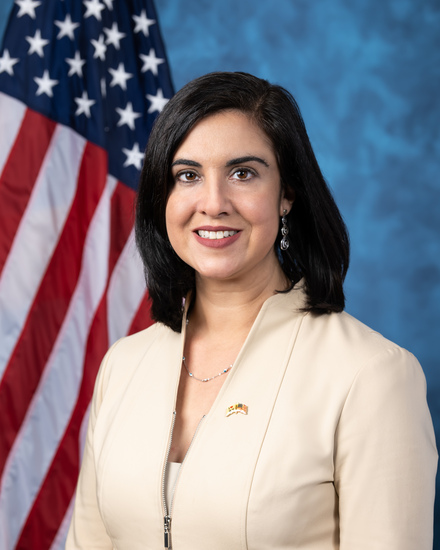
Rep. Nicole Malliotakis
Sponsored bills
Maddy summaryThis House resolution marks the 25th anniversary of the September 11, 2001 terrorist attacks by formally honoring the memory of the nearly 3,000 victims and recognizing the sacrifices made by first responders, military personnel, and the passengers of United Airlines Flight 93. The bill acknowledges the ongoing health challenges faced by survivors and responders, highlighting the role of the World Trade Center Health Program in providing long-term medical support. It also credits charitable organizations and community groups that have continued to assist victims' families and veterans over the past two decades. Finally, the resolution urges the American public to observe the anniversary with ceremonies and reaffirms Congress's commitment to remembering the events and lessons of that day.
This resolution states that the House of Representatives condemns and denounces socialism in all its forms, including the Democratic Socialists of America, and opposes the implementation of socialist policies in the United States; reaffirms its support for free, fair, and secure elections and calls for enactment of the SAVE America Act; reiterates that American elections are for American citizens only; and recommits itself to upholding the U.S. Constitution.
Maddy summaryThe American Mariner Tax Fairness Act amends the Internal Revenue Code to allow U.S. merchant mariners working on qualifying vessels in foreign trade to treat their earnings as foreign earned income for tax purposes. This change directly affects U.S. citizens or residents who are actively employed on large, U.S.-flagged ships of at least 6,000 deadweight tons used exclusively in international commerce. To qualify, a mariner must work at least 90 full days during any 12-consecutive-month period while the vessel is engaged in U.S. foreign trade. The bill effectively grants these workers the same tax exclusion benefits currently available to individuals working abroad, applying to taxable years beginning after the law's enactment.
Maddy summaryThe Stopping Foreign Influence in Elections Act of 2026 imposes new financial penalties on specific tax-exempt organizations that accept money from foreign nationals and subsequently donate to political committees. This law directly affects larger non-profits with significant assets or revenue, requiring them to pay fines ranging from 100% to 200% of the donation amount if they fail to screen donors properly. The bill also mandates that organizations making repeated violations lose their tax-exempt status for two years. These rules apply to contributions made after one year following the bill's enactment.
Maddy summaryThe Increasing Mental Health Options Act of 2026 expands Medicare coverage and oversight rules to include clinical psychologists in rural and underserved areas. Starting in 2026, clinical psychologists working in designated health professional shortage areas will receive an additional 10 percent payment for services provided to Medicare beneficiaries. The bill also removes certain federal restrictions that previously limited the types of care clinical psychologists could provide in outpatient rehabilitation, skilled nursing, partial hospitalization, home health, and inpatient psychiatric settings. These changes allow psychologists to supervise or provide care directly in these facilities as long as state laws permit it, while maintaining existing requirements for consultation with physicians.
Maddy summaryThe FRONTIER Act establishes a regulatory framework for the largest artificial intelligence developers to manage and disclose risks associated with their most powerful models, known as "frontier models." It requires companies meeting specific revenue and spending thresholds to create public safety frameworks, undergo independent third-party audits, and report incidents or potential harms to the Department of Commerce. The bill also creates a system where the Secretary of Commerce can issue emergency orders to suspend or restrict model development if an imminent catastrophic risk is identified. Additionally, the legislation preempts state laws that impose new obligations on AI developers regarding risk transparency, auditing, and incident reporting to ensure a uniform national approach.
Maddy summaryThe FIXER Act allows state and local governments to issue tax-free bonds for specific housing projects without being limited by the usual spending caps. This change applies to buildings that need repairs or upgrades, such as low-income housing where the required affordable rental period has ended or federally assisted structures. By removing these limits, the bill aims to make it easier to raise funds for preserving and improving existing residential rental properties. Additionally, the act adjusts rules on buying existing buildings to allow up to 50 percent of bond funds to be used for such acquisitions, up from the previous 15 percent limit.
Maddy summaryThis bill designates the United States Postal Service facility at 114 John Street in New York, New York, as the "Jack Greenberg Post Office." The legislation requires that all official government records, maps, and documents referring to this location use the new name. This change is intended to honor Jack Greenberg, a prominent civil rights attorney, by permanently associating his name with the building.
This bill designates the facility of the United States Postal Service located at 80 Atlantic Avenue in Oceanside, New York, as the "Detective Luis G. Alvarez Post Office".