Maddy summaryHRES 1061 is a symbolic resolution recognizing the cultural and historical significance of Lunar New Year in 2026. It does not create new laws or policies, but formally acknowledges Lunar New Year's origins (over 4,000 years in China), its celebration as Seollal in Korea and Tết in Vietnam, and its observance by millions of Asian Americans and others in the U.S. The resolution expresses respect for Asian Americans and extends holiday wishes for a "happy and prosperous new year" during the Year of the Horse. As a non-binding resolution, it has no legal effect or direct impact on any individuals or groups.
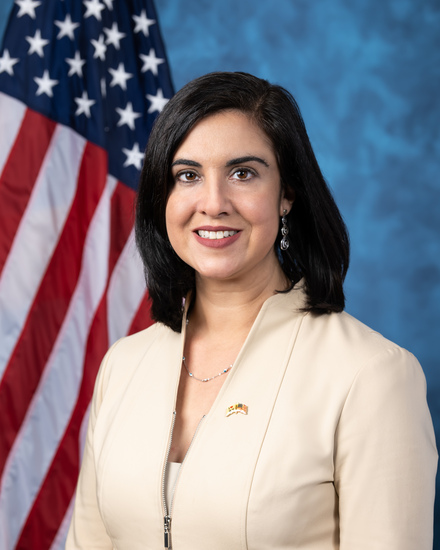
Rep. Nicole Malliotakis
Sponsored bills
Maddy summaryThe Pay Less at the Pump Act of 2026 ends a fee on certain chemicals that funded the Superfund program for hazardous waste cleanup after December 31, 2025. Starting January 1, 2026, companies subject to this fee will no longer be required to pay it. The bill also changes repayment rules for Superfund advances, requiring quarterly payments from unobligated funds until advances are fully repaid. This directly affects businesses that paid the Superfund fee, which applied to manufacturers and handlers of specific chemicals.
Maddy summaryThis bill authorizes the U.S. Mint to produce two types of commemorative $2.50 coins for the 250th anniversary of the Declaration of Independence: a circulating coin for everyday use and a numismatic (collector) coin. Both would feature designs based on the 1926 Sesquicentennial coin - showing allegorical liberty holding the Declaration on one side and Independence Hall on the other - with "1776-2026" inscriptions. The bill requires the Mint to issue these coins by July 4, 2026, if technically and economically feasible, but does not mandate their production or affect any specific groups beyond the public who may purchase them.
Maddy summaryThis bill extends medical coverage for 180 days after family caregivers stop providing personal care to veterans (unless dismissed for fraud), and adds employment support during this transition period. It provides up to $1,000 in reimbursement for certification fees, free training modules, and access to programs like Military OneSource and Veterans' Employment Services. The bill also requires studies on creating returnship programs for caregivers rejoining the workforce and on hiring former caregivers at VA facilities. Additionally, it mandates reports on retirement plan options for caregivers and VA efforts supporting their transition away from caregiving. The bill directly affects family caregivers designated under VA's program who are ending their caregiving role.
This bill designates the facility of the United States Postal Service located at 15422 NY 104 in Martville, New York, as the "Sergeant Staret J. Engleston Memorial Post Office Building".
Maddy summaryThis bill prevents state or local governments from banning or restricting energy connections (like installation, modification, or access) based on the type or source of energy, such as electricity, natural gas, or renewable fuels. It directly affects consumers choosing energy providers and energy companies seeking to offer services. The key provision prohibits local laws, regulations, or policies that limit energy services sold in interstate commerce, covering all energy types listed in the bill’s definitions. It does not create new programs but limits regulatory authority at the state or local level. The law aims to ensure open access to diverse energy sources without source-based restrictions.
Maddy summaryThis bill exempts certain less-than-lethal projectile devices from federal sales taxes and National Firearms Act restrictions. It directly affects manufacturers, importers, and producers of these devices, which are defined as non-lethal tools (like rubber bullets or beanbag rounds) designed not to cause serious injury and unable to be easily converted to use standard firearm ammunition. Key mechanisms include a 90-day classification process for manufacturers seeking exemption, an annual public list of approved devices, and annual congressional reports on devices excluded from the exemption. The policy change applies to devices meeting specific safety criteria, such as projectile velocity limits and design features preventing misuse as conventional weapons.
Safeguard American Voter Eligibility Act or the SAVE America Act This bill requires individuals to provide documentary proof of U.S. citizenship when registering to vote, and requires photo identification to vote, in federal elections. Specifically, the bill prohibits states from accepting and processing an application to register to vote in a federal election unless the applicant presents documentary proof of U.S. citizenship. The bill specifies what documents are considered acceptable proof of U.S. citizenship, such as identification that complies with the REAL ID Act of 2005 that indicates U.S. citizenship. Further, the bill (1) prohibits states from registering an individual to vote in a federal election unless, at the time the individual applies to register to vote, the individual provides documentary proof of U.S. citizenship; and (2) requires states to establish an alternative process to demonstrate U.S. citizenship. Each state must take affirmative steps on an ongoing basis to ensure that only U.S. citizens are registered to vote, which shall include establishing a program to identify individuals who are not U.S. citizens using information supplied by certain sources. Additionally, states must remove noncitizens from their official lists of eligible voters. The bill (1) provides for a private right of action for certain violations, and (2) establishes criminal penalties for certain offenses. Individuals voting in federal elections must present an eligible photo identification document. An individual who votes by absentee ballot must submit a copy of their identification document with both the request for, and the submission of, the absentee ballot.

Maddy summaryHR 7268, the CLEAN-UP Act, streamlines the removal or remediation of contaminated sediment in waterways by requiring the Army Corps of Engineers (as "Secretary") to develop a joint plan with local partners. This plan must protect human health and the environment, detail work methods, disposal locations, roles, and funding sources, and undergo public review. The bill shields the Corps from liability under federal environmental law for cleanup activities conducted under this approved plan. It maintains existing requirements for the government to seek cost recovery from polluters responsible for the contamination. The law directly affects federal and local agencies managing sediment cleanup projects under existing water resources programs.
Maddy summaryHR 7219, the FAIR MAP Act, requires states to redraw congressional districts to be contiguous, compact, and non-partisan, avoiding favoritism toward incumbents or political parties. It mandates that districts maintain population equality based on citizen and legally present immigrant counts (excluding undocumented individuals) and prohibits states from redrawing districts more than once between federal censuses unless required by court order. The bill also adds a citizenship checkbox to the 2030 and future decennial censuses to determine apportionment and bans ranked-choice voting for federal elections. Additionally, it requires photo ID for in-person voting and signature verification for mail ballots for federal races, effective after 2026. These provisions directly affect how states establish congressional maps and conduct federal elections.