

Head Start Shutdown Protection Act of 2025 This bill requires the Department of Health and Human Services to reimburse a state, local government, or school district that uses its funds to maintain participation in the Head Start program or the Early Head Start program during a government shutdown in which there is a lapse in federal appropriations for the programs. The Head Start programs provide comprehensive early childhood education and development services to low-income children. The programs seek to promote school readiness through the provision of educational, health, nutritional, social, and other services.
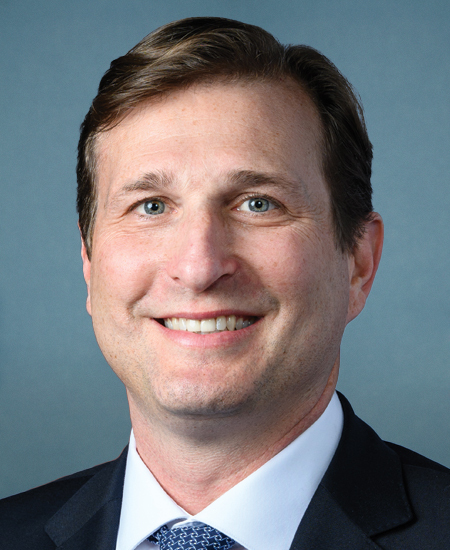
Rep. Daniel S. Goldman
Sponsored bills
Maddy summaryThis resolution formally recognizes the vital role of Spanish-language media in serving over 41 million U.S. residents who speak Spanish at home. It affirms that access to Spanish-language news and entertainment is essential for community engagement, combating misinformation, and supporting democratic participation. The House resolution specifically commends Spanish-language media professionals and encourages policies that sustain this media sector, which provides culturally relevant information on elections, health, and civic life. As a symbolic gesture (not a law), it has no direct policy changes but highlights the sector's importance to Latino communities and national inclusivity.
Maddy summaryThis bill establishes the New York-New Jersey Watershed Restoration Program to coordinate and fund habitat restoration and water quality improvements across the shared watershed region. It creates a competitive grant program providing federal matching funds (up to 90% for small/rural/disadvantaged communities) to state/local governments, nonprofits, and tribes for projects advancing habitat restoration, climate resilience, and public access. The program prioritizes communities facing environmental injustice and requires coordination with existing regional conservation plans like the Hudson River Estuary Program. Funding of $20 million annually (2026-2031) will support these activities, with 75% dedicated to the grant program and all projects supplementing existing conservation efforts.
Keep Air Travel Safe Act This bill provides continuing appropriations for the Transportation Security Administration (TSA) during any period in which there is a lapse in appropriations for TSA. It also requires the continuing appropriations to be funded using certain unobligated funds that were provided to U.S. Immigration and Customs Enforcement by the One Big Beautiful Bill Act. The bill provides the appropriations for TSA to continue all programs, projects, or activities (including the costs of direct loans and loan guarantees) that were funded in the preceding fiscal year. The appropriations provided by this bill are available from the first day of a lapse in appropriations for TSA until the earlier of the date on which the applicable regular appropriations bill for the fiscal year becomes law or a joint resolution making continuing appropriations becomes law, or the date that is 180 days after the first day of a lapse in appropriations.
Maddy summaryThis resolution requires the House of Representatives to hold daily meetings and recorded attendance checks during government shutdowns. Members must electronically confirm their presence each day via a "quorum call," with fines of $500 for a first offense and $2,500 for repeat failures. Fines cannot be paid using campaign or official funds, and the rules apply to all House members, including delegates and the Resident Commissioner. The bill aims to ensure continuous House operations during shutdowns but does not alter the cause or duration of shutdowns.
Maddy summaryHRES 792 is a symbolic resolution designating May 31, 2026, as "Youth Mental Health Day" and September 9 annually as "Youth Suicide Prevention Day." It calls for increased investments in youth mental health services and encourages state and local governments to adopt these observances while promoting community-based mental health initiatives. The resolution does not create new laws or allocate funding but aims to raise awareness about the youth mental health crisis, which disproportionately affects marginalized groups like LGBTQ+, Black, Indigenous, and low-income young people. It references CDC and NIH data showing rising rates of depression, suicidal ideation, and suicide among U.S. youth, particularly ages 10-34.
Maddy summaryHRES 797 is a non-binding resolution expressing concern about the rising number of book bans in U.S. schools and libraries. It cites PEN America data showing 6,870 book bans affecting 3,751 titles between July 2024 and June 2025, with books about race, LGBTQ+ experiences, and marginalized communities disproportionately targeted (e.g., *The Handmaid’s Tale*, *Maus*, *This Book Is Gay*). The resolution calls on schools to follow best practices for book challenges, protect students’ access to diverse materials, and return books removed from military schools under recent executive orders. It directly addresses students, educators, librarians, and authors impacted by censorship, emphasizing that such bans threaten free expression and democratic values.
Maddy summaryHRES 795 is a non-binding resolution condemning Hamas for the October 7, 2023, attacks that killed over 1,200 people, took 251 hostages (including Americans), and involved sexual violence. It demands Hamas immediately surrender and release all remaining hostages - specifically noting 48 people still held, including two U.S. citizens. The resolution also affirms Israel’s right to self-defense, calls for humanitarian aid to reach Palestinians, and condemns global antisemitism following the attacks. As a symbolic congressional statement, it does not create new laws or alter policies.
Maddy summaryHR 5705 requires the federal government to reimburse state agencies for funds they use to maintain participation in the WIC program during a government shutdown. It directly affects states that cover WIC costs using their own money when federal funding lapses. The bill establishes a process where states can seek reimbursement from the federal government after the shutdown ends. This ensures states aren’t burdened with costs for a federal funding gap that impacts nutrition assistance for women, infants, and children.
Maddy summaryThis bill creates a federal grant program to help communities develop non-police mental health crisis response teams. It provides funding for local governments, clinics, fire departments, and nonprofits to recruit behavioral health professionals, establish co-response teams (combining mental health clinicians with emergency responders), and integrate these teams into 911 or 988 dispatch systems. The grants specifically support replacing police as the primary responders for mental health crises with clinician-led mobile teams or emergency medical services, while respecting existing state laws on detention. Recipients must report on response outcomes, diversion rates (cases handled without police), and community feedback.