

Maddy summaryThe Workforce of the Future Act of 2025 requires federal agencies to produce reports analyzing artificial intelligence's impact on the workforce, including data on affected industries, demographic impacts, and necessary skills. It authorizes $160 million in Department of Education grants to expand emerging and advanced technology education in schools, with a focus on underserved communities and students from low-income backgrounds. The bill also allocates $90 million in Department of Labor grants to support workforce training for workers most affected by AI, particularly those in high-impact industries. Both programs require detailed reporting on demographic data and will be evaluated for effectiveness. The legislation aims to prepare workers and students for an AI-driven economy through education, training, and equitable access to technology skills.
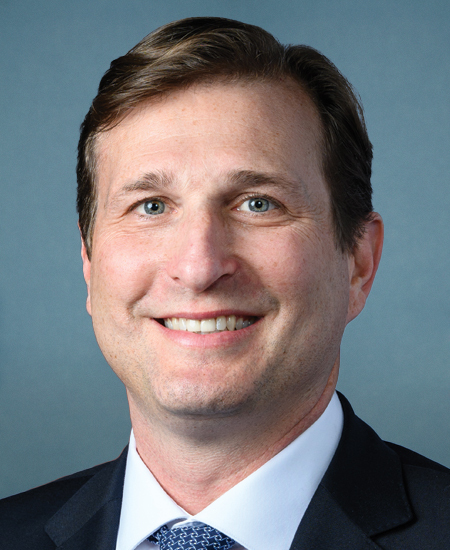
Rep. Daniel S. Goldman
Sponsored bills
Maddy summaryThis concurrent resolution (HCONRES 65) is a symbolic congressional commendment of state and local governments that have affirmed reproductive rights as human rights. It recognizes efforts by jurisdictions like Carrboro, North Carolina; Austin, Texas; and Fulton County, Georgia, which passed resolutions or proclamations declaring abortion access a human right and condemning criminalization of pregnancy outcomes. The resolution urges states to repeal restrictive abortion laws and protect access to reproductive care, but it does not create new legal requirements or fund programs. As a procedural resolution, it has no binding effect on federal or state law.
Maddy summaryThis bill increases federal student loan limits for graduate and professional students. Starting July 1, 2026, it sets a $50,000 annual limit and a $200,000 total aggregate limit (beyond undergraduate borrowing) for unsubsidized Federal Direct Stafford loans. These changes directly affect graduate and professional students pursuing advanced degrees who rely on federal loans for education costs. The provisions aim to provide higher borrowing capacity for these students' educational expenses under the Higher Education Act.
Maddy summaryThis bill authorizes $250 million over five years to fund grants for states, school districts, and eligible Tribal schools to expand computer science education. It requires grantees to provide computer science courses for all high school students within five years, create early access from pre-K through middle school, and implement plans to close equity gaps for underrepresented groups (including minority students, girls, and low-income youth). Grant funds must cover teacher training, high-quality learning materials, and targeted support for underrepresented students, with strict limits on equipment spending (max 15%). Grantees must report annually on student participation data disaggregated by race, gender, and socioeconomic status.
Maddy summaryHR 6597, the LET’S Protect Workers Act, increases civil penalties for employers violating key labor laws to strengthen worker protections. It raises fines for child labor violations to up to $700,000 per incident causing death or serious injury, and doubles penalties for repeated wage/hour violations (up to $50,000 per violation). The bill also significantly boosts OSHA penalties (e.g., up to $800,000 for serious violations), adds new retaliation penalties for mine safety violations (up to $200,000 for repeat offenses), and clarifies that recordkeeping violations continue until corrected. These changes apply to employers across sectors, including manufacturing, agriculture, and mining, under the Fair Labor Standards Act, Occupational Safety and Health Act, and Mine Safety Act.
Maddy summaryThis bill prohibits Department of Homeland Security (DHS) officers from arresting or detaining immigrants at immigration court facilities during hearings or while arriving/departing for hearings, except with a judicial warrant. It applies to all pending immigration cases, appeals, and motions to reopen, covering anyone whose removal order isn't final. Exceptions allow arrests only to prevent imminent threats to life, safety, or national security. The bill also requires DHS to report scheduled check-in arrests to the Inspector General and mandates annual oversight reports to Congress on compliance.
Maddy summaryThe Military in Law Enforcement Accountability Act requires the President to submit detailed justification to Congress before the military provides support to civilian law enforcement, including specific budget, timeline, and funding details, with a 30-day limit on such support unless Congress approves a longer period through a specific joint resolution process. It prohibits Department of Defense personnel (including military members) from holding civilian law enforcement positions concurrently, with limited exceptions for reserve members who must recuse during active duty. The bill also removes the military's authorization to deploy for "civil disturbances" without the new approval process and establishes a private right for individuals or governments to sue the federal government for violations. This directly affects the Department of Defense, military support to local police agencies, and DoD personnel's dual employment policies.
Maddy summaryThis bill provides a one-time $200 monthly payment to eligible Social Security, SSI, railroad retirement, and veterans disability/pension beneficiaries during January-June 2026. It directly affects individuals receiving these specific benefits who reside in U.S. states, territories, or the District of Columbia, with payments delivered through existing benefit channels. Key provisions include treating these payments as non-income for tax and program eligibility purposes, prohibiting double payments for multiple benefits, and ensuring payments cannot be offset or assigned. The payments expire by July 2026, and the bill includes specific administrative funding for implementation.
Maddy summaryThis bill directs the American Battle Monuments Commission to correct historical errors by identifying Jewish World War I and II veterans buried overseas under incorrect Christian markers (Latin crosses) and replacing them with appropriate markers. It establishes a 10-year program to contact families of affected veterans, with the Commission funding the effort at $500,000 annually through nonprofit contracts. The program specifically targets veterans buried in foreign U.S. military cemeteries with markers indicating non-Jewish faith, addressing a documented mistake affecting approximately 900 Jewish servicemembers. This directly affects Jewish veterans' families by honoring their heritage and correcting past burial inaccuracies.
Maddy summaryHR 6497, the Temporary Immigration Judge Integrity Act, establishes specific rules for appointing temporary immigration judges to handle cases while permanent judges are being hired. It limits temporary judges to 6-month terms (renewable up to four times for a maximum of 24 months), requires them to have at least 10 years of immigration law experience (e.g., former judges, DOJ attorneys, or experienced administrative law judges), and mandates 8 weeks of initial training plus weekly training unless they recently served as permanent judges. The bill also requires the Attorney General to oversee caseloads and performance, ensuring temporary judges have the same authority as permanent judges but emphasizing they should not replace permanent positions. This directly affects immigration courts and the temporary judges appointed under these new standards.