

Maddy summaryHR 7016, the "No Funds for NATO Invasion Act," blocks federal funding for any U.S. military invasion of a North Atlantic Treaty Organization (NATO) member country or territory covered by NATO's Article 5 mutual defense clause. The bill prohibits using any federal funds for such invasions and bans U.S. officials from executing these actions. It directly affects U.S. military operations and funding decisions involving NATO members. The law applies to all federal spending, preventing the use of existing budgets for this specific purpose.
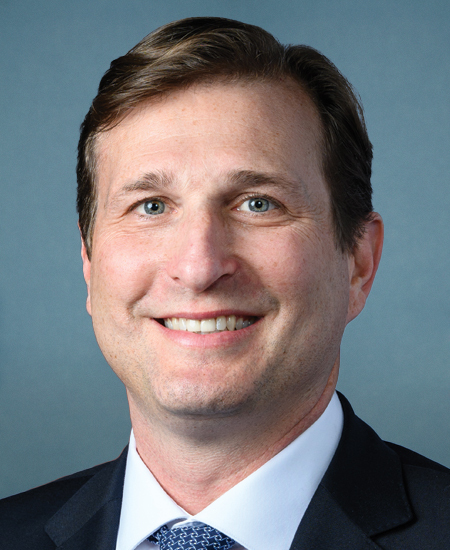
Rep. Daniel S. Goldman
Sponsored bills
Maddy summaryHR 7004 prohibits federal elected officials, congressional staff, political appointees, and executive branch employees from trading prediction market contracts using material nonpublic information about government policy, actions, or political outcomes. It bans any purchase, sale, or exchange of these contracts when the individual possesses or could reasonably obtain such nonpublic information - defined as important investment details not available to the public. The bill directly affects government insiders who might otherwise trade on inside knowledge of upcoming decisions or election results through prediction markets. Key provisions clarify that covered transactions include any financial instrument tied to future government events, listed on platforms operating across state lines. This creates a specific insider trading rule for prediction markets, distinct from general securities laws.
Maddy summaryHR 7002, the Justice for Exploited Children Act, amends the Fair Labor Standards Act to increase penalties for employers violating child labor laws involving minors under 18. It adds criminal penalties for repeated or willful violations, including fines up to $100,000 or 5 years in prison, and significantly higher fines for violations causing death or serious injury to child employees (up to $500,000 or 10 years imprisonment). Civil penalties are also raised, with minimum fines of $1,000 for standard violations and $50,000 for violations causing a child’s death (doubled for repeat or willful cases). The bill directly affects employers who violate child labor protections, aiming to strengthen enforcement through steeper financial and criminal consequences.
Maddy summaryThis concurrent resolution (HCONRES 69) commemorates the 15th anniversary of the January 8, 2011, Tucson shooting that killed six people and injured 13, including former Congresswoman Gabby Giffords. It honors the victims, survivors, and Giffords - now a prominent advocate for gun violence prevention - and recognizes her leadership in promoting civility and reducing gun violence. The resolution also commends Tucson residents and first responders for their resilience and reaffirms Congress’s commitment to respectful dialogue and opposing political violence. As a ceremonial resolution, it does not create new laws or policies.
Maddy summaryHR 6989, the Public Health Nursing Act, provides $5 billion annually (2026-2035) to expand the public health nursing workforce through grants to state, local, and territorial health departments. It directly affects underserved communities by funding the recruitment, hiring, and training of registered nurses in areas with high chronic disease rates, maternal mortality, low-income populations, or rural settings. Key provisions require grant recipients to use funds for nurse wages, medical supplies (like PPE), and administrative costs, while prioritizing services for medically underserved groups and culturally appropriate care. The bill also mandates maintaining pre-grant funding levels and defines public health nurses as those providing preventive care, maternal health services, and chronic disease management.
Maddy summaryHR 1601, the Defending Ukraine’s Territorial Integrity Act, prohibits U.S. federal funds from being provided to any foreign government that recognizes Russian-occupied Ukrainian territories (including Crimea, Donetsk, Kherson, Luhansk, and Zaporizhzhia) or supports Russia's annexation of Ukraine. The bill requires the Secretary of State to publish a list of such countries on the State Department website and allows limited waivers for national security reasons. It directly affects foreign governments that formally acknowledge Russian control over these regions, restricting their access to U.S. aid. The law aims to uphold U.S. policy against recognizing Russia's territorial claims in Ukraine through concrete funding restrictions.
Maddy summaryHR 1600, the Crimea Annexation Non-Recognition Act, prohibits U.S. federal departments and agencies from taking any action that implies recognition of Russia's claim to Crimea, its airspace, or territorial waters. The bill states U.S. policy explicitly rejects recognizing Russia's sovereignty over Crimea and requires federal agencies to avoid any actions that could be interpreted as such recognition. This directly affects all U.S. federal agencies by restricting their activities related to Crimea, such as diplomatic engagements or aid programs that might imply acceptance of Russia's control. The bill does not impose new sanctions or funding changes but establishes a clear policy stance on diplomatic recognition.
Maddy summaryHJRES 136 would require the President to issue an annual proclamation designating a day as "Democracy Day" each year. The proclamation must call on state and local governments, as well as educational authorities, to observe the day through programs and activities promoting civic engagement. The bill does not specify which date must be designated, leaving that decision to the President annually. This is a procedural measure focused on directing an existing executive action to foster democratic awareness, without creating new laws or altering existing policies.
Maddy summaryThis bill prohibits states from pursuing or collecting Medicaid recovery claims against individuals' estates for payments made during their lifetime. It requires states to withdraw all existing recovery liens within 90 days of enactment and notify affected individuals or their estates. The law specifically ends state efforts to reclaim Medicaid funds from beneficiaries' estates after death, applying to claims initiated before the law's effective date. It directly affects Medicaid beneficiaries and their estates who were subject to prior state recovery actions. The key mechanism is a mandatory 90-day withdrawal of all existing liens and a permanent ban on new recovery claims for correctly paid assistance.
Maddy summaryThis bill prohibits the use of federal funds for any military action against Venezuela from its enactment date through December 31, 2026, unless Congress either declares war or passes new specific authorization meeting War Powers Resolution standards. It directly affects all federal agencies and military operations that would require funding for actions targeting Venezuela. The key mechanism blocks funding for military force unless Congress explicitly authorizes it through one of two specific pathways. A narrow exception allows actions already compliant with existing War Powers Resolution rules. This is a funding restriction, not a ban on military action itself.