

Maddy summaryThis joint resolution seeks to officially reject a final rule issued by the Department of Education regarding federal student loan programs. If passed, the measure would prevent the new regulations from taking effect, leaving the previous rules in place. The bill directly impacts borrowers, lenders, and the Department of Education by nullifying the specific changes outlined in the "Reimagining and Improving Student Education" proposal. It is a procedural action that uses the Congressional Review Act to disapprove the agency's policy without altering the underlying law.
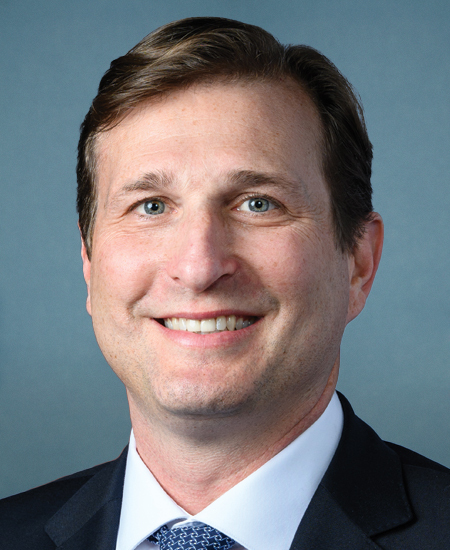
Rep. Daniel S. Goldman
Sponsored bills
Maddy summaryThe Protect Working Musicians Act of 2026 allows independent musicians and small music businesses to collectively negotiate licensing terms with large online music streaming platforms without fear of antitrust lawsuits. To qualify for this protection, creators must own their own copyrights and earn less than $1 million in licensing revenue annually, while the platforms targeted must generate over $100 million in music-related revenue. The law explicitly permits these groups to coordinate on pricing and licensing strategies, provided the negotiations remain fair and do not involve outside parties. Additionally, the bill extends similar collective bargaining protections to negotiations with companies developing generative artificial intelligence systems.
Maddy summaryThe Gambling Disorder Health Study Act directs the Secretary of Health and Human Services to conduct research on gambling disorder, a behavioral addiction recognized by the American Psychiatric Association. This initiative aims to fill a current gap in federal oversight by funding studies on the causes, impacts, and treatments of gambling addiction, particularly in light of recent state legalization of sports betting. The program will involve collaboration with various federal agencies, academic institutions, and nonprofit organizations to analyze how different forms of gambling, including online platforms and mobile apps, affect individuals and communities. Findings from this research will be reported annually to Congress, which will then review recommendations for public health actions and policy changes. Funding for these efforts is authorized from 2027 to 2029, based on a percentage of taxes collected from gambling activities.
Maddy summaryThe Bipartisan Transparency for American Taxpayers Act prohibits the use of federal funds to pay claims submitted to the Anti-Weaponization Fund. This fund was established by the Department of Justice on May 18, 2026, and the bill specifically bars any money from being used for these payments. The legislation directly affects the Department of Justice and any individuals or entities seeking reimbursement from this specific fund. By restricting funding sources, the bill aims to prevent taxpayer money from being spent on claims directed to this newly created entity.
Maddy summaryThis bill, the Provider Reimbursement Stability Act of 2026, aims to create more predictable payment adjustments for physicians and other healthcare providers under the Medicare program. It directly affects medical practices and providers who receive reimbursement for services through the physician fee schedule. The legislation increases a threshold for certain budget neutrality calculations from $20 million to $54.3 million in 2027, with automatic increases every five years thereafter. It also requires the government to correct payment estimates when actual service usage differs significantly from projections, mandates regular updates to cost calculations for practice expenses, and limits how much Medicare payment rates can change from year to year to a maximum of 2.5 percent.
Maddy summaryThis bill authorizes the U.S. Mint to produce commemorative $5 gold and $1 silver coins marking the 25th anniversary of the September 11, 2001, terrorist attacks. The coins must feature designs honoring victims and first responders (including the inscription "Never Forget") and will be sold only during 2027-2028. All surcharges ($35 per gold coin, $10 per silver coin) collected from sales will fund the National September 11 Memorial and Museum at the World Trade Center, with no net cost to the federal government. The coins are legal tender but primarily intended for collectors, not circulation.
Maddy summaryThis concurrent resolution directs the President to withdraw U.S. military forces from active hostilities with Iran. The measure relies on the War Powers Resolution, requiring the President to end combat operations unless the forces are needed to defend the United States or its allies from an immediate attack. Any continued use of troops in such defensive scenarios must still follow specific reporting and notification rules, and full military engagement is only permitted if Congress explicitly authorizes it through a formal declaration of war or a specific authorization for force.
Maddy summaryThe No Taxpayer-Funded Settlement Slush Funds Act of 2026 prohibits the use of federal money to pay specific settlements involving high-ranking government officials and their close associates. It bars payments to the President, Vice President, their immediate families, cabinet members, senior executive staff, political appointees, and individuals connected to these roles, as well as any entity owned by the President or Vice President. Additionally, the bill restricts settlements related to claims about the January 6 Capitol attack, foreign election interference, or previously dismissed lawsuits, while requiring Treasury reports for large settlements and allowing the government to seek repayment if rules are broken.
This bill designates the facility of the United States Postal Service located at 5951 Riverdale Avenue in Bronx, New York, as the "Eliot L. Engel Post Office".
Maddy summaryThis bill increases federal reimbursement for states operating summer nutrition programs. It requires the Secretary of Agriculture to pay states 90% of monthly administrative costs for two programs: the summer electronic benefits transfer program for children (under the School Lunch Act) and the Supplemental Nutrition Assistance Program (SNAP). This directly affects states that administer these programs, providing them with significantly more federal funding to cover operational expenses. The key change is raising the reimbursement rate from previous levels to 90% for both programs' administrative costs during fiscal years they are operated.