

Maddy summaryThe Interstate Ferry Fairness Act allows privately owned ferries and ferry terminals operating between two adjoining states to receive federal funding for construction and purchase. Under this legislation, private ferry operators can apply for federal assistance if the Secretary of Transportation determines the project provides substantial public benefits or meets surface transportation needs. The bill also permits privately owned ferries to charge fares that cover operational costs plus a reasonable rate of return approved by the Secretary. These changes expand eligibility for the Ferry Boat Program beyond publicly owned vessels, while maintaining oversight on fare structures and fund usage.
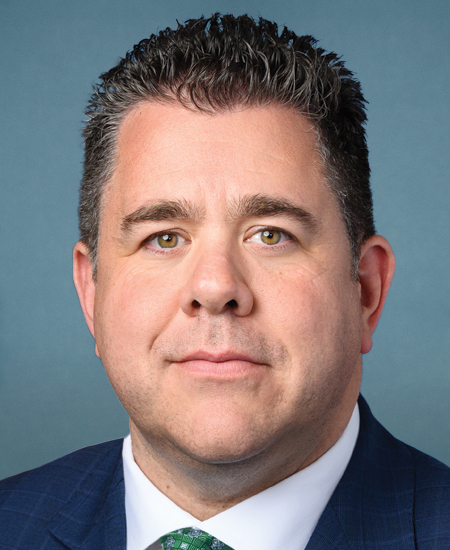
Rep. Nick LaLota
Sponsored bills
Maddy summaryThis bill expands family leave protections under the Family and Medical Leave Act to include time off for employees when their son or daughter dies. It allows eligible workers to take up to 12 weeks of unpaid leave within 12 months of the death, with provisions for using paid leave balances and requiring advance notice when the loss is foreseeable. The legislation also updates rules for civil service employees and establishes certification requirements that employers may request to verify the need for leave.
Representing our Seniors at VA Act of 2025 This bill expands the membership of the Geriatrics and Gerontology Advisory Committee within the Veterans Health Administration by requiring the addition of one representative from the National Association of State Veterans Homes who holds a professional license in nursing home administration. Additionally, the committee must consult with the National Association of Veterans State Homes with respect to matters concerning the association.
Love Lives On Act of 2025 This bill extends entitlement for various benefit programs and services for surviving spouses of deceased members of the Armed Forces or veterans. The bill provides that the remarriage of a surviving spouse must not bar the furnishing of dependency and indemnity compensation or special pension benefits to such spouse. Additionally, the Department of Defense may not terminate the payment of an annuity for a surviving spouse under the Survivor Benefit Plan solely because the surviving spouse remarries. The bill also expands the definition of a dependent under TRICARE to include a remarried widow or widower whose subsequent marriage has ended due to death, divorce, or annulment.
Maddy summaryThis bill extends funding periods for several key water restoration programs through 2031, including the Great Lakes Restoration Initiative, Long Island Sound program, and Columbia River Basin restoration. It modifies the San Francisco Bay program to require 25% non-Federal cost-sharing for projects and updates coastal water quality monitoring rules to include new testing technologies. The bill also restricts federal funds for these programs from going to non-U.S. entities or those partnering with "foreign countries of concern." These changes directly affect state, local, and nonprofit entities managing federally funded water restoration projects across specific geographic regions.
Maddy summaryThe Military Financial Literacy Act of 2026 expands personalized financial and housing counseling services for members of the Armed Forces. It requires the Department of Defense to establish a one-on-one counseling program within one year that covers credit management, budgeting, anti-predatory lending, rental planning, VA home loans, and legal protections under the Servicemembers Civil Relief Act. The program must partner with HUD-approved, tax-exempt Veteran Service Organizations that have expertise in financial literacy and housing stability. The Secretary of Defense must submit a report to Congress within two years detailing the number of service members who received counseling, completion rates, and indicators of financial stress or housing instability among participants.
Maddy summaryThe ISLET Act amends federal regulations to allow the use of human cadaveric islets for transplantation without classifying them as drugs or biological products. This change directly affects patients with diabetes who may receive islet cell transplants and the healthcare providers who administer these procedures. The bill requires the Secretary of Health and Human Services to update existing regulations within one year and submit a progress report to Congress within six months. By removing islets from drug and biological product categories, the legislation aims to streamline regulatory oversight for this specific type of medical treatment.
Bill to Outlaw Wounding of Official Working Animals Act or the BOWOW Act This bill establishes that a non-U.S. national ( alien under federal law) convicted of, or who admits to having committed, an offense related to harming animals used in law enforcement is inadmissible and deportable.
Maddy summaryThe Fiscal Contingency Preparedness Act (HR 4642) requires the Treasury Secretary and OMB Director to annually examine how the federal government would respond to major crises like recessions, pandemics, natural disasters, or cyberattacks, including their short- and long-term fiscal impacts. It mandates these assessments be included in an existing annual report and specifies key crisis types to evaluate. The Government Accountability Office (GAO) must then review the methodology and results of these assessments within one year of the first report. The bill directly affects federal agencies responsible for fiscal planning (Treasury and OMB) but does not create new spending or alter existing programs. It focuses solely on improving preparedness through structured risk analysis.
Maddy summaryThis bill directs the Director of National Intelligence to conduct a comprehensive assessment of how the Chinese Communist Party has used foreign malign influence activities outside the United States since January 1, 2023. The assessment must examine impacts on U.S. alliances, regional perceptions, financial systems, and overall national security interests in key areas including the Indo-Pacific, Africa, Latin America, and Europe. The intelligence community must submit an initial report within 90 days and a final report within 180 days to designated congressional committees, with reports provided in unclassified form that may include a classified annex.