

Maddy summaryHR 3519, the Hot Foods Act of 2023, amends the Food and Nutrition Act of 2008 to allow Supplemental Nutrition Assistance Program (SNAP) benefits to be used for hot foods or hot food products ready for immediate consumption at participating retailers. This change directly affects SNAP recipients who purchase such hot foods and retailers that sell them. The key provision removes the previous exclusion of hot foods from SNAP eligibility, while adding a limit that no more than 50% of a retailer's total gross sales from SNAP can come from hot foods. The bill clarifies that hot foods can be purchased for home or immediate consumption, aligning SNAP rules with current retail practices for prepared foods.
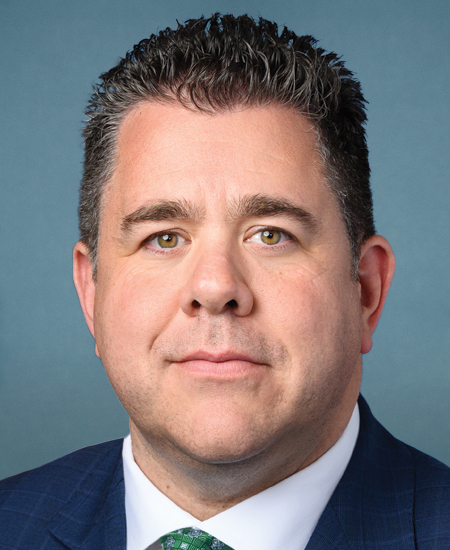
Rep. Nick LaLota
Sponsored bills
Maddy summaryThe SAFE Act of 2023 extends a 2018 law that prohibits slaughtering animals for human consumption to include horses, donkeys, and other equine animals, such as ponies. It amends Section 12515 of the Agriculture Improvement Act of 2018 by updating the language to replace "dog or cat" with "dog, cat, or equine" in both the section title and the main prohibition. This change directly affects the livestock industry and slaughter facilities by banning the processing of equines for food. The bill modifies existing law without adding new enforcement mechanisms, closing a gap in animal protection.
This resolution states that the government of the United Kingdom should enter into negotiations with the government of Greece to facilitate the return of the Parthenon Marbles to Greece. (The Parthenon Marbles are marble sculptures that were removed from the Parthenon in the early 19th century when it was under Ottoman rule and later transferred to the British Museum.)
Maddy summaryHR 3099 establishes a new Special Envoy for the Abraham Accords within the State Department, directly affecting U.S. diplomatic efforts and coordination. The envoy, appointed by the President with Senate confirmation, will coordinate U.S. government activities to expand diplomatic, economic, and security ties between Israel and Muslim-majority countries, including encouraging nations without formal relations with Israel to establish them. Key duties include strengthening existing Accords partnerships, fostering regional cooperation on issues like trade and water security, and providing diplomatic support for Israel’s regional engagement. The envoy must submit annual reports to Congress detailing specific diplomatic efforts and progress with partner countries.
Maddy summaryHR 4070, the Disaster Mitigation and Tax Parity Act of 2023, excludes certain payments received from state disaster mitigation programs from taxable income. It directly affects homeowners who get funds from state or state-regulated programs to make property improvements specifically designed to reduce damage from windstorms, earthquakes, or wildfires (like installing fire-resistant roofing or seismic upgrades). The bill adds a new tax exclusion in the Internal Revenue Code, meaning these qualified mitigation payments won't be counted as gross income for tax purposes. This change applies to payments made after December 31, 2020, with options for retroactive tax filings.
Maddy summaryHR 4021, the Fair and Open Skies Act, amends U.S. aviation law to require that the Department of Transportation consider labor standards when reviewing international air transport agreements. Specifically, it adds "preventing the undermining of labor standards" as a mandatory factor in the public interest test for approving such agreements under 49 U.S.C. § 40101. This change directly affects international airlines seeking to operate flights to or from the U.S. and the DOT, which must now evaluate whether proposed agreements could weaken U.S. labor protections. The bill updates existing provisions by replacing outdated language about "agreements with the United States Government" and explicitly including labor standards in the evaluation criteria.
Maddy summaryThis bill changes the tax treatment of unused commuter benefit funds. It requires employees to include one-time distributions from transportation fringe benefit accounts (used for commuting costs) in their taxable income for the year they receive the payment. The distribution must occur within six months of the bill's enactment and cannot exceed the highest account balance since March 2020 or the current balance. This directly affects employees who had unused funds in these pre-tax commuter accounts, making those distributions taxable income instead of tax-exempt.
Maddy summaryThe Neighborhood Homes Investment Act creates a new tax credit for developers who rehabilitate or build affordable homes in distressed communities. The credit is calculated based on the difference between rehabilitation costs and the sale price, with homes required to be sold at affordable prices to qualified homeowners with incomes up to 140% of the local median family income. The bill targets specific "qualified census tracts" defined by high poverty rates, low homeownership, and below-average home values. Developers must ensure homes are sold to qualified homeowners who use them as primary residences for at least five years, with additional safeguards to prevent program abuse and ensure fair housing practices.
Wild Horse and Burro Protection Act of 2023 This bill prohibits the Bureau of Land Management (BLM) from using or contracting for the use of helicopters or fixed-wing aircraft for gathering horses and burros under the Wild Free-roaming Horses and Burros Act. Further, BLM may not make contracts to use helicopters for transporting captured animals under such act.
Maddy summaryHRES 482 is a ceremonial resolution commending Raul L. Ortiz upon his retirement after 32 years of service with the U.S. Border Patrol. It formally recognizes his career, including his role as the 25th Chief of the Border Patrol (appointed August 2021), and acknowledges his leadership during his tenure. The resolution contains no policy changes or new laws; it is solely a gesture of appreciation from the House of Representatives. It does not affect any individuals or policies beyond expressing formal recognition of Ortiz’s service.