

Maddy summaryHR 5218, the Federal Data Center Enhancement Act of 2023, extends the expiration date of the Federal Data Center Optimization Initiative from 2022 to 2026. It requires federal agencies to meet new minimum standards for any new data centers or substantial upgrades, including sustainable energy use, cybersecurity protections, physical security, and high uptime. Agencies must prioritize commercial cloud services over custom infrastructure and report compliance to Congress. The bill mandates annual GAO audits to verify agencies meet these standards for both new and existing data centers. This directly affects all federal agencies managing data centers by setting concrete operational and security requirements.
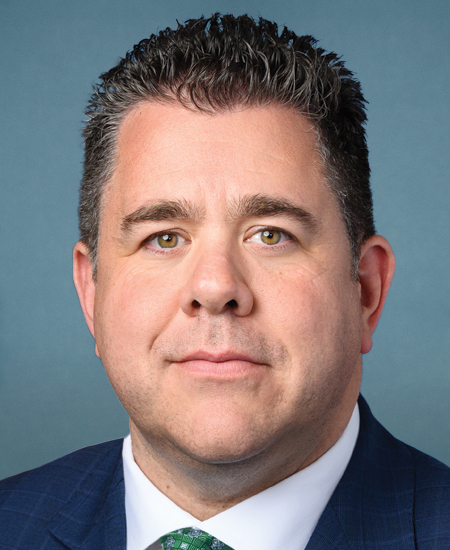
Rep. Nick LaLota
Sponsored bills
Maddy summaryThe ACES Act directs the Department of Veterans Affairs to fund a National Academies study examining cancer rates among active-duty military aircrew members (including pilots and navigators in fixed-wing aircraft). The study will identify potential military-related exposures linked to specific cancers - such as lung, prostate, melanoma, and others - and analyze existing VA, Defense, and CDC health data. It requires the National Academies to report findings to Congress on cancer prevalence and mortality among these service members. This bill focuses on gathering scientific data to inform future policy, not on immediate benefits or changes.
Maddy summaryThe CARE Act of 2023 amends the program for family caregivers of veterans to improve transparency and accessibility. It requires the Department of Veterans Affairs (VA) to include relevant medical specialists in caregiver evaluations, provide detailed annual reports to Congress on application outcomes (broken down by race, gender, and service details), and clarify how eligibility decisions are made. The bill also creates a fee-free process for recognizing organizations and individuals who help veterans, family members, and caregivers navigate VA services without charging users. These changes directly affect veterans' family caregivers and VA administrative processes, focusing on clearer eligibility standards and data-driven accountability.
Maddy summaryThe SHELLS Act creates a new Office of Aquaculture within the U.S. Department of Agriculture to support sustainable shellfish farming (like oysters and clams), algae cultivation, and land-based aquaculture systems. It establishes an advisory committee with 14 members representing aquaculture farmers, Tribal communities, coastal towns, academic institutions, and food industry stakeholders to advise on best practices and barriers. The bill authorizes $25 million annually (2024-2028) for the office to provide technical assistance, coordinate with agencies like NOAA, and gather production data. This directly affects shellfish and algae producers, coastal communities, and Tribal nations by promoting practices that support food security while limiting environmental harm.
Maddy summaryThis bill adds spotted lanternfly control to the list of high-priority research initiatives funded by the USDA. It enables federal grants for developing and sharing practical tools to combat this invasive insect pest, directly affecting agricultural researchers and farmers in affected areas (like Pennsylvania, where the pest causes significant crop damage). The key provision modifies existing law to specifically include lanternfly research under funding programs, without changing current grant rules. The bill also extends the funding authorization period for such initiatives through 2028.
This resolution condemns Iran for the 1988 massacre of political prisoners. It also urges the Biden Administration and U.S. allies to publicly condemn the massacre and to pressure Iran to provide information to the families of the victims.
Maddy summaryHR 4963, the Tax Fairness for Workers Act, would restore tax deductions for certain employee expenses. It creates an above-the-line deduction for union dues and expenses paid by wage-earning employees, and allows miscellaneous itemized deductions for other work-related expenses (like uniforms or supplies) that were previously disallowed after 2017 tax law changes. These provisions directly affect employees who pay union dues or incur qualifying job-related costs. The bill amends specific sections of the Internal Revenue Code to make these deductions available for taxable years beginning after December 31, 2022. It does not change tax rates or provide new benefits, only reinstating previously eliminated deductions for eligible workers.
Maddy summaryThis bill requires the Director of the Cybersecurity and Infrastructure Security Agency (CISA) to develop a framework for assessing risks in open source software components used by federal agencies. It mandates annual assessments of critical open source software, considering factors like security practices, deployment scope, and community health, and requires public sharing of results and tools. The law directly affects federal agencies (which must use these assessments) and the open source software community (which must be consulted in framework development). Key provisions include publishing risk frameworks, automating assessments, and conducting a study on extending assessments to critical infrastructure sectors.
Maddy summaryThis bill clarifies legal pathways for victims of terrorism to collect judgments against foreign states that sponsor attacks. It removes barriers by updating references in federal law to ensure victims can pursue claims under Section 2333(d)(1) without being blocked by prior legal interpretations. The bill also expands the definition of "national of the United States" to include U.S.-organized entities for these cases, making it easier for more victims to qualify. These changes apply to all pending or future lawsuits filed after the bill's enactment.
Maddy summaryThis bill directs the U.S. Treasury to mint commemorative coins marking the Marine Corps' 250th anniversary in 2025. It authorizes three coin types: $5 gold coins (max 50,000), $1 silver coins (max 400,000), and half-dollar coins (max 750,000), with surcharges of $35, $10, and $5 respectively. The surcharge proceeds will fund the Marine Corps Heritage Center's educational programs, with no net cost to taxpayers as the Treasury must recover all minting costs through the surcharges. The coins can only be issued during 2025, and the Treasury must ensure all costs are covered before distributing funds to the Heritage Foundation.