

Maddy summaryThe Alzheimer’s Accountability and Investment Act (HR 620) requires the National Institutes of Health (NIH) Director to annually submit a budget estimate for Alzheimer’s-related initiatives - including personnel needs - directly to the President for review and then to Congress. This budget must be prepared after public comment and submitted without changes by the Secretary of Health and Human Services or the Advisory Council. The bill directly affects the NIH’s budget reporting process for Alzheimer’s research and programs, mandating transparency in how funds are allocated. It does not change funding levels but establishes a specific annual reporting mechanism to improve accountability.
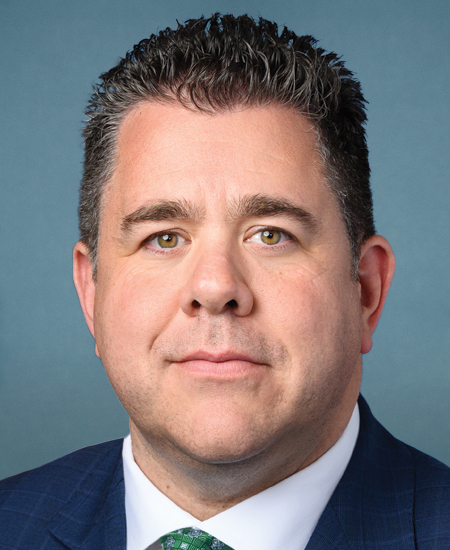
Rep. Nick LaLota
Sponsored bills
Maddy summaryHRES 1262 is a ceremonial resolution commemorating the 100th anniversary of the U.S. Border Patrol's establishment on May 28, 1924. It honors the agency's history, service, and sacrifices - including over 57 million apprehensions and 155 agents who died in the line of duty - without creating new laws or affecting any policies. The resolution symbolically recognizes the Border Patrol's role in border security and recommends designating a National U.S. Border Patrol Day. As a purely commemorative measure, it has no direct impact on legislation, funding, or individuals.
Maddy summaryHR 8466 extends the Affordable Connectivity Program (ACP) through 2024 with $6 billion in funding, directly affecting low-income households receiving subsidized broadband internet. It strengthens eligibility verification by requiring use of the National Verifier, limiting eligibility to households with school meal program participation (not just provider programs), and mandating collection of partial Social Security numbers for verification. The bill adds new antifraud controls and performance measures for the FCC, requiring a report on program effectiveness within a year. It also allows households switching providers to maintain benefits only if they've used the current service for at least 180 days.
Maddy summaryThis bill reauthorizes the National Alzheimer's Project Act through 2035 (extending the previous deadline of 2025) and adds new requirements to promote healthy aging and reduce Alzheimer’s risk factors. It mandates the program to provide information on healthy behaviors that may lower cognitive decline risk and expands the advisory group to include representatives from agencies like the Department of Justice, FEMA, and Social Security Administration, plus experts with diverse clinical trial experience. The bill directly affects Alzheimer’s research, care programs, and the federal advisory group overseeing national efforts. Key changes include requiring annual evaluations instead of initial ones and adding a focus on reducing health disparities in Alzheimer’s initiatives.
Maddy summaryThis bill requires federal agencies to write contracting notices for small businesses in clear, concise language that follows existing federal plain language guidelines. It directly affects small businesses seeking government contracts by mandating that notices published on the government-wide online portal include key terms to help them quickly identify and understand opportunities. Key provisions include requiring notices to be accessible to small business concerns and directing the Small Business Administration to issue implementing rules within 90 days of enactment. The bill does not create new funding requirements but aims to reduce confusion in federal contracting communications.
Maddy summaryHR 895, the Combating Organized Retail Crime Act of 2023, expands federal law to better prosecute organized retail theft by amending sections 2314 and 2315 of Title 18. It clarifies that crimes involving stolen goods valued at $5,000 or more over 12 months - including retail theft - can be prosecuted under existing federal statutes, and broadens definitions to include goods taken via "any facility of interstate or foreign commerce." The bill also creates a new Organized Retail Crime Coordination Center within Homeland Security, requiring it to coordinate federal, state, and local law enforcement efforts, share threat information with retailers, and produce annual public reports on trends. This directly affects law enforcement agencies, retailers, and criminal justice systems by standardizing prosecution thresholds and enhancing interagency collaboration.
Maddy summaryThis resolution (HRES 616) condemns the Taliban's ongoing human rights abuses in Afghanistan, specifically targeting women, girls, religious minorities (including Hazaras and Sikhs), and ethnic groups. It expresses support for Afghans who assisted U.S. missions and calls for the U.S. government to halt Taliban violence and address systemic repression. Key mechanisms include urging the State Department to assess potential crimes against humanity, developing strategies to support human rights defenders, and expediting refugee processing for Afghans with Special Immigrant Visas. The resolution does not impose new legal requirements but formalizes congressional stance and policy guidance. It directly affects U.S. foreign policy implementation toward Afghanistan.
Maddy summaryHR 8498 authorizes $1.02 billion in funding to modernize and rebuild facilities at the United States Merchant Marine Academy. The bill allocates $54 million for planning in fiscal year 2025 and $107.33 million annually from 2026 through 2034 for construction, following the "Full Speed Ahead" infrastructure plan. This funding directly affects the Academy's physical infrastructure, including rehabilitation, modernization, and new construction projects. The bill specifies that funds must align with the Maritime Security Infrastructure Council's plan outlined in the February 28, 2024, Congressional Record.
Maddy summaryHR 8477, the Supporting Law Enforcement Officers’ Ability to Combat Organized Retail Crime Act, requires the Federal Law Enforcement Training Centers (FLETC) to develop training and guidance for state, local, Tribal, territorial, and campus law enforcement agencies on identifying, investigating, and reporting organized retail crime. The bill mandates FLETC to create these resources within one year of enactment and directs the Department of Homeland Security to conduct research on security technologies for combating such crime, while adhering to privacy and civil liberties protections. It directly affects local law enforcement agencies by providing standardized educational materials and operational support tools. The legislation focuses on enhancing law enforcement capabilities through training and technology research, not on creating new criminal penalties or funding mechanisms.
Maddy summaryThis bill requires the U.S. Department of Defense and State Department to immediately deliver all previously approved military equipment and services to Israel within 15 days, reversing any pauses on arms transfers. It prohibits using federal funds to withhold, halt, or cancel defense article deliveries to Israel and mandates that unobligated security assistance funds for Israel must be spent by the end of 30 days. The bill also requires monthly reports to Congress detailing all security assistance provided to Israel since October 7, 2023, including specific items delivered and funding sources. The law directly affects U.S. agencies responsible for military aid and Israel as the recipient of the security assistance.