

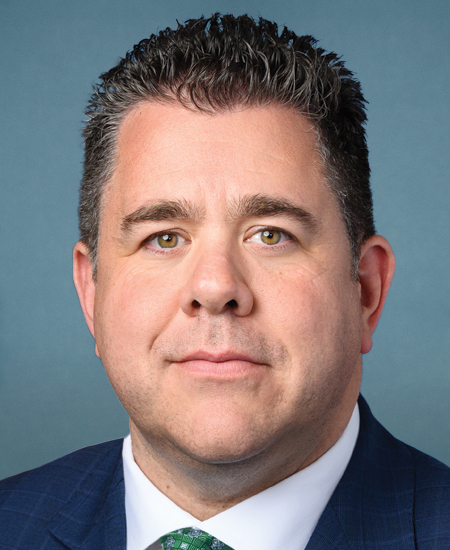
Photo of Nick LaLota
R United States House · District 1 · New York On the 2026 ballot

Rep. Nick LaLota

Compare
Total votes
1,879
all sessions
Attendance
98%
31 missed
Near the chamber average
With party
88%
of cast votes
Lower than 80% of chamber peers
Bipartisan score
6%
crosses aisle rarely
Higher than 79% of chamber peers
Sponsored
741
bills & resolutions
Near the chamber average
Committees
7
assignments
741 bills and resolutions

Sponsored bills

Total
741
Primary
57
Co-sponsor
684
This page
741
matching current filters
Co-sponsor HR 6364
In committee · Indiana House · Co-sponsor
Medicare Telehealth Privacy Act of 2023

Maddy summaryThis bill prevents Medicare from publicly disclosing a physician's or practitioner's home address if they provide telehealth services from home and the address is required for enrollment or billing. It directly affects doctors and healthcare providers who choose to deliver telehealth services from their residences. The key provision amends Medicare rules to ensure that even when an address is needed for administrative purposes, the home location remains private and cannot be shared publicly. This is a specific privacy safeguard, not a broad policy change to telehealth services.

In committee Dec 17, 2024 1 co-sponsor
Co-sponsor HR 6114
In committee · Indiana House · Co-sponsor
Maximum Pressure Act

Maddy summaryThe Maximum Pressure Act (HR 6114) is a legislative proposal that would maintain and expand U.S. sanctions against Iran. The bill would codify existing sanctions, require Iran to meet 12 specific conditions before sanctions could be lifted (including ending support for terrorism, releasing hostages, and ending nuclear enrichment), and expand sanctions on Iran's Revolutionary Guard Corps and missile programs. It also establishes new reporting requirements for the U.S. government to monitor Iran's activities and the impact of sanctions. The legislation would require congressional review before any sanctions could be lifted or modified, preventing the executive branch from unilaterally easing restrictions.

In committee Dec 17, 2024 1 co-sponsor
Co-sponsor HR 4438
In committee · Indiana House · Co-sponsor
John W. Walsh Alpha-1 Home Infusion Act of 2023

Maddy summaryThis bill expands Medicare coverage to include home infusion treatment for people with Alpha-1 Antitrypsin Deficiency Disorder, a genetic condition causing lung and liver damage. It specifically covers "augmentation therapy" (a standard treatment using Alpha-1 Proteinase Inhibitor) when administered in a patient's home by qualified providers. Medicare will pay 80% of the cost for intravenous kits and up to 2 hours of nursing care during these home infusions, starting January 1, 2025. The change directly affects Medicare beneficiaries with this condition who require home-based treatment and their qualified home infusion providers.

In committee Dec 17, 2024 1 co-sponsor
Co-sponsor HR 4315
In committee · Indiana House · Co-sponsor
Medicare Orthotics and Prosthetics Patient-Centered Care Act

Maddy summaryThis bill prohibits Medicare from paying for certain custom-fitted or custom-fabricated orthotic and prosthetic devices delivered via "drop shipment" (direct shipping without in-person training from a qualified provider). It directly affects Medicare beneficiaries who need these devices, ensuring they receive necessary in-person fitting and training. The bill also expands which healthcare professionals (including physical therapists, occupational therapists, orthotists, and prosthetists) can prescribe these devices and updates definitions to clarify terms like "orthoses" and "prostheses." Final regulations implementing these changes must be issued within one year of the bill's enactment.

In committee Dec 17, 2024 1 co-sponsor
Co-sponsor HR 4189
In committee · Indiana House · Co-sponsor
CONNECT for Health Act of 2023

Maddy summaryThe CONNECT for Health Act of 2023 aims to expand access to telehealth services under Medicare by removing barriers that previously limited who could provide these services and where they could be delivered. The bill eliminates geographic restrictions on telehealth coverage, allows telehealth services to be provided from the patient's home and other clinically appropriate locations, and expands the types of healthcare providers who can offer telehealth services. It also improves the process for adding new telehealth services to Medicare coverage and includes provisions to ensure quality measurement includes telehealth services. This legislation directly affects Medicare beneficiaries seeking remote care and healthcare providers delivering telehealth services, with key provisions taking effect between 2024 and 2025.

In committee Dec 17, 2024 1 co-sponsor
Co-sponsor HR 3875
In committee · Indiana House · Co-sponsor
Expanded Telehealth Access Act

Maddy summaryHR 3875, the Expanded Telehealth Access Act, expands Medicare coverage for telehealth services by adding new healthcare professionals to the list of providers eligible for payment. It specifically includes licensed audiologists, occupational therapists (and their assistants under supervision), physical therapists (and their assistants under supervision), and speech-language pathologists. The bill ensures these providers are paid the same rate for telehealth services as they would be for in-person care under Medicare. This change directly affects Medicare beneficiaries seeking remote therapy services and the new provider types who can now offer these services via telehealth.

In committee Dec 17, 2024 1 co-sponsor
Co-sponsor HR 3842
In committee · Indiana House · Co-sponsor
Expanding Access to Diabetes Self-Management Training Act of 2023

Maddy summaryHR 3842, the Expanding Access to Diabetes Self-Management Training Act of 2023, would improve Medicare coverage for diabetes self-management training (DSMT) services for beneficiaries with diabetes. The bill expands provider eligibility to include nonphysician practitioners (like nurse practitioners), increases available training hours (initial 10 hours plus up to 2 hours annually), and requires 100% Medicare coverage with no out-of-pocket costs for beneficiaries. It also mandates a new demonstration project starting in 2025 to test virtual DSMT services, evaluating impacts on health outcomes (like A1c levels), hospitalizations, and program costs. This legislation directly affects Medicare beneficiaries with diabetes and healthcare providers offering DSMT services.

In committee Dec 17, 2024 1 co-sponsor
Co-sponsor HR 3033
Passed · Indiana House · Co-sponsor
Solidify Iran Sanctions Act of 2023

Maddy summaryHR 3033, the Solidify Iran Sanctions Act of 2023, repeals the expiration date (sunset) from the 1996 Iran Sanctions Act. This permanently maintains existing U.S. sanctions targeting Iran's weapons programs, ballistic missile development, and support for terrorism. The bill directly affects Iran's government and entities involved in these activities by ensuring sanctions remain in effect without needing periodic renewal. It does not impose new sanctions but preserves current policy by removing the automatic expiration provision.

Passed Dec 17, 2024 1 co-sponsor
Co-sponsor HR 2880
In committee · Indiana House · Co-sponsor
Protecting Patients Against PBM Abuses Act

Maddy summaryThis bill regulates pharmacy benefit managers (PBMs) working with Medicare Part D prescription drug plans. It prohibits PBMs from earning income based on drug prices or rebates (requiring flat fees instead), mandates equal reimbursement for all network pharmacies, and requires PBMs to report how much of drug rebates they pass through to Medicare plans. The law also mandates annual compliance certifications and requires the government to publish aggregated transparency data (without revealing specific plan details) starting in 2024. These changes directly affect Medicare Part D plans and the seniors who rely on them for prescription drug coverage.

In committee Dec 17, 2024 1 co-sponsor
Co-sponsor HR 2794
In committee · Indiana House · Co-sponsor
Border Reinforcement Act of 2023

Maddy summaryThe Border Reinforcement Act of 2023 requires the immediate resumption of border wall construction along the US-Mexico border using previously allocated funds, with annual goals to complete 200 miles of wall until operational control is achieved. It mandates a comprehensive 5-year technology investment plan for border security systems, including surveillance and detection technology, and sets staffing requirements for U.S. Border Patrol, including a target of 22,000 full-time equivalent agents by 2025. The bill also requires U.S. Customs and Border Protection to publish monthly operational statistics on border encounters, drug seizures, and other border security metrics. Additionally, it includes provisions for DNA collection at land borders, eradication of certain vegetation impeding border security, and a report on Mexican cartels as potential foreign terrorist organizations.

In committee Dec 17, 2024 1 co-sponsor
Showing 371 to 380 of 741 bills
Previous 1 … 37 38 39 … 75 Next