

Maddy summaryThis bill amends the federal tax code to exclude certain overtime pay from taxable income. It directly affects workers who earn overtime under the Fair Labor Standards Act (FLSA) or through specific employer-employee agreements meeting defined conditions (like exceeding 40 hours per week or railway work standards). The key provision defines "qualified overtime compensation" to exclude this pay from federal income tax calculations. The change applies to tax returns filed for 2025 and later. This creates a concrete tax exemption for qualifying overtime earnings.
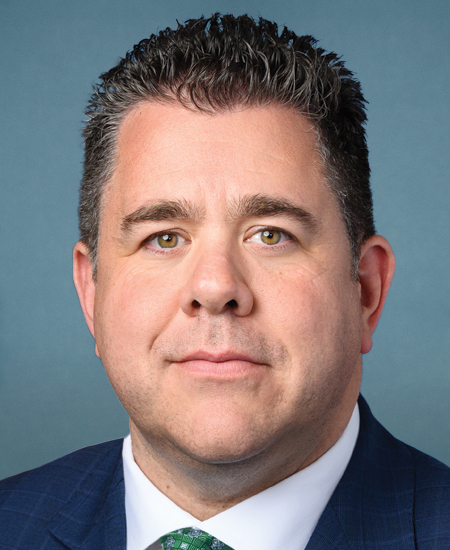
Rep. Nick LaLota
Sponsored bills
Maddy summaryThis bill allocates $5 million annually (2026-2030) to states for collecting de-identified stillbirth data through existing health systems, including risk factor analysis. It also provides $1 million yearly to develop standardized guidelines for healthcare providers and public educational materials about stillbirths, requiring consultation with medical professionals, bereavement organizations, and affected families. The bill mandates that all data collection complies with privacy laws and requires the Department of Health and Human Services to publish a public report on stillbirth guidelines within five years. It directly affects state health departments, healthcare providers, and families experiencing stillbirth by improving data quality and access to resources.
Maddy summaryHR 5454, the Medicare Advantage Prompt Pay Act, requires Medicare Advantage plans to pay 95% of valid claims (with complete data) within 14 days for electronic claims or 30 days for paper claims, starting January 1, 2027. Plans that miss these deadlines must pay interest at standard government rates and face $25,000 civil penalties per violation. The bill also mandates annual reports showing payment rates for in-network versus out-of-network claims and interest paid. This directly affects Medicare Advantage insurers and healthcare providers (like doctors and hospitals) who bill these plans.
Maddy summaryHRES 733 is a symbolic resolution designating the week of September 20-27, 2025, as "National Estuaries Week." It expresses congressional support for raising public awareness about the economic and ecological importance of coastal estuaries, which support millions of jobs, generate significant economic output, and provide critical services like flood protection and habitat for fish and wildlife. The resolution acknowledges estuaries' role in sustaining employment, economic growth, and environmental health without creating new policies or funding. It directly affects the public, government officials, and conservation organizations by highlighting estuaries' value through a designated awareness week.
Maddy summaryHRES 723 is a ceremonial resolution recognizing the 180th anniversary of the United States Naval Academy, established on October 10, 2025. It formally commemorates the Academy's founding, historical contributions, and legacy of producing naval and marine leadership. The resolution highlights the Academy's role in educating graduates who have served in major conflicts, earned military honors, and held significant national leadership positions. As a symbolic gesture with no policy changes or direct impact on constituents, it serves solely to honor the institution's history and ongoing mission.
Maddy summaryHR 5401, the Pay Our Troops Act of 2026, ensures military personnel, civilian Defense workers, and supporting contractors receive pay during government funding gaps in fiscal year 2026. It appropriates emergency funds for active-duty service members, reserves, and their supporting personnel (including Coast Guard staff under DHS) if regular appropriations aren't enacted by the end of the fiscal year. The bill provides necessary pay and allowances during any period when full-year funding is unavailable, covering both active service and support roles. Funding expires when regular appropriations are passed, a funding resolution is enacted, or January 1, 2027, whichever comes first. This is a procedural measure to prevent pay delays for military and support staff during fiscal year 2026 funding lapses.
Maddy summaryHR 5100 extends the Small Business Innovation Research (SBIR) and Small Business Technology Transfer (STTR) programs through fiscal year 2026, instead of ending on September 30, 2025. This bill directly affects small businesses and research institutions that rely on federal funding for research and development through these programs. The key mechanism is updating expiration dates across multiple program provisions in the Small Business Act to maintain funding authority and program operations for one additional year. The extension does not alter program eligibility, funding levels, or core requirements.
Maddy summaryHR 5309, the Congressional Tribute to Constance Baker Motley Act of 2025, authorizes a posthumous Congressional gold medal for Constance Baker Motley, a pioneering civil rights attorney and judge. The bill directs the Treasury Secretary to strike the medal with her image and name, to be presented to her son, Joel W. Motley III, and her niece, Constance Royster. It also permits the sale of bronze duplicates at cost to cover expenses, with proceeds going to the U.S. Mint fund. This is a commemorative measure with no substantive policy changes, honoring Motley’s legacy as the first African-American woman appointed to a federal judgeship.
Maddy summaryHR 5321 extends the deadline for allowing low-emission and energy-efficient vehicles to use high-occupancy vehicle (HOV) lanes from September 30, 2025, to December 31, 2026. It also requires the Transportation Secretary to conduct a study within 180 days of enactment on whether electric vehicle exemptions in HOV lanes reduce traffic congestion, with results reported to Congress. The bill directly affects state and local transportation agencies managing HOV facilities and the Department of Transportation. Key provisions include the deadline extension and the mandated study, with no changes to vehicle eligibility rules.
Maddy summaryHRES 692 is a non-binding resolution urging all 50 U.S. states to incorporate the events of the September 11, 2001, terrorist attacks into K-12 school curricula. It directly addresses state education systems, calling for mandatory inclusion of this history in public school lessons to ensure future generations remember the attacks. The resolution does not create new laws or funding but expresses the House's view that this education is essential for honoring victims and first responders. It cites that only 14 states currently require such instruction and emphasizes preserving this historical context for national security awareness.