

Maddy summaryHRES 912 is a ceremonial resolution recognizing the 75th anniversary of the Battle of the Chosin Reservoir (November 27-December 13, 1950) during the Korean War. It commemorates the military campaign involving U.S. and UN forces, highlighting their resilience against Chinese forces amid extreme cold, the evacuation of over 105,000 troops, and the valor of units like the 1st Marine Division. The resolution urges the House to honor the sacrifices of service members who suffered over 10,500 battle casualties and 7,310 nonbattle casualties (primarily from frostbite). As a non-binding commemorative measure, it does not create new policies or affect any individuals or entities.
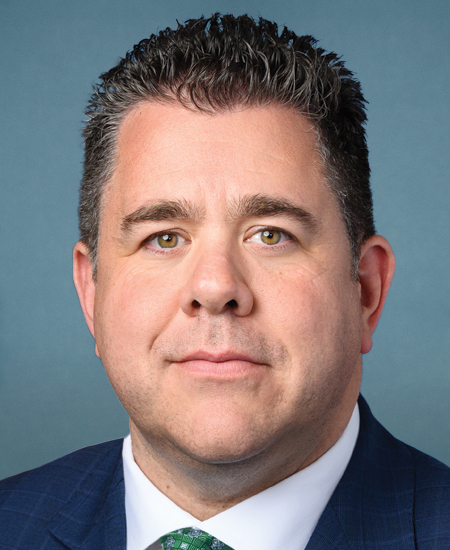
Rep. Nick LaLota
Sponsored bills
Maddy summaryHR 6304, the "AI for America Act," requires federal agencies to develop an action plan by July 2027 focused on AI leadership, security risks, and bias mitigation, along with biennial updates. It mandates identifying regulatory barriers to AI adoption in healthcare, scientific research, and transportation within one year of enactment. Additionally, the bill directs the National Institute of Standards and Technology (NIST) to submit a report within one year on methods to detect security risks and ideological bias in AI systems, including third-party audits and public disclosure protocols. The bill primarily affects federal agencies like OSTP and NIST, setting procedural deadlines without creating new funding or direct regulatory changes for AI developers.
Maddy summaryThe ROTOR Act narrows the definition of "sensitive government mission" for aircraft operations, excluding training flights and flights by officials below Cabinet rank. It requires regular reporting to Congress about exceptions to ADS-B Out requirements, establishes deadlines for requiring ADS-B In equipment on most aircraft, and mandates safety reviews for airports with military operations. The bill also improves coordination between the FAA and Department of Defense on airspace management and safety information sharing. These changes increase transparency around aircraft operations that don't broadcast their location while enhancing safety oversight. The bill directly affects Federal agencies operating aircraft, the FAA, and aircraft operators required to equip with ADS-B technology.
Maddy summaryHR 6231 extends and enhances the Work Opportunity Tax Credit (WOTC), a federal tax credit for employers hiring from specific target groups like veterans, SNAP recipients, and summer youth workers. The bill extends the program through 2030 (from 2025), increases the credit rate to 50% for certain wages (up from 40%), adds automatic inflation adjustments to the $6,000 wage cap, and expands eligibility to include military spouses and removes age limits for SNAP recipients. Key provisions also modify credit calculations for veterans, agricultural workers, and long-term assistance recipients, while requiring federal agencies to promote hiring from target groups in critical sectors like healthcare and construction. This bill directly affects employers who hire from these designated groups, making the tax credit more valuable and accessible.
Maddy summaryHR 6146, the STAY Act, requires the Department of Defense to submit a report by March 2026 analyzing options to reduce frequent military relocations (permanent changes of station) and sea-shore rotations (moving between ship assignments and shore duty). The report must assess costs, potential savings, and impacts on service member retention, spouses' employment, and children's education across all military branches. It will identify feasible adjustments to tour lengths or rotations while maintaining mission readiness and career progression, and recommend legislative or policy changes for potential pilot programs. This bill does not change current policy but mandates a study to inform future decisions about military assignment patterns.
Maddy summaryHR 6137 would create a new separate job code for "direct support professionals" (DSPs) within the federal Standard Occupational Classification system. This change aims to better recognize DSPs - who provide daily support for people with intellectual and developmental disabilities (like helping with daily living, community participation, and goal-setting) - as distinct from other roles like home health aides. The bill requires the Office of Management and Budget to consider this revision during the next system update, without authorizing new funding. It addresses data gaps caused by high turnover rates (39% nationally) in DSP hiring and retention.
Maddy summaryThis bill ensures uninterrupted WIC benefits during government funding gaps by directing emergency Treasury funds to cover the program in fiscal year 2026 if Congress fails to pass regular appropriations. It directly affects WIC participants (women, infants, and children) and state agencies administering the program, preventing service disruptions. Key provisions include retroactive reimbursement for states that covered costs between September 30, 2025, and the bill’s enactment date, and funding that lasts until fiscal year 2026 appropriations are approved. The bill’s mechanisms bypass standard budget processes to maintain WIC operations during fiscal lapses.
Maddy summaryHRES 831 is a symbolic resolution expressing the U.S. House of Representatives' support for designating October 2025 as "National Down Syndrome Awareness Month." It does not create new laws or allocate funds but publicly acknowledges the Down syndrome community, highlighting that about 6,000 babies are born with Down syndrome annually in the U.S. and noting increased federal research funding for Down syndrome (from $18 million in 2014 to $133 million in 2023). The resolution celebrates individuals with Down syndrome and their families, commends advocates and researchers, and reaffirms congressional commitment to supporting the community through policy and research. As a non-binding resolution, it directly affects public recognition and awareness, not legal or financial obligations.
Maddy summaryThis bill ensures SNAP (food stamp) benefits continue uninterrupted during government funding gaps in fiscal year 2026. It directs the USDA to use existing Treasury funds to pay SNAP benefits if Congress fails to pass a full-year budget for the Department of Agriculture by September 30, 2025. The bill also covers retroactive payments for missed benefits starting September 30, 2025, through the bill's enactment date. Benefits funded this way stop once Congress enacts a full FY2026 budget for the USDA. It directly affects SNAP recipients who rely on these benefits during budget delays.
Maddy summaryThis bill (HR 5589) is a commemorative naming resolution. It directs the Department of Veterans Affairs to rename the Riverhead, New York VA clinic as the "Private First Class Garfield M. Langhorn VA Clinic" in honor of a soldier who died saving his comrades during the Vietnam War. The bill has no policy impact beyond changing the facility's official name and references in government documents. It directly affects the VA clinic's designation and records.