

Maddy summaryHR 3376 creates the Water Affordability, Transparency, Equity, and Reliability Trust Fund, funded by increasing the corporate tax rate from 21% to 24.5% starting in 2025, with annual funding capped at $35 billion or 1/20th of 20-year infrastructure needs. The bill allocates funds to clean water programs (42%), safe drinking water programs (42.5%), household water well systems (1%), colonias assistance (0.5%), and Indian health services (3%), requiring specific prioritization of low-income and minority communities for many programs. It mandates an EPA study on water affordability, discriminatory practices, and civil rights violations in water service, including data collection on service disconnections affecting vulnerable populations. The bill also includes provisions for lead service line replacement, PFAS contamination response, and job training grants for water system operators with specific requirements to prioritize low-income communities.
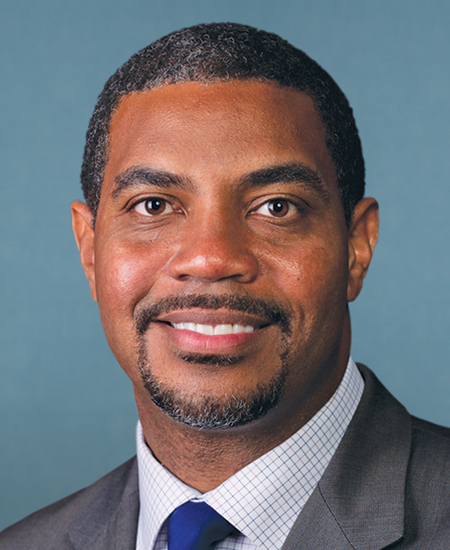
Rep. Steven Horsford
Sponsored bills
Saving Our Veterans Lives Act of 2025 This bill requires the Department of Veterans Affairs (VA) to implement a program to provide, upon request, a firearm lockbox (or voucher for such item) to eligible individuals. Currently, there is a pilot program under which certain veterans may be prescribed a lockbox by a VA clinician. The VA must also provide information with respect to the benefits of and options for secure firearm storage. The VA must develop an informational video on the secure storage of firearms as a suicide prevention strategy and publish the video on its website. Additionally, the VA must publish information to inform individuals who participate in the lockbox program that such lockboxes are not for resale. The VA must also implement a public education campaign to educate eligible individuals about the availability of lockboxes under the program and that participation in the program does not affect the rights of an individual with respect to the lawful ownership of a firearm.
Maddy summaryThe MIL FMLA Act expands the Family and Medical Leave Act to provide military families with additional leave options. It allows eligible employees to take up to 26 workweeks of leave during a 12-month period to care for a covered servicemember (active duty member or veteran), regardless of the employee's family relationship to the servicemember. The bill adds new definitions to include domestic partners, grandparents, siblings, and other extended family members as eligible caregivers, and creates a new "veteran leave" provision for employees who are covered servicemembers needing leave due to service-related serious injury or illness. These changes aim to better support military families by providing more comprehensive leave options for caregiving needs related to military service.
Maddy summaryHR 3243, the Therapeutic Fraud Prevention Act of 2025, bans the provision of paid conversion therapy aimed at changing a person's sexual orientation or gender identity, and prohibits advertising such therapy as effective, safe, or without risk. It directly affects LGBTQ+ individuals and their families who might be targeted by these practices, as professionals have determined conversion therapy is ineffective and harmful. The law treats violations as deceptive acts under consumer protection laws, empowering the Federal Trade Commission and state attorneys general to enforce it through civil actions. It explicitly excludes legitimate gender transition support and non-discriminatory counseling from the ban.
Maddy summaryHR 3241, the Defense Workforce Integration Act of 2025, creates pathways for military personnel medically disqualified from service to transition into civilian defense jobs. It requires the Defense Department to establish a process within one year for entry-level service members (like those in basic training or ROTC) who can't serve due to medical reasons to qualify for civilian roles in the Department of Defense. The bill also mandates a new program to connect medically disqualified individuals with employment opportunities in the defense industrial base, cybersecurity, research, and other national security support roles. Additionally, it directs the Navy to provide career information about Military Sealift Command and shipbuilder training to personnel during transition assistance. The Secretary of Defense must report on implementation to Congress within one year.
Maddy summaryHR 3215, the UNLOCK Housing Act, redefines affordable housing development on federal land as a "public purpose" under existing law, directly enabling housing for extremely low-income, very low-income, and low-income families (as defined by federal standards). It creates a Joint Task Force between HUD and the Interior Department to identify underused federal land suitable for housing, streamline land transfers, and measure costs from housing shortages. The Task Force must annually report progress to Congress and will dissolve 10 years after the bill's enactment. This bill changes how federal land can be used for housing by making affordable development a priority under current land management statutes.
Maddy summaryThe Housing Market Transparency Act (HR 3216) requires the Department of Housing and Urban Development (HUD) to collect standardized data on low-income housing tax credit projects. This includes development costs, ownership details, habitability standards, and reasons for property disposition (like sales or foreclosures), which states must submit annually to HUD. HUD will then compile and publicly release this data yearly, excluding certain sensitive details, and periodically publish market reports on multifamily housing. The law directly affects HUD, state housing agencies, and owners of properties receiving low-income housing tax credits under Section 42 of the Internal Revenue Code.
Maddy summaryThis bill clarifies liability for payroll tax errors when third-party payroll services (like professional employer organizations) rely on employer certifications. It allows these services to depend on employer-provided information unless they knew or should have known of an error. If an error is discovered, the employer bears full liability unless the third party had "constructive knowledge" of the error, in which case liability is shared based on the portion of the error the third party knew about. The bill also prevents the IRS from delaying payroll tax credits or auditing employers solely because a third party relied on an erroneous certification from that employer. It directly affects third-party payroll services and the businesses that use their services for tax filings.
Maddy summaryThe HOME Act of 2025 prohibits landlords and sellers from charging "unconscionably excessive" rental or home sale prices during a federally declared affordable housing crisis. The Secretary of Housing and Urban Development (HUD) must determine crisis periods using metrics like mortgage rates, median home prices, and disaster declarations, with restrictions limiting crisis periods to 30 days (renewable). Violations are enforced by HUD and state attorneys general, with penalties funding affordable housing through the Housing Trust Fund. The law also requires HUD to monitor housing markets, investigate excessive investor purchases, and review anti-competitive practices in rental markets.
Maddy summaryHR 3204, the BASIC ACT, increases tax incentives for semiconductor manufacturing. It raises the advanced manufacturing investment credit from 25% to 35% for qualifying semiconductor production facilities and extends the deadline for claiming the credit from 2026 to 2030. The bill directly affects companies building or expanding semiconductor manufacturing plants in the U.S. The changes apply to property placed in service after the bill's enactment date. This provides longer-term financial support for domestic semiconductor investment.