

Maddy summaryHRES 502 is a House resolution requesting transparency about a potential federal database project. It directs the President and three Cabinet Secretaries (Treasury, Labor, Health and Human Services) to provide documents to the House within 14 days regarding a proposed centralized database developed with Palantir Technologies Inc. The resolution seeks information about the database’s scope - compiling sensitive personal data like tax records, health information, financial accounts, and Social Security details across federal agencies - and its purpose, including potential uses like tax audits or benefit restrictions. This is a procedural inquiry (not a policy change) focused on obtaining documents for congressional review of the project’s development and contracts.
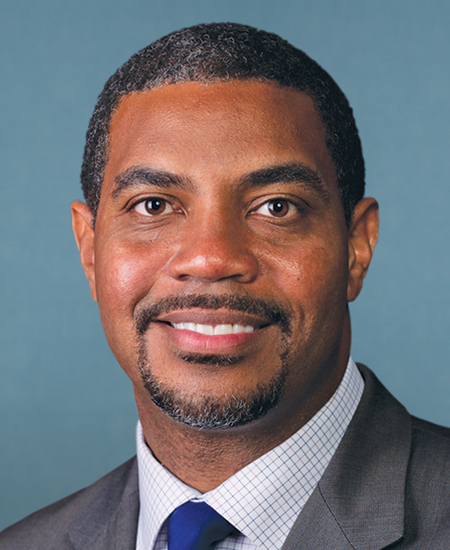
Rep. Steven Horsford
Sponsored bills
Maddy summaryThis bill, HR 3916 (My Body, My Data Act of 2025), requires businesses and other "regulated entities" to minimize collection and sharing of personal reproductive or sexual health data - such as pregnancy status, contraceptive use, or abortion-related information - and gives individuals specific rights. It mandates that entities provide individuals with easy access to their data, the ability to correct inaccuracies, and the right to request deletion of such information within 15 days. The law also requires clear privacy policies detailing data practices and prohibits retaliation against individuals who exercise these rights, such as charging higher prices or denying services. It applies broadly to most businesses (excluding HIPAA-covered healthcare providers) and is enforced by the FTC with private lawsuits allowed for violations.
Maddy summaryHR 3906, the Medical Research for Our Troops Act, restores funding levels for military medical research by increasing the Defense Health Agency's research budget from $40.395 billion to $41.576 billion in the 2025 appropriations act. It ensures Congressionally Directed Medical Research Programs funds are used consistently with the Consolidated Appropriations Act, 2024, requiring the Defense Secretary to support all previously identified research programs and maintain existing funding allocations. The bill directly affects military medical research initiatives and the Defense Health Agency's budget implementation. This is a procedural funding adjustment, not a new policy, maintaining continuity for ongoing research projects.
Maddy summaryThis bill requires private firearm transfers between individuals to go through a licensed dealer who must conduct a background check. It applies to most private sales but includes exceptions for transfers between family members (like parents and children), law enforcement, emergencies preventing harm, and temporary loans at shooting ranges or for hunting. Dealers must provide background check notices in both English and Spanish. The law aims to prevent prohibited individuals from obtaining firearms through private transactions while maintaining existing state authority on firearm laws.
Maddy summaryThe Broadcast VOICES Act creates a tax certificate program to incentivize ownership of broadcast stations by socially disadvantaged individuals (defined as women or those who have faced racial/ethnic prejudice). It allows for tax benefits on qualifying sales of broadcast stations, requiring that socially disadvantaged individuals maintain ownership for at least 2 years and control management operations. The bill mandates the FCC to submit biennial reports to Congress on the number of stations owned by socially disadvantaged individuals and recommendations for increasing such ownership. Additionally, it establishes a new tax credit for contributions to organizations training socially disadvantaged individuals in broadcast management. The program will sunset after 16 years.
Maddy summaryHR 3868, the Enhanced Background Checks Act of 2025, modifies federal firearm background check procedures to address delays. It requires federal firearms licensees to wait 10 business days after a background check query if the system doesn’t immediately flag a transfer, unless the buyer submits an electronic petition confirming they aren’t prohibited from owning firearms. The petition process includes a 10-day response deadline from the Attorney General, with licensees allowed to proceed if the system remains silent after 10 days. The bill also mandates detailed annual reports from the FBI on petition delays and GAO reports on implementation, focusing on how these changes affect firearm transfers to prohibited individuals.
Maddy summaryHR 3876, the LIHEAP Staffing Support Act, amends the Low-Income Home Energy Assistance Act to establish staffing requirements for the program. It requires the Secretary to employ at least 20 full-time staff dedicated to administering LIHEAP, limits contractors to no more than 40% of these staff, and mandates increasing staffing to at least 30 during declared emergencies (as defined under existing law). These provisions directly affect the administrative capacity of the LIHEAP program, which provides energy assistance to low-income households. The bill focuses on ensuring consistent staffing levels to support program delivery, with specific rules for emergency periods lasting up to 180 days.
Maddy summaryThis resolution designates specific Capitol rooms (H-315 to H-319) housing the House Press Gallery as the "Frederick Douglass Press Gallery." It honors Frederick Douglass, who was the first Black journalist permitted to cover Congress in the Capitol press galleries (1871-1875), recognizing his pioneering role in journalism and advocacy during Reconstruction. The resolution is purely ceremonial, with no new policies, funding, or obligations; it only changes the name of an existing space to commemorate Douglass's historical significance.
Maddy summaryThe STOCK Act 2.0 requires Members of Congress, federal officials, Federal Reserve employees, Supreme Court justices, and their spouses and dependent children to report and divest certain financial interests, including investments in stocks, cryptocurrencies, commodities, and futures. It mandates that covered individuals report these financial interests within 120 days of taking office or upon the bill's enactment, and sell any existing investments that conflict with public duties. The bill establishes a fine of 10% of the value of unreported or undivested interests for noncompliance and requires electronic filing of financial disclosures with public online access to searchable reports. This legislation expands and strengthens the original STOCK Act by creating more comprehensive reporting requirements and improving public transparency about potential conflicts of interest. The provisions apply to a wide range of government officials and their families, with specific requirements for Federal Reserve officials added through this bill.
Maddy summaryHR 3757, the Pride In Mental Health Act of 2025, provides $20 million annually (2026-2030) to fund grants for mental health services targeting LGBTQ+ youth, including nonbinary, intersex, and Two Spirit youth, and their families/caregivers. The bill mandates grantees to provide trauma-informed care, cultural competency training, school bullying prevention guidelines, and evidence-based practices while explicitly prohibiting the use of funds for conversion therapy or its promotion. It also requires the federal government to restore mental health reports on LGBTQ+ youth, conduct a national survey measuring mental health distress, and produce a report on mental health services for LGBTQ+ youth in foster care. The law directly affects these youth populations by expanding access to tailored mental health resources and data collection, with funding administered through the Substance Abuse and Mental Health Administration.